Black spots on patio slabs: lichen a wash leaves behind
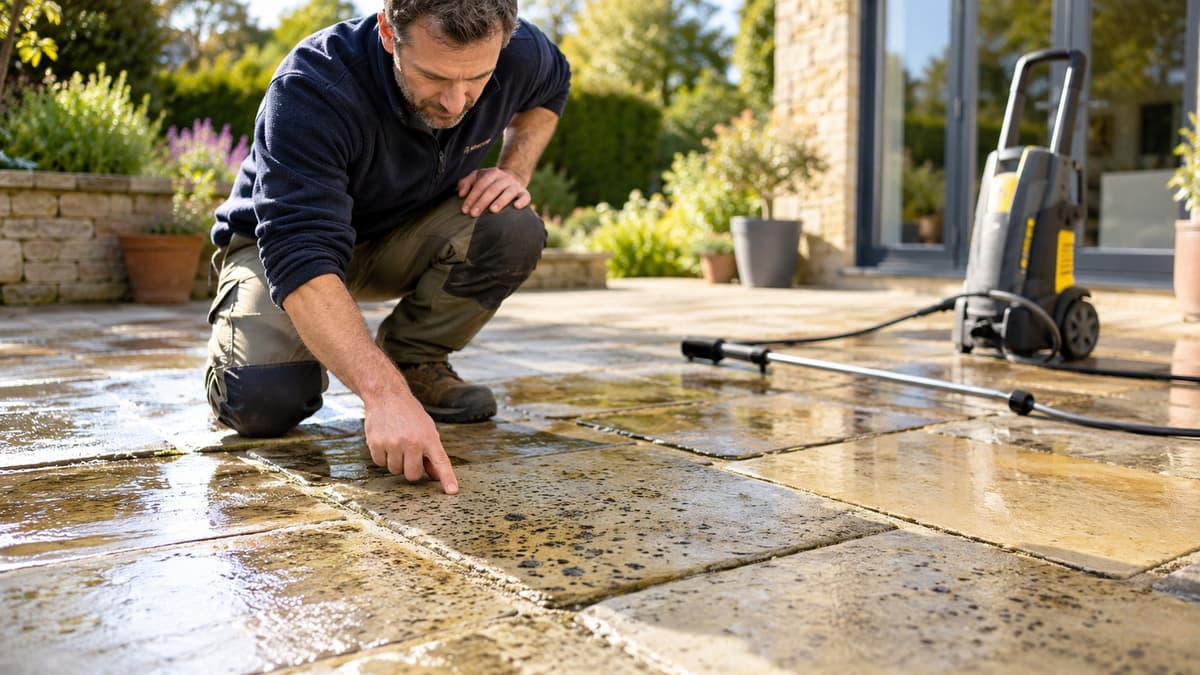
Black spots on patio slabs often stay after the green film has gone. They are usually lichen in the stone, and a closer jet wash or acid will not clear them.
On this page
- 1.In short
- 2.Algae and black spot are different growths
- 3.Why jet washing does not remove black spots on sandstone
- 4.Lichen on paving and what a biocide may claim
- 5.Acid on Indian sandstone leaves rust stains
- 6.Ornaments and headstones are a different job from flags
- 7.What the stone cleaner comparison can tell you

You spent a dry Saturday on the flags, watched the green film run into the joints, and then saw the dark dots still sitting in the stone. Those black spots on patio slabs are usually lichen in the pore, especially on sandstone, and a closer pass with the lance leaves them where they are. The split that matters is between a film a careful wash can lift and a spot that has grown into the grain.
That split decides the bottle. A 2 litre restorer listed for ornaments and headstones is a different job from a product whose label names paving, and acid on Indian sandstone can leave a rust-coloured stain.
Products Compared read the amazon.co.uk listings in this stone cleaner set in October 2026, including Stone King 2 L at £29.99 with 4.6 from 100 ratings, plus public UK notes from the Health and Safety Executive, the Church of England and paving references. There was no laboratory trial. A purchase through a comparison link may earn us a commission at no extra cost to you.
In short
A green film is usually algae and can lift with a careful wash. Black dots that remain are often lichen in the stone, and pressure washing clears the film while the spots stay. A surface biocide is a different product from a moss killer, and a 2 litre restorer sold for gravestones and ornaments is not a measured dose for a whole patio.
Algae and black spot are different growths
Algae on a patio is a film. It looks green or brown, feels slick after rain, and often lifts with a stiff brush and a rinse because it sits on the face. Black spot is commonly lichen in the pores, as separate dots or a thin dark crust. On sandstone the dots look like pepper in the stone. A wash can take the film and leave the dots on the same terrace.
Check one wet slab before you spend an afternoon. After rain, or after a watering can on a single flag, press a thumb on the green film and then on a dark dot. The film smears. The dot stays. Indian sandstone black marks are frequently this lichen. Pavingexpert's stain index also separates acid burns and rust from organic marks, so a brown-orange freckle under a metal chair is a different problem.
A glance is weak proof. Bitumen, soot and a stained leaf can all look dark. Marks under a planter drip, or only where a barbecue stood, have a cause you can see. Dots on open flags that get light and rain are the lichen pattern. A wire brush on sandstone cuts a pale ring and leaves the growth in the pore.
Why jet washing does not remove black spots on sandstone
A pressure washer shears soft growth, so the green film and loose grit go and the flags look paler within the hour. The lichen stays. Floorseal's account of black spot on sandstone patios is that it resists pressure washing: the jet cleans around the spot, and the spot remains once the flags are dry. Water does not dissolve a growth seated in the grain.
The usual mistake is a closer second pass. You drop the lance and hold the fan on one flag until the colour changes. The spot is still there, and the face now has a pale stripe or a frosted patch. The patio and paving guide splits green film from black spots. More pressure spends the face of the slab before it spends the lichen.
An afternoon on a modest patio is a rule of thumb, and it feels finished because the algae has gone. Judge the flags only when they are dry. Wet stone hides the contrast. Floorseal's dwell times belong to Floorseal's product, and those minutes do not transfer to Stone King or to any other liquid.
Lichen on paving and what a biocide may claim
A liquid for organic growth on hard surfaces follows different rules from a detergent or a lawn treatment. The Health and Safety Executive's COPR rules cover surface biocides for algae, lichen, mould and mildew on surfaces. A moss-kill claim falls under plant protection products instead. Patio cleaner, black spot treatment and moss killer are different labels, and a star rating does not swap one for another.
Read the organisms and the surfaces on the UK label before you look at pack size. A bottle that names algae and lichen on hard surfaces is a different product from a moss killer for turf. No authorisation number was checked for any ASIN in this set. The stone cleaner buying guide sorts bottles by the job they are listed for.
Household bleach has no measured rate for lichen in sandstone. UK reviews of chlorine-type restorers report bleached clothes, a lingering smell, and damaged plants beside the flags. Biodegradable on a listing does not cancel that record. Keep bleach off beds, lawn edges and fabric. Use the rate on the pack you open, and wait as long as that label allows.
Acid on Indian sandstone leaves rust stains
Acid is the wrong second tool once a wash has failed. Pavingexpert records rust-coloured staining when acid meets Indian sandstone, because many of these stones carry iron. The flag can develop an orange or brown cast wider than the original spot.
Hydrochloric patio cleaner is for mineral deposits and cement residue. Wetting one dot does not make it a lichen treatment. The rust colour often appears as the slab dries, so a wet test that looks unchanged is not a pass. Keep acid off Indian sandstone for this job. On concrete, a soak can still leave cured cement lumps in place.
Name the mark first. Scattered dark dots are the lichen problem. A pale haze on paving laid this season is cement film. A rust freckle under a table leg needs the metal moved. A seller who calls acid a brightener for tired Indian sandstone is describing a rust-stain risk.
Ornaments and headstones are a different job from flags
A bird bath or a statue is a small job you can keep off the lawn. A churchyard headstone is different, even when the growth looks the same. The Church of England records that hundreds of lichen species use churchyards, and the guidance is to leave them. Spraying a memorial is the wrong intervention.
Stone King 2 L, ASIN B08S3J6B47, is the outdoor restorer in this comparison. The amazon.co.uk listing read for the set showed £29.99 and 4.6 from 100 ratings, for gravestones and ornaments. UK reviews describe killed grass, bleached clothes, a chlorine smell, and no sprayer in the box. GLEE, biodegradable and acid-free are listing claims only. They were not checked against a safety data sheet or an award record.
The notes give no square-metre rate, so this 2 litre bottle is not a patio dose. Reviewers decant it into a sprayer they already own, and a splash on trousers matches the bleach result they report. On a churchyard memorial, leave the lichens. Beside a lawn, the reviews say the grass dies. A sheet over the beds was not tested here, so keep the liquid off planting.
What the stone cleaner comparison can tell you
The stone cleaner comparison lines up indoor stone liquids, Stone King as the outdoor restorer, a pressure-washer head and abrasives. You can see which row is for organic staining outdoors, what the UK listing claimed, and what buyers reported about plants, clothes and the missing sprayer.
These notes include no coverage figure for flags. Treating the gravestone bottle as a patio dose would invent litres per square metre. For paving, choose a product whose UK label names that surface and names lichen or black spot, then test one slab and wait the interval that label states. Floorseal's timings stay with Floorseal.
Judge the test dry, in daylight, from standing height. Wet stone flatters every cleaner. If the test slab shows bleaching or etching, stop. The 4.6 from 100 mixes ornaments, paths and patios, with no dwell recorded on your stone. Price and rating are the amazon.co.uk figures from that reading.
Common questions
What are the black spots on my patio slabs?
Why did pressure washing leave the spots?
Are black spot and algae the same growth?
Can I scrape lichen off sandstone?
Will bleach clear black spots on slabs?
Is a patio biocide the same as a moss killer?
Should I leave lichens on a gravestone?
Will acid remove the marks?

Products Compared publishes British-English buying guides based on amazon.co.uk listings and public UK sources. We do not run a lab and we do not invent test scores.
Related articles
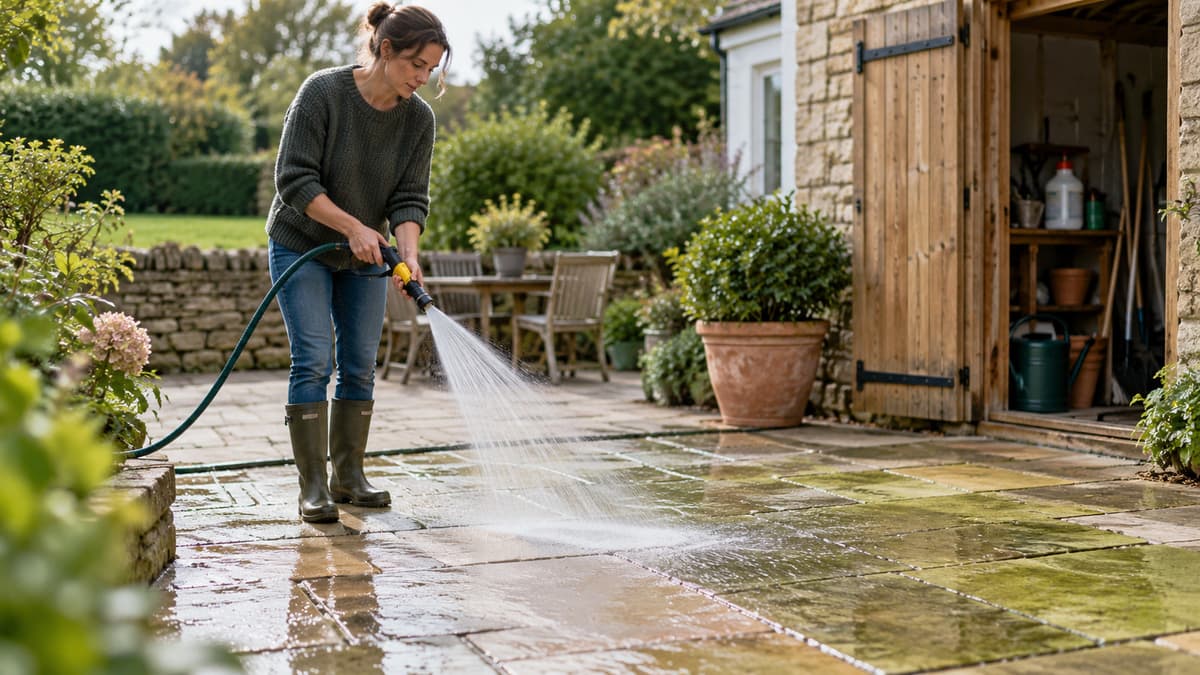
How to clean a sandstone patio
A careful wash for Indian or British sandstone, and why a close jet and acid both mark the face.

Bleach on garden stone
Bleach on patio slabs can kill grass and mark clothes, even under sheeting.
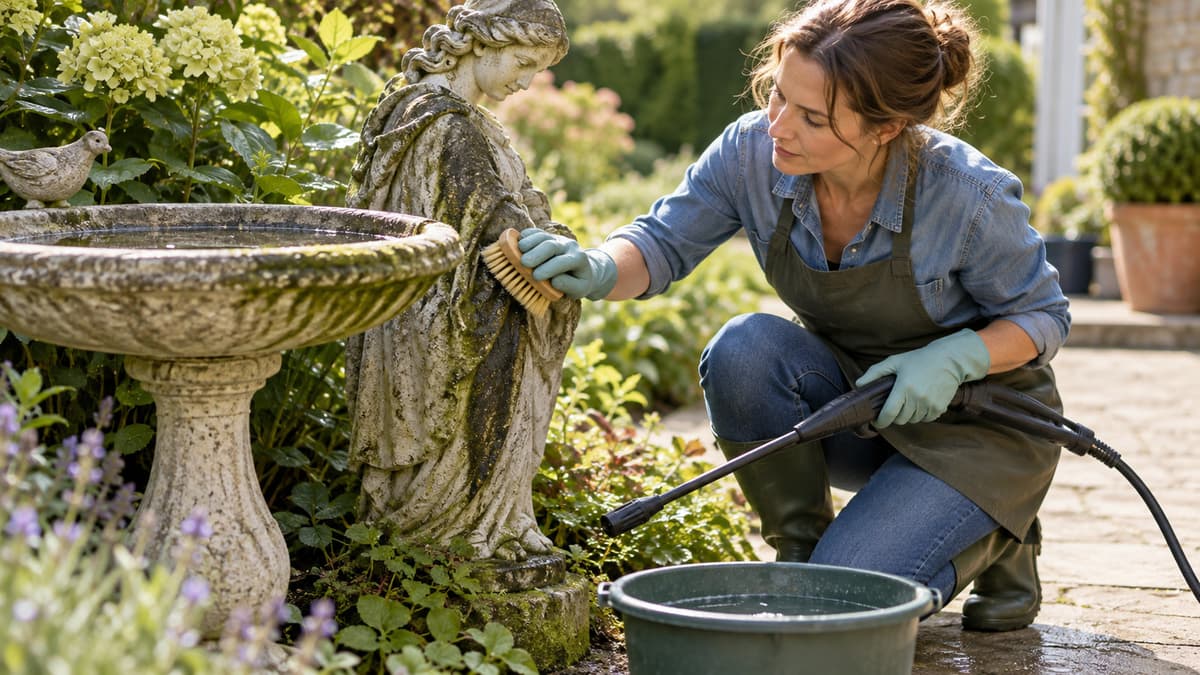
Algae on garden ornaments
A bird bath or statue needs a small labelled clean. A patio lance and a floor mop are the wrong tools.