Cleaning a gravestone UK: ask the site owner first

Cleaning a gravestone UK starts with the site owner and the lichen. Pressure washing is inappropriate, and a restorer listing is not clearance to spray.
On this page

You searched for cleaning a gravestone UK advice because a family memorial has gone dull. The letters are still cut in the face, under a grey-green crust that looks like neglect from the path, and the pressure washer in the boot feels like a Saturday job.
Historic England treats cleaning a monument as a major intervention. The Church of England’s churchyard guidance is to leave the lichens and keep sprays off memorials. Ask the site owner before you bring water, a brush or a bottle.
Products Compared read the amazon.co.uk listing for Stone King Gravestone and Ornament Restorer, 2 litres, model STK750, at £29.99 with 4.6 from 100 ratings, in October 2026. That page was set beside public notes from Historic England, the Church of England, the Health and Safety Executive, Lithofin and Pavingexpert.
There was no laboratory trial, and no authorisation number was looked up for this bottle. A purchase through a comparison link may earn us a commission at no extra cost to you.
In short
Ask the site owner before any churchyard memorial cleaning. Historic England calls the work a major intervention and calls pressure washing inappropriate, while the Church of England points to more than 700 lichen species in churchyards and says to leave them. Stone King 2 L was £29.99 with 4.6 from 100 ratings, and no authorisation number was checked for that bottle.
Cleaning is an intervention, not a chore
Historic England’s notes on monuments in cemeteries and burial grounds treat cleaning as a major intervention. If any cleaning happens, they want the mildest method, and they tell you to ask the site owner first. That owner may be a parish, a council, a cemetery company or a private keeper. The surname cut in the stone does not say who is allowed to agree.
To clean a headstone because a visit is close feels like care, and warm water with a soft brush is already work on a weathered face. Churchyard memorial cleaning still waits on the owner of the ground. Agree the method before you wet the letters, and keep any cloth for your hands.
Whether it is allowed to clean a gravestone in a Church of England churchyard depends on that ground. Church guidance is to leave lichens and keep sprays off memorials. Historic England says to ask, and to stay mild only where cleaning is acceptable. A cemetery, a churchyard and a private grave are run separately. If the site owner wants this memorial left, the bucket stays in the car.
Lichens in British churchyards
About 2,000 lichen species live in the UK, and the Church of England records more than 700 in churchyards. A grey, yellow or near-black patch is often that wildlife, which is why lichen on a gravestone is read as neglect.
The guidance is to leave the crust and keep sprays off memorials. The name can still be readable at arm’s length when the view from the path looks abandoned.
A scraper or a wire brush is the mistake that feels tidy. It breaks crust and stone together, and you are left with a pale scar and a softer letter. Bird droppings, soot, a loose green film and ivy are different from a bonded crust.
Cutting woody growth, if the site owner agrees, is plant work and stays off the inscription. If you cannot tell lichen from soot, test nothing on the carved name until you have an answer for this stone.
Why a pressure washer is the wrong tool
Historic England says pressure washing a monument is inappropriate. A pressure wash headstone pass can feel careful on a low setting, yet the water is still driven at a carved face. Limestone, marble and weathered sandstone shed grains. Shallow letters become shallower, and another pass does not restore the edge you have lost.
The same habit stripes ordinary flags. The lance stays still, a dark line fades, and a pale band remains. On a memorial that band can cross a surname. The chemical cleaner and jet wash comparison is about flat paving, which is the limit worth taking from it. A tool that marks flags is a poor choice on a monument already described as inappropriate for a pressure washer.
A garden hose still needs a yes before you soak carved stone. Turning the machine down does not create an exception. Where cleaning is agreed, use the least water the task needs, and keep ladders off the memorial. A stone that already tilts is a stability question for the site owner.
What the Stone King listing actually is
The amazon.co.uk bottle in this set is Stone King Gravestone and Ornament Restorer, a 2 litre gravestone restorer, model STK750. In October 2026 the listing showed £29.99 and 4.6 from 100 ratings. The page says the liquid is acid-free and biodegradable, that you wait about 15 minutes, and that you do not scrub.
It also claims a GLEE award. Treat the award, the timing and the acid-free line as listing claims. None was checked in a laboratory for this article.
UK reviews include marble headstones and ornaments that looked cleaner. One result does not show that every lichen will lift. The stone cleaner comparison sets this bottle with the other products. The buying guide puts the listing language next to those review themes. Neither page speaks for a parish or a cemetery office.
No HSE authorisation was looked up for Stone King. A surface claim for algae or lichen sits under COPR biocide rules. A claim to kill moss sits under plant-protection rules. The 4.6 average is a review score, not an approval number retrieved for this bottle. “Gravestone” on the label is a product description, and on managed ground the site owner still decides.
Plants, clothes and the missing sprayer
Reviews that describe cleaner marble also describe killed grass and plants, even under a sheet, plus bleached clothes and a chlorine or bleach smell. There is no sprayer, the cap is stiff, and reviewers point to gloves, eye protection and the hazard lines on the pack. Those limits sit on the same 2 litre bottle as the 15-minute claim.
Sheeting failed in those accounts. People covered the turf, treated the stone, and still lost the grass. Beside a churchyard path that trial sits with the site owner, and the wildlife guidance already says to keep sprays off memorials. Biodegradable on the listing does not rewrite dead turf or ruined cloth.
With no sprayer you would decant, gloves on before the stiff cap turns, away from the letters and the grass. Leave the 15 minutes on this listing. It was not timed for this article, and it does not transfer to a patio acid or a household bleach kept in the same shed.
Acid, marble and letters you cannot get back
On marble or limestone, Lithofin classes the stone as acid-sensitive, and Pavingexpert describes how acid stains those materials. Hydrochloric patio cleaner, sold for cement haze on flags, does not belong on a memorial. It can etch a polish and carry that mark through the inscription you wanted to read.
Stone King’s acid-free line is a listing claim, and it was not checked here against a safety data sheet. It separates this bottle from a hydrochloric cement remover, and it leaves the churchyard guidance unchanged. If you are holding a patio acid, leave it in the car. A wire brush or a pool of acid in a letter takes a serif you will not recut that day, and old paint can lift so the name reads fainter.
Recolouring letters is work for a mason the site owner instructs. A harder stone than marble is still a weak reason to soak the face. Ask what they will accept on this memorial, and leave the crust unless they have told you to do otherwise.
Common questions
Can I clean a family gravestone?
Should I leave the lichen?
Is pressure washing a headstone safe?
What cleaner is sold for gravestones on amazon.co.uk?
Will it kill the grass?
Is the product HSE-authorised?
Can I use patio acid on marble?
Who do I ask before I start?

Products Compared publishes British-English buying guides based on amazon.co.uk listings and public UK sources. We do not run a lab and we do not invent test scores.
Related articles
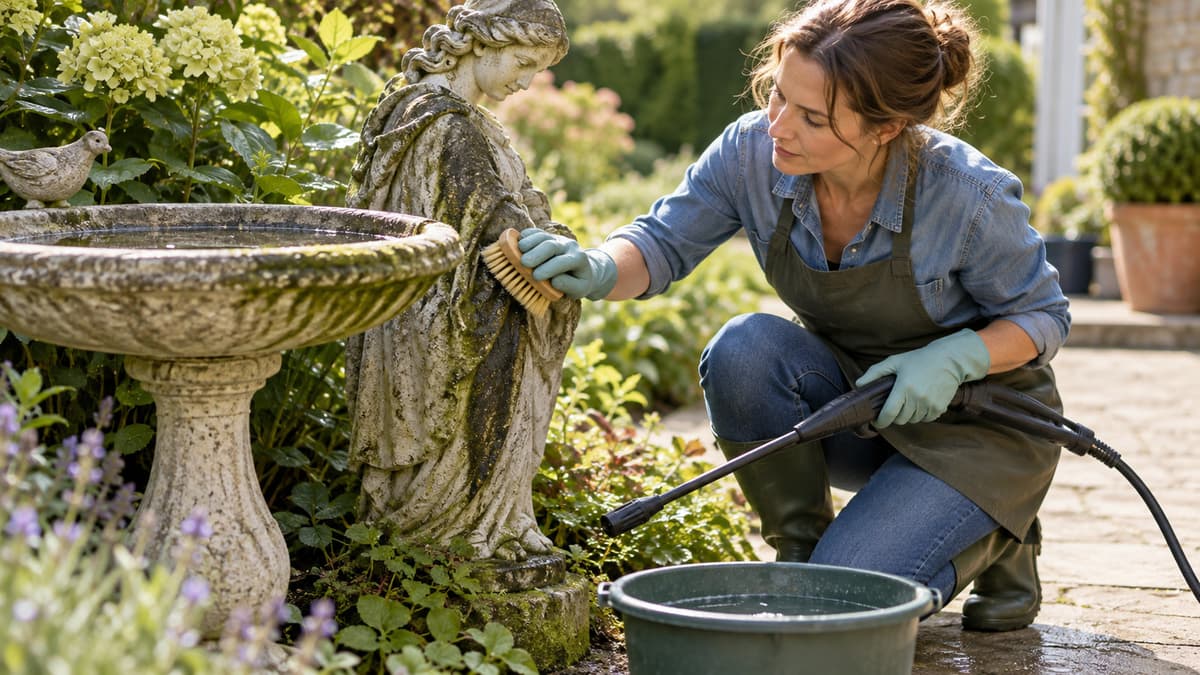
Clean algae off garden ornaments: a soft brush first
A soft brush and water come first on a bird bath or statue. A pressure-washer lance is a poor fit for a small casting.

Bleach on patio slabs: grass, clothes and the label
Bleach on patio slabs looks decisive while the stone is wet. UK reviews of the chlorine restorer record dead grass and bleached clothes.
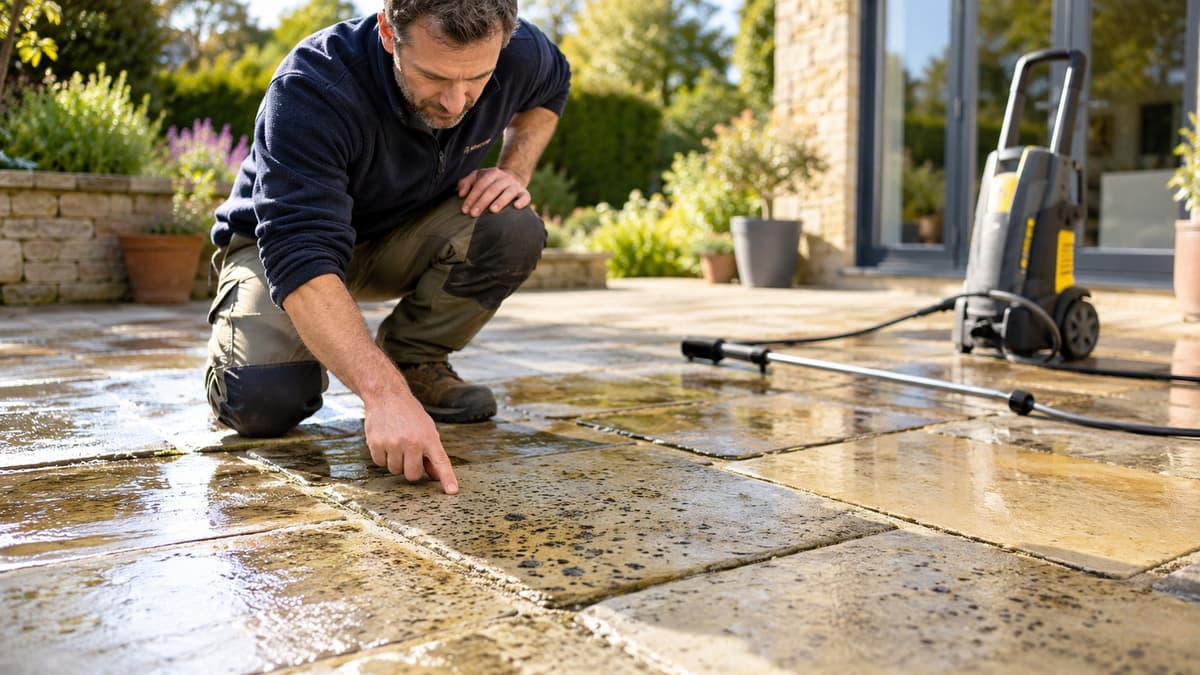
Black spots on patio slabs: lichen a wash leaves behind
Black spots on patio slabs are usually lichen in the pore. A closer pass with the lance leaves them where they are.