Acid on Indian sandstone: why grey flags turn orange

Hydrochloric patio cleaner rust-stains Kandla Grey, Raj, Camel and Autumn Brown. The orange iron mark is often permanent. Acid-free will not reverse it.
On this page

The patio cleaner is already mixed. The flags are Kandla Grey, a pale veil from pointing is still there, and the bottle says it is made for patios. Acid on Indian sandstone does not lift that film and return the original colour. Pavingexpert records that hydrochloric patio cleaners rust-stain Kandla Grey, Raj, Camel and Autumn Brown, and that the orange iron mark is often permanent. The same cleaners are a known risk on black limestone, and a second wash leaves the orange where it is.
Name the stone before you pour anything. Lithofin's UK cleaning note places lime stones, some sandstone and slate, concrete, some siliceous stones, dark grout and certain metals on the acid-sensitive list, so one sentence about natural stone misses the flag under your feet. Products Compared drew this page from Pavingexpert, London Stone, that Lithofin note and the Health and Safety Executive's guidance on corrosive pictograms, on 15 October 2026. There is no laboratory test here. A purchase through a comparison link can earn us a commission at no extra cost to you.
In short
Hydrochloric patio cleaner rust-stains Kandla Grey, Raj, Camel and Autumn Brown, and it is a known risk on black limestone. The orange iron mark is often permanent, so keep vinegar and brick acid off limestone too. An acid-free label, including on HG cement film remover, leaves that rust in place, and cured cement can remain.
Which stones rust with hydrochloric acid
The names that matter are on the delivery note. Pavingexpert ties hydrochloric patio cleaners to rust stains on Kandla Grey, Raj, Camel and Autumn Brown, the pale imported sandstones common on British patios. Black limestone is on the same warning. If the invoice says Raj and the border is black limestone, both materials refuse that bucket. Calling the whole terrace natural stone sends one mix across two chemistries.
Kandla Grey can look like dusty concrete until rain darkens it, and that wet shade is the stone. Autumn Brown already carries warm tones, so a new rust mark hides until you stand a treated flag beside one you left alone. Test a labelled cleaner on one edge flag you can bear to see if the colour shifts. If you cannot name the flags, leave the hydrochloric acid in the shed.
Pavingexpert's record covers these imported sandstones and black limestone, not every sandstone in Britain. Siliceous stone differs from a lime stone, so one calcium rule does not describe a mixed terrace.
What the orange mark is
Orange stains after using patio acid on Indian sandstone are iron staining. Pavingexpert describes hydrochloric cleaners leaving a rust colour in these stones, and treats the mark as often permanent. It can show within a day. While the flag is wet the orange looks softer, and a second dose feels like the obvious next step. Once the stone dries, the rust reads clearly against Kandla Grey or Raj, and that second dose has only carried it further.
A rinse or another bottle with patio on the front leaves the original face where it was. This page will not invent a reversal. If the terrace has already turned, stop pouring and ask a paving contractor whether any of the face is worth saving. That is a repair conversation, separate from a stronger cleaner.
Judge the stain in daylight, on a dry flag, beside a dry flag the acid never touched. Wet sandstone is darker, so an evening look hides the real colour. In October a full dry can mean the next day. Photograph the pair once they are dry if you need to show what changed.
Vinegar and brick acid on limestone
London Stone is plain about limestone patios: no vinegar, and no brick acid. Brick acid is the hydrochloric cleaner sold for cement on masonry, the chemistry Pavingexpert ties to rust on the Indian sandstones above. London Stone also wants a patch test, because the liquid can mark the stone and a sealer already on the flags can react. Use one edge flag, the dose on the tin, then a dry comparison. A splash in the middle of the terrace tests the stone you walk past every morning.
Limestone's ban does not turn sandstone into a lime rock. The named sandstones take Pavingexpert's warning on hydrochloric cleaner and iron staining. Some sandstone sits on Lithofin's list without being limestone, and so do dark grout, concrete, and metal under a chair or on a drain grate.
Kitchen vinegar feels harmless because you eat it. On a limestone border it is still refused, and on the named sandstones the documented harm is hydrochloric patio cleaner. If the label never mentions sandstone or limestone, put the bottle back. The buying guide sets acid-free wording, a named surface and dilution side by side.
Acid-free is a label, not a guarantee
Acid-free is a claim on a label or a listing. The seller presents the liquid as something other than an acid cleaner. The line does not name your patio or pull iron staining out of the face. HG cement film remover is listed as acid-free for cement and lime film. Cured cement can remain, and orange staining on Kandla or Autumn Brown stays put.
Lithofin already places some sandstone on that acid-sensitive list. A bottle can be acid-free and still mention only granite, or only polished marble indoors. If sandstone is absent from the back, the acid-free line has not approved Kandla, Raj, Camel or Autumn Brown. Wind, joints and runoff sit between an indoor floor and a patio, and the tin has to say where the liquid goes.
Treat acid-free as the listing words, not as a measurement this page made. When the front disagrees with the pictogram or the surface list, follow the back. Check whether the tin says acid-free, which stones it names, and whether you must dilute.
Cement film without reaching for acid
People open brick acid because new pointing leaves a pale veil and a few hard lumps. That veil is cement film. Hydrochloric cleaner is the wrong tool on Kandla Grey, Raj, Camel, Autumn Brown and black limestone. The substitute in these notes is HG cement film remover, listed as acid-free and sold for that film. Cured cement can remain, and a longer soak is not a promise these sources make.
When the film is still there after the first pass, people reach for the hydrochloric bottle, and that switch turns the haze orange. Leave the lumps that have set. Outdoor flags are on the patio and paving page, and the bottles sit in the stone cleaner comparison. Follow the dilution on your tin.
- Test one edge flag, and leave the next flag untouched.
- Wet the stone only if the label says so, then apply the printed dose.
- Wait out the dwell on the tin, then rinse.
- Compare the flags in daylight only once they are dry.
- Stop if the dry patch turns orange or you reach for brick acid.
A film remover will not clear green growth or fade rust. One orange patch ends the afternoon.
H318 and H319 in plain language
The Health and Safety Executive separates two eye warnings on cleaning products. H318 means serious eye damage and carries the corrosive pictogram, so eye protection matters because that liquid can destroy eye tissue. H319 means eye irritation and carries the exclamation mark. Patio on the front does not tell you which code is on the back.
No full CLP label was transcribed from the bottles in this set, so the split above is the HSE's guidance rather than the panel on your tin. A cleaner without a large danger word on the front can still be H318. Turn the bottle, find the code, and keep a corrosive pictogram off your eyes and skin. The orange stain harms the flag and leaves that eye warning in place.
Read the back before you dilute anything. Note the H code, the pictogram, and whether the list names sandstone, limestone, or only a stone you do not have. A print with no back panel is not a label you can follow, and the comparison cannot replace the tin in your hand. When the code says H318, wear eye protection even for a cement film.
Common questions
Can I use brick acid on Indian sandstone?
Why did my grey patio turn orange?
Is the orange stain on Indian sandstone permanent?
Is vinegar safe on sandstone?
What does acid-free on a label mean?
Can I use the same acid on black limestone?
Which cleaner is for cement if acid is banned?
How do I read a corrosive label on patio cleaner?

Products Compared publishes British-English buying guides based on amazon.co.uk listings and public UK sources. We do not run a lab and we do not invent test scores.
Related articles
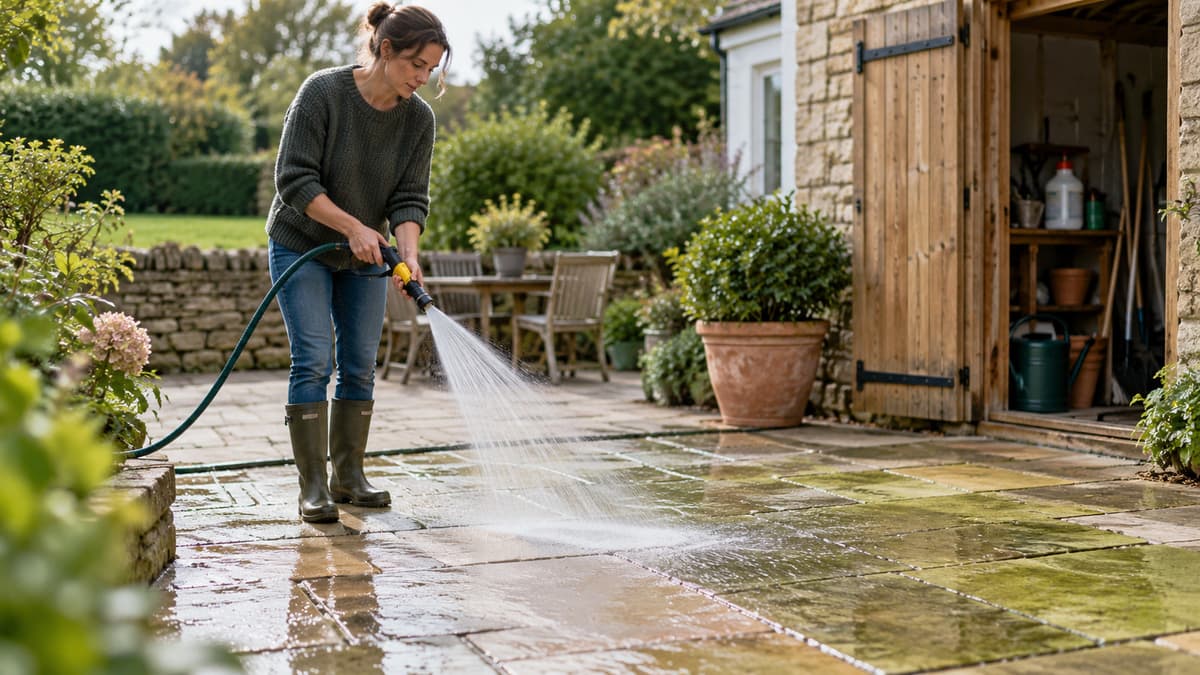
How to clean a sandstone patio
Sweep, name the mark, and wash from a distance. Keep hydrochloric acid off Kandla, Raj, Camel and Autumn Brown.

Bleach on garden stone
Household bleach and a chlorine restorer can mark plants and clothes even when the listing sounds gentle.
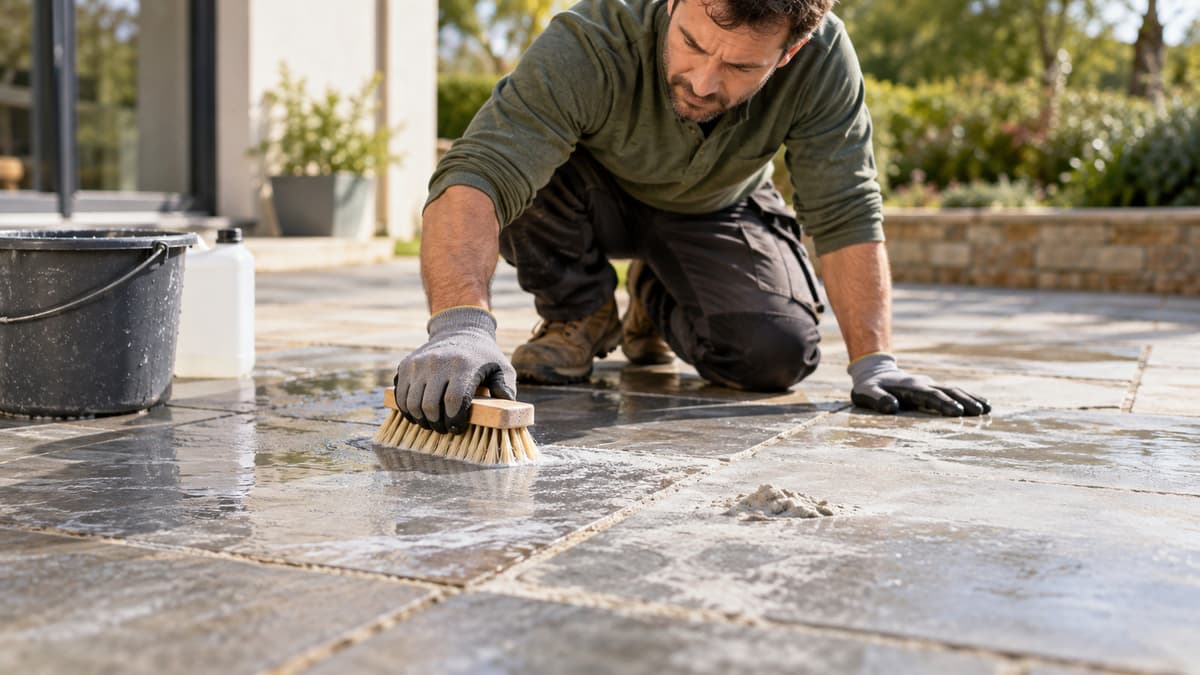
Cement haze on new paving
A pale film after pointing is cement. An acid-free film remover can leave cured lumps, and brick acid can rust the stone.