Independent comparisons. We may earn from shop links. More info

Flue pipe fan vs stove top fan

Updated: 22.10.2026

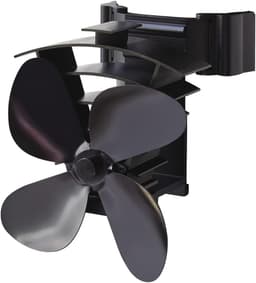
You have not decided where a heat-powered fan should sit, and amazon.co.uk shows both machines in one search. One clamps to a magnetic flue. One stands on the stove plate. A flue pipe fan vs stove top fan choice is about the surface you can heat, not about blade count. This comparison keeps only pipe fans. Stovetop models were taken out of the [magnetic stove fan comparison](/hub/fireplaces-and-stoves/magnetic-stove-fan) because they are the other category. The notes use maker guidance and listings captured on 19 October 2026, not a lab test. A qualifying purchase can earn a commission at no extra cost to you.

You have not decided where a heat-powered fan should sit, and amazon.co.uk shows both machines in one search. One clamps to a magnetic flue. One stands on the stove plate.

Our top picks

Signstek Signstek CF6-T pipe fan

Alternative

Signstek Signstek CF6-T pipe fan
5.5/10about £31.44
On this page

Same idea, different surface

Both fans use a thermoelectric module. Heat on one face and a cooler face toward the room spin the blades. No battery and no mains plug is true only while that hot face is actually hot. A stovetop fan wants the plate. A flue fan wants the outside of single-wall pipe. A plate fan on cool stone sits still. A pipe fan on stainless twin-wall falls off, or the outer skin never feeds the module. A review count on the wrong mount does not transfer. Ecofan’s airflow figures and fuel-saving percentages belong to Ecofan models. They are not a result for a Remora or a Drcokars clamp.

When the stovetop fan is the one to buy

Buy a stovetop fan when the top is flat, gets properly hot, and has room at the back or the side. Ecofan’s UK guidance puts the fan there, not in front of the flue, and not on an insert. AirMax is described as giving useful airflow from about 85°C. Wood-burning Ecofan models are to come off above 345°C. Those limits are Ecofan’s, not a range for the pipe fans here. A steel-top log burner with a clear back corner is the concrete case. Lift the fan off if the top is over-fired. Do not stand it in the plume in front of the pipe. If the top fails flat, hot or clear, stop reading plate-fan reviews. A cool or crowded top is covered on stove fan for a cool top.

When the flue fan is the one to buy

Buy a flue fan when the top cannot do that job and the pipe can. No flat top, soapstone, a boiler stove with a cool plate, angled enamel, or a top you need for pans: those are the Remora reasons. The pipe still has to pass a cold fridge-magnet test, be single-wall, and get hot on a normal fire. Valiant’s shop page talks about magnetic pipe of about 4–7 inches. Drcokars prints 12–15.5 cm. If the magnet falls off, there is no flue fan in this set. The air is often gentler. Remora reviewers who like the clamp also call the draught faint beside a plate fan. The main table has five pipe fans and no Ecofan ASIN, so a 4.4 pipe listing is not a verdict on plate fans. Fitting is how to fit a magnetic stove fan. If the magnet is still in doubt, the buying guide is the refuse-or-proceed step.

Using both, and what neither fan does

Some households add a pipe fan beside a plate fan. One UK Drcokars review says that. A second fan is optional after the first has shown you what a small module can do. Neither fan fixes spillage, a blocked chimney, or a missing carbon monoxide alarm. For a fixed solid-fuel appliance in England, the alarm standard is BS EN 50291. The blades do not sense gas. A battery fan, or a magnetic cruise-ship fan, is a different product and was not kept. Flat, hot and clear at the back: buy a stovetop fan. No usable top, with a hot magnetic single-wall pipe: buy a flue fan, and expect a modest push of air.

Common questions

I have a flat steel top. Which type?
Buy the stovetop fan, and put it at the back or the side, not in front of the pipe. The plate is the hot face that type is built for, as long as the top gets hot and you can lift the fan off if it exceeds the maker’s limit. A flue fan is the extra, not the first buy, when the top already works.
I have no flat top. Which type?
Buy a flue fan only if a fridge magnet holds on single-wall pipe and that pipe gets hot. Soapstone, a sloped enamel top, and a missing flat plate are the usual reasons. If the magnet fails, neither row in a mixed amazon.co.uk search is the right machine, and you should not force a plate fan onto a curve.
Will either type cut my logs by a set percent?
Do not take a percentage from a fan listing or from another brand’s manual. Ecofan prints fuel-saving figures for Ecofan models. They are not a measurement of the Remora or of a generic pipe clamp, and our files do not contain a UK test that would let us repeat a number. Judge the fan by whether warm air reaches the room you sit in.
What about a battery fan with magnets?
That is a different product. The fans in this comparison are heat-powered, with no battery in the bullets of the pipe listings we kept. A magnetic cruise-ship fan was in the wider raw set and was removed. If the listing needs cells, or it is built for a cabin rather than a log-burner flue, it is not the choice this page is making.
Does the pipe fan replace the stovetop fan on a boat?
Only if the boat’s flue is the same sort of magnetic single-wall pipe and the stove top is a poor seat. One pleased Remora review mentions a boat, which shows the clamp can be used there, not that every boat stove should lose its plate fan. Test the magnet cold, watch for a faint draught, and keep the carbon monoxide alarm. The hull does not change the rule about stainless pipe.

Related pages

Sources

Public UK sources used for this comparison. amazon.co.uk prices, stars and review counts were taken from the listings on 19 October 2026.

  1. Valiant Remora product page (retrieved 19 October 2026)
  2. FIR350 user guide (retrieved 19 October 2026)
  3. Remora FAQ (retrieved 19 October 2026)
  4. Caframo Ecofan technical note (retrieved 19 October 2026)
  5. Approved Document J 2022 (retrieved 19 October 2026)
  6. Approved Document J carbon monoxide circular (retrieved 19 October 2026)
  7. GOV.UK smoke and carbon monoxide alarm booklet (retrieved 19 October 2026)
  8. BFCMA general guidance (retrieved 19 October 2026)