Wood burner glass black: fix the cold burn first

Soot on wood burner glass usually means a cold fire: wet logs, a shut airwash, or a weak draught. Clean it cold, then fix the burn before you buy a new pane.
On this page
You close the door on a new fire and, by the time the room is warm, the pane has a brown-black veil across it. Sometimes it is only a crescent along the lower edge. Sometimes you cannot see the flames at all. Wood burner glass black with that film is soot from a smoky fire, and it is the usual result of a cold burn rather than a pane that failed overnight.
Sort the fuel, the airwash, and the draught before you price a replacement, because a wipe takes off what this fire left but does not change the next one. HETAS ties a dirty pane to incomplete combustion: too little air, and unburnt particles settle on the glass and in the flue. Stovax's owner notes add slumbering, a weak flue, and wood wet enough to cool the firebox. Prices here are GBP from amazon.co.uk. A qualifying purchase can earn us a commission at no extra cost to you, though we did not laboratory-test your glass.
In short
Wood burner glass goes black when the fire smokes. Fuel wetter than about 20% moisture, an airwash left shut, logs against the glass, or a flue that will not pull will all do it. Open the airwash on a properly hot fire for about 10 to 15 minutes if the manual allows, clean only when the glass is cold, and buy a new pane only if it is cracked, crazed, or permanently stained.
Soot means the fire is not burning cleanly
The black on the glass is carbon that did not burn in the firebox. HETAS describes the airwash as air running down the inside of the pane so the surface stays hot enough, and supplied with oxygen, for those particles to burn off instead of sticking. When the wash is starved, or the whole fire is cool, smoke paints the door and the flue soots up with it.
Stove glass soot after one evening is a combustion problem, while a light haze after a fortnight of bright fires is maintenance. Homebuilding, reporting Logs Direct and a HETAS technician, says moisture is the cause owners meet most often, and that the glass still needs a clean on a schedule. Treat any "nine times out of ten" line quoted online as that report's phrasing, not a counted study. Abrasives scratch, so a bottle does not turn a cold fire and a fortnight's film into one job.
More air at the start means a faster fire and logs that disappear sooner. You can have a long dull slumber or a pane you can see through, not both for hours. If the manual states a minimum air setting for wood, that floor protects the flue as well as the view.
Fuel moisture, slumbering, and the airwash
Stovax's troubleshooting guide puts the moisture line under 20%. Wetter wood spends the heat boiling water out of the log, the firebox stays cooler, and the glass takes the soot. Wet wood is enough on its own to leave wet wood black glass. Dry wood is not a free pass: shut the airwash and the pane still blacks up.
In England, wood sold for domestic burning in volumes under 2 m³ should carry Ready to Burn, which Woodsure ties to 20% moisture or below. A bag can still sit in the rain or under sealed plastic and climb back over that line. If a log hisses or steams the glass, stop feeding that pile. "Kiln dried" in a title is not the logo on that pack.
The fix is a hot start, not a smaller colder one. Charlton & Jenrick say get the fire hot and avoid fully closing the airwash. Stovax says open it fully for about 15 minutes to clear a light film, and Charlton & Jenrick say around 10. Follow your manual if it differs, and only when there is a real flame. An airwash not cleaning glass over smouldering wet logs is doing what a cool box forces it to do.
Kindling is only the lighting layer. Dry sticks get the box hot, and our kindling comparison is for that job, not for a clear pane at 10 pm. No brand of sticks earns that claim. Stovax also rules out treated timber, pallets, and painted wood.
Logs, ash, and a weak draught
Stovax warns against logs touching the glass and against overfilling. A log on the pane blocks the airwash, so you get a black print along the bottom or one side while the middle stays clearer. That is the usual reason only the edge goes black. Pull the load back so air can run the full height of the door.
Ash can close the vents you think you have opened. Leave the bed depth your manual allows, and clear the rest before it covers the inlets. Wet-fuel ash is full of soot. Putting grit from that ash on the glass later is how a dirty burn becomes a scratched pane.
If the airwash is already open and the fuel is dry, Charlton & Jenrick say suspect the draught, and Stovax lists a weak flue and the weather with it. You cannot tell a blocked chimney from a wet log by colour alone. If smoke enters the room, stop, air the room, and get everyone outside if anyone feels unwell. Smoke at breathing height means a sweep, not a cleaner.
How to clean the glass without scratching
Clean when the stove is cold. A hot pane and a wet cloth is how people crack glass that was only dirty. To clean wood burner glass, HETAS suggests a purpose-made pad, or damp newspaper dipped in cool ash with no grit, because sand and clinker scratch. A ceramic hob cleaner is mentioned only with a non-scratch sponge. That is not permission to use whatever is under the sink.
Leave the razor and the oven cleaner in the cupboard. Neither is in that HETAS method, and a blade or a harsh gel can mark ceramic you then have to replace. If the manual bans abrasives, that includes mesh pads. Charnwood's Bay instructions ban pads, and SCHOTT limits a dry wiper to uncoated glass.
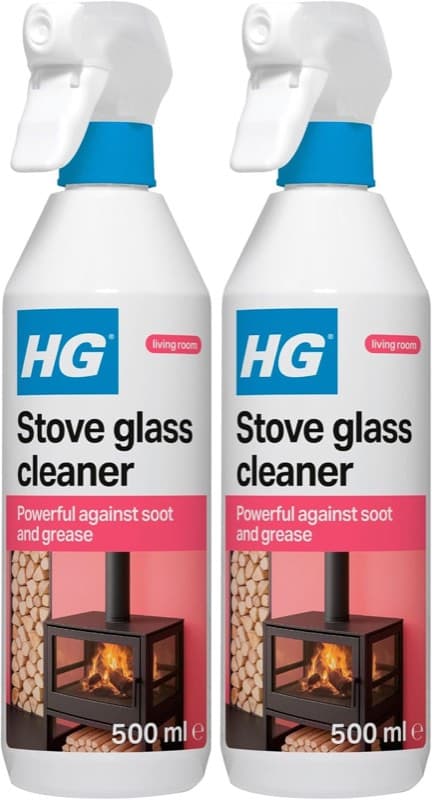
In our fireplace glass cleaner set, the top pick for review depth, when a spray is allowed, is the HG twin, model 431050106, at £17.98 with 4.5 from 5,571 reviews. Use it on cold or lukewarm glass for 3 to 5 minutes, and do not let it run. The listing is the HG stove glass cleaner. Foam lifts tar and also runs, so use newspaper and gloves. The safety data sheet classes that mix as corrosive, so skip it if you will not catch the drip.
RAKSO, at £6.70 with 4.3 from 5,180 reviews, is the best-value pad in that set when mesh is allowed and the glass is uncoated. Heavy tar can survive one pass. If the pane is clear at bedtime and black after the next lighting, moisture and air are still the problem.
When the pane itself is the problem
Soot sits on the surface, so it wipes or burns off once the airwash works. A scratch is a line you can still feel, crazing is a fine web, and a crack is a crack. White cloudiness that survives a proper clean is staining, which is stove glass cracked or stained rather than a dirty door. HETAS says you still clean on a schedule, and that abrasives scratch.
Do not buy the pane first. A new sheet in front of wet logs and a closed wash will be black by the weekend. Change the fuel and the air, then clean once cold. Order a replacement only when the pane is cracked, crazed, or etched, matched to your model and any coating the maker specifies.
The fireplace glass pages here are loose decorative glass for outdoor gas pits, not a stove-door pane. If the pane is cracked, do not light the stove. A cracked ceramic panel is a parts and safety job, not one more evening to see whether it holds.
Common questions
Why does the glass go black as soon as I shut the vents?
Is wet wood enough on its own to soot the glass?
Will opening the airwash for a few minutes clear a light film?
The logs are touching the glass. Does that matter?
Can I use oven cleaner or a razor scraper?
Is scratched or cracked glass the same as soot?
Should I replace the pane before I change the fuel?
Does kindling quality change the glass, or only the logs?

Peter F. is the editor for DIY & tools at productscompared.co.uk. Comparisons in this category are checked against amazon.co.uk listings, review evidence and public UK sources.
Related articles

When to book a chimney sweep
Smoke in the room, a soot smell, or a flue that will not draw are reasons to stop the fire and book a sweep.
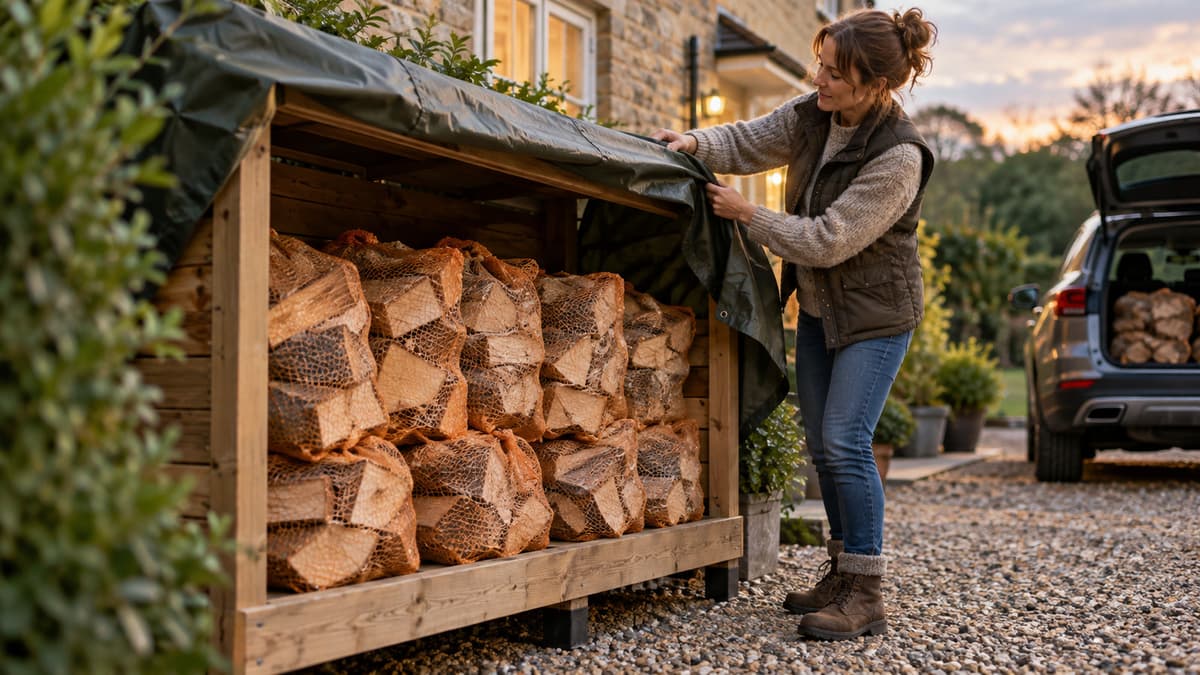
How to store kiln-dried logs
A dry bag soots the glass less often, but it goes wet again on the ground or under a sealed plastic cover.

Fatwood or kiln-dried kindling
A dry lighting layer gets the firebox hot. Resin sticks are a starter, not a substitute for dry logs.