Signs chimney needs sweeping: when to stop and book

Smoke in the room, a soot smell from a cold stove, or tar that will not wipe off means stop and book a sweep. Dry kindling will not clear a blocked flue.
On this page

You light the wood burner and smoke curls off the door, or the hallway smells of soot even though the stove has been out since yesterday. If you are looking up signs chimney needs sweeping, start with tonight, not the month on the calendar.
HETAS treats smoke in the room, a smell when the stove is unlit, tar at the flue entrance, soot falling into the fire, a worse burn with nothing else changed, and birds or scratching as reasons to stop and book. A new bag of kindling will not clear a flue that is already restricted.
Products Compared used the HETAS pages on sweeping, creosote, and smell, the Devon and Somerset Fire and Rescue Service note on open fires, and amazon.co.uk kindling listings priced on 20 October 2026. This is not a lab test. A qualifying purchase through our links can earn us a commission at no extra cost to you.
In short
Stop using the stove if smoke comes back into the room, the cold appliance smells of soot, tar will not wipe off, soot falls into the fire, the burn has worsened with no change in fuel or air, or you hear birds or scratching. Dry wood prevents fresh creosote. It does not clear a flue that is already restricted. Book a sweep who can show identification from a recognised solid-fuel scheme, and treat a carbon monoxide alarm as a reason to leave the house, not as a booking tip.
Signs that mean stop and book
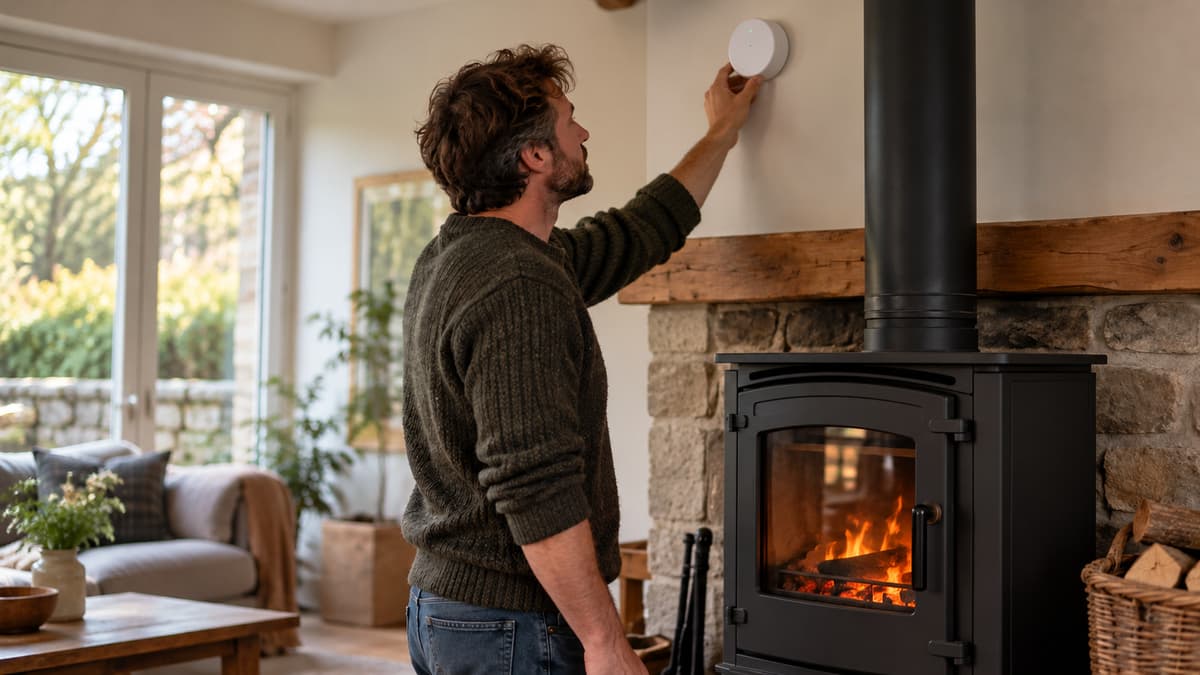
HETAS puts smoke that re-enters the room on the book-now side of the line. The flue is not taking the products away. Stop adding fuel, and do not light the stove again until a sweep has seen the chimney. If the room fills with smoke, get people out. A window is only for visible smoke, and only if you can open it without staying in it. If a carbon monoxide alarm sounds, or anyone has a headache, feels sick, or is unusually drowsy, leave the house first. Do not phone a sweep from indoors. Alarm standards are in carbon monoxide alarms for a stove.
A soot smell when the wood burner is not lit, soot falling into the fire, tar at the flue entrance, a burn that has suddenly got harder, and birds or scratching sit on the same list. Birds on the pot are not proof of a nest. They are enough reason to keep the fire out. Wet logs and a nearly shut air control also make smoke, so check those first. If the fuel is dry, the air is open as the maker expects, and the smoke or the cold smell remains, book. Do not keep burning.
Smell, tar, and soot
Creosote is tar left when smoke from a cool fire condenses in a cool flue. HETAS lists a sharp sooty smell, tar-like marks, a light tinkling as pieces fall after the fire, and a fire that is hard to keep alight. If the wood burner smells when it is not lit, treat that as deposits in the flue, not as a normal winter smell.
Ash from a hot burn is dry and comes off on a cloth when the stove is cold. Viscous tar smears and stays. HETAS uses that wipe at the flue entrance or on metal you can see with a torch. Do not scrape a failed wipe and carry on. Tar you can see is a sample of what may sit further up. Soot falling into the stove is darker than pale ash and arrives from above. A fireplace tool set lifts cold ash from the grate. It does not reach the pot.
HETAS links tinkling as the stove cools to deposits breaking off. One tick after a smoky light means look once the stove is cold. Repeated tinkling, with soot in the firebox, means stop and book. The sound does not tell you the thickness. Only a sweep can. Our sources state no national fee, so this guide does not invent one.
A poor fire that is not the fuel
A fire that is harder to light, with nothing else changed, is on the HETAS list. Another bag of sticks will not clear tar already in the flue. Dry fuel is still the right habit. In England, wood sold under 2 m³ for domestic burning should carry Ready to Burn at 20% moisture or below, with the supplier name and certificate number on the pack. Wet wood builds fresh creosote, which is why Devon and Somerset Fire and Rescue warn against it. A splitter does not repair a flue.
Light with dry sticks, firelighters rather than a heap of paper, air open, and the door closed once the flame is going. The top pick in our kindling comparison is Log Barn wood-wool firelighters, about £12.99 for 200 on amazon.co.uk on 20 October 2026, at 4.7 from 22,250 ratings. That count is not stated as UK-only. They light a fire. They do not clean a chimney. If dry kindling and open air still send smoke into the room, stop.
Black glass can be wet fuel in a flue that still draws. If smoke is in the room, the flue comes first. See why stove glass turns black after a sweep. Keep later fuel in a log store. Lignite briquettes do not excuse a blockage. If a second light on dry fuel draws and the cold smell is gone by morning, you may not have a nest. If smoke returns next evening, book.
Who should sweep the chimney
HETAS tells you to use a HETAS-approved chimney sweep and to ask for identification. It also names APICS, GoMCS, NACS, and Sweep Safe. A card from one of those schemes is the doorstep check. A logo on the van is not. If they cannot show it, book someone who can. These sources state no UK average fee, so we do not quote one.
Ask for the appliance, the flue or liner, and the pot when smoke has entered the room or a nest is possible. Ask what came down before you light again. Creosote, a nest, a damaged liner, or a cowl full of sticks are different findings. A householder set of rods does not show you a liner, and hard tar or a nest is not a practice run. A grate brush only lifts ash you can see.
Do not start a fire with petrol or paraffin, and do not burn paper and rubbish that can throw embers. Devon and Somerset Fire and Rescue are explicit on that. HETAS has cited 4,300 recorded chimney fires in England, Wales, and Scotland between April 2018 and March 2019. That count is for that year, not this winter. If you have no urgent sign, still book before you rely on the stove every night. The usual interval is in how often to sweep a wood burner. This page is for when that interval is already too late.
What to do while you wait
Leave the stove out until the sweep has been. If smoke is in the room and the carbon monoxide alarm is silent, ventilate once people are clear. If the alarm sounds, or anyone feels ill, go outside before you phone. The same no-fire rule covers a cold soot smell, a failed tar wipe, soot from above, tinkling, a worse burn, and birds at the pot.
Do not burn the chimney clear, and do not use accelerant or rod upwards while the firebox is warm. When it is cold, lift only ash you can see. Tell the sweep what you saw, and ask for HETAS identification or a card from APICS, GoMCS, NACS, or Sweep Safe. If the visit is days away, use heat that does not share that flue. Another solid-fuel fire into the same chimney is not a workaround.
Do not light a fire the night before so the house is warm for their arrival. Afterwards, one small fire on dry fuel with the air open is the test. Smoke in the room means you stop and call them back. A clean draw and no cold smell the next morning is when you put the next sweep on the calendar. A sweep can clear tar and a nest. They cannot dry wet wood.
Common questions
Should I stop using the stove if smoke comes into the room?
What does creosote smell like?
Are black marks inside the stove always tar?
I hear a light tinkling after the fire. Is that deposits falling?
The fire is harder to light but I changed nothing. Is that the chimney?
There are birds on the pot. Could there be a nest?
Can I sweep the chimney myself?
Does dry kindling fix a flue that is already restricted?

Peter F. is the editor for DIY & tools at productscompared.co.uk. Comparisons in this category are checked against amazon.co.uk listings, review evidence and public UK sources.
Related articles

How often to sweep a wood burner
Wood and smokeless fuel are not the same interval. Plan the year once the flue is clear and the urgent signs have gone.
Carbon monoxide alarms for a stove
When a solid-fuel stove needs an alarm, which standard to look for, and what to do if it sounds.

Why stove glass turns black
Black glass is often wet fuel or a closed airwash. It is a different problem from tar sitting in the flue.