Carbon monoxide alarm wood burner: when you need one
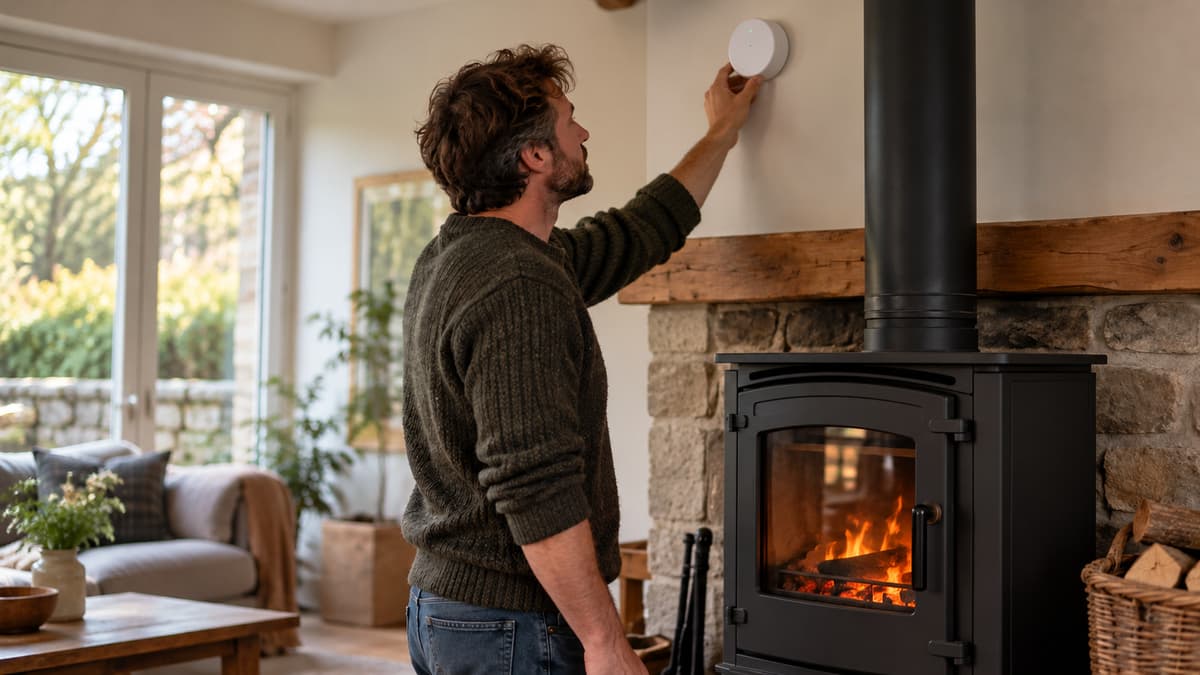
An existing wood burner is not automatically unlawful without an alarm. England splits building work, rented rooms, and where the alarm should be placed.
On this page

You have burned the same stove for years. The search you typed next was carbon monoxide alarm wood burner, after a forum thread said the house is unlawful until an alarm is on the wall tonight. The thread has mixed three jobs. England's building guidance attaches an alarm to the installation of a fixed combustion appliance. England's landlord rules attach one to a room that already has that kind of appliance. An owner-occupied house with an old stove, and nobody replacing it, is a third case.
A qualifying purchase through a link to amazon.co.uk can earn us a commission, at no extra cost to you. Peter F., editor for DIY & tools at productscompared.co.uk, followed the Department for Levelling Up, Housing and Communities circular on Approved Document J from 1 October 2022, the HETAS consumer FAQ, the Smoke and Carbon Monoxide Alarm (England) Regulations 2015 as amended, the GOV.UK booklet for private landlords and tenants, and the Welsh Government Approved Document J page. No alarm was lab-tested. This hub's kindling comparison does not list alarm products. Any price is the amazon.co.uk shelf price from the listing we saved, and shelf prices move.
In short
England does not treat every existing stove without an alarm as unlawful. The Approved Document J circular from 1 October 2022 expects a BS EN 50291 alarm when a fixed solid-fuel, gas, or oil appliance is installed, including a new or replacement appliance in an existing home. Landlords in England have a separate duty in any living-accommodation room with a fixed combustion appliance other than a gas cooker. Placement in the building circular is high in the room. The landlord booklet also mentions head height, so the two notes are not one diagram.
When building work expects a carbon monoxide alarm
The building-work trigger is the installation, not the age of the house on its own. The England circular, in force for this purpose from 1 October 2022, expects an alarm to BS EN 50291 when fixed combustion appliances are installed. That includes solid fuel, gas, and oil, in a new home and when the appliance in an existing home is new or a replacement. HETAS states the solid-fuel case for England and Wales: a new or replacement solid-fuel appliance needs an alarm in the same room.
A stove you have used for years, in a house you own and live in, is not that job. Transitional rules for work already under way around 1 October 2022 sit in the circular. If the install falls on that date, read the circular rather than a later summary.
The costly miss is a like-for-like swap treated as the same fire. A replacement stove in the old opening is the HETAS case, and so is a first stove where an open fire used to be. Book the alarm with the installer, in the same room, before the hearth is closed. A unit left in its box does not meet the note. Wales names BS EN 50291-1:2018 for flued fixed appliances, including rooms a flue passes through. Do not paste the England wall figures onto a Welsh job. Scotland and Northern Ireland are outside the England documents used here.
Rented homes in England
Landlord duty can apply to a stove that nobody is replacing. The Smoke and Carbon Monoxide Alarm (England) Regulations 2015, as amended, require a carbon monoxide alarm in any room used as living accommodation that contains a fixed combustion appliance other than a gas cooker. A wood burner in that room is on the appliance side of the line. A gas cooker is the named exception. A stove is not a gas cooker.
From 1 October 2022 the landlord has a repair duty after a report that an alarm is missing or not working. The GOV.UK booklet is written for private rented sector landlords and tenants. In social housing, read the amended regulations rather than treating the booklet's audience line as the whole duty. Report in writing the same day: the room, the appliance, and whether the alarm is absent, silent on test, or at end of life. Keep a copy. The repair sits with the landlord.
On a rented existing stove, follow the booklet and the instructions in the box. On the day a fitter replaces the stove, put the circular's power and position notes on the job sheet. One house can meet the landlord duty this week and still need the building note when the appliance changes.
Which alarm, and where the two notes differ
Battery, mains, and the mark on the box
For English building work, the circular asks for a battery that lasts the life of the alarm, with an end-of-life warning, or a fixed mains supply with a warning if the sensor fails. A loose cell you change every year is a different product, even with an approval mark on the carton. HETAS accepts mains or battery on new or replacement solid fuel in England and Wales, with a self-test and an audible fault warning. Test as the leaflet says. Replace the unit when it announces the end of its life.
The landlord booklet does not fix mains versus battery. Look for BS EN 50291 on an England building job. The booklet's wording is BS 50291. A quiet alarm does not certify the flue.
High on the wall, or at head height
The England circular wants the alarm on the ceiling at least 300 mm from any wall, or high on a wall and not within 150 mm of the ceiling, and 1 to 3 metres horizontally from the appliance. Measure to the stove. If the room cannot give you that distance, ask the installer and building control rather than standing the alarm on the stove.
The landlord booklet says follow the manufacturer, and it mentions about 1 to 3 metres and head height. Head height and a position within 150 mm of the ceiling are not the same spot. Use the circular for an installation or a replacement. Use the booklet and the manufacturer for the landlord duty in an existing rented room, and keep the leaflet.
If the carbon monoxide alarm sounds
Leave. Ventilate on the way out, and do not return until it is safe. That is the HETAS line this page follows. Opening a window and staying beside it is the wrong plan. This page does not give a reset sequence or a waiting time in the chair.
If anyone feels unwell, contact 999 or NHS 111. Symptoms are not a diagnosis you make beside the fire. Get people out, then make the call. Do not send someone back for a phone or to shut the air control. The alarm has not repaired the flue. A sweep or a fitter comes after the house is safe to enter. If the instructions say that event ends the unit, replace it.
What an alarm does not fix
An alarm warns. It does not dry the fuel or clear the chimney. A bag of kindling can make lighting easier, and it does not sense carbon monoxide. Buying it is not the moment the building-work duty appears. The kindling top pick here is the Log Barn box of 200 wax-wool firelighters, model KNIND-10, at £12.99 on the saved amazon.co.uk listing, 4.7 from 22,250 ratings, and that count is not stated as UK-only. See it on amazon.co.uk. It is a starter, not a BS EN 50291 alarm. Ready to Burn on that page is about the brand's wood, not these lighters.
A sweep certificate does not stand in for the unit on the wall. Keep the alarm up while you wait, and leave if it sounds. A boiler stove flued into the house is still a fixed solid-fuel appliance, so a new or replacement one needs an alarm in the same room under the HETAS note.
A freestanding pizza oven in the garden is outside those two England duties. An outdoor fireplace used for garden cooking is a different appliance from the sitting-room stove. Flue it into the house and the building-work case returns. An electric fireplace has no solid fuel and no flue, so these duties do not describe it.
Common questions
I already have a stove. Must I fit an alarm tomorrow?
What standard should a stove carbon monoxide alarm meet?
Should the alarm be battery or mains?
How far from the stove should the alarm go, and how high?
I rent a house with a stove. Whose job is the alarm?
The alarm sounded. Do I open a window and stay?
Does a pizza oven in the garden need a carbon monoxide alarm?
Will new kindling or a chimney sweep replace the alarm?

Peter F. is the editor for DIY & tools at productscompared.co.uk. Comparisons in this category are checked against amazon.co.uk listings, review evidence and public UK sources.
Related articles

When to book a chimney sweep
Smoke in the room or a cold soot smell means stop and book a sweep. An alarm does not clear the flue.

What you can burn in a smoke control area
Wood and a smokeless label are not an authorised fuel or an exempt stove. Check the council and the list.

How often to sweep a wood burner
Wood and smokeless fuel do not share one sweep interval. A sweep still does not stand in for an alarm.