Store kiln dried logs: keep a Ready to Burn bag dry
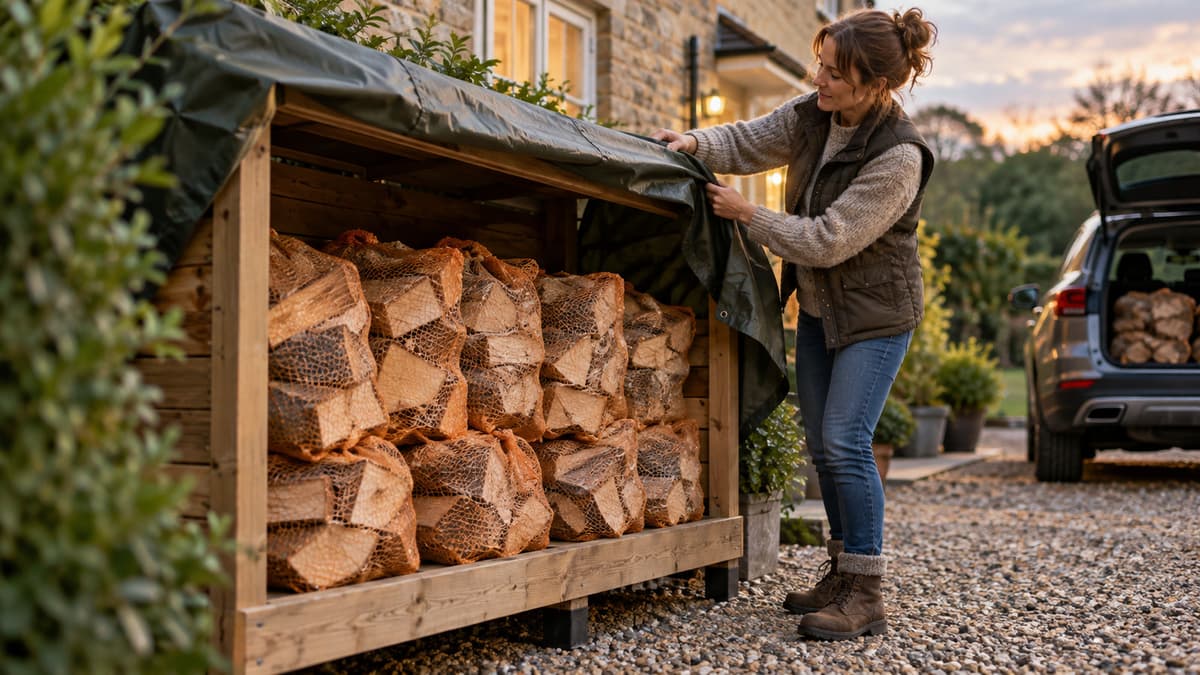
Store kiln-dried logs raised off the ground, under a top cover with the sides open. A sealed sheet or a damp patio can push the moisture back above 20%.
On this page

The crate is in the drive, and you want the nets under cover before dark. Store kiln dried logs as a condition you can lose. Defra’s seasoning note says kiln-dried wood can be ready the day you buy it, at about 20% moisture or below, when it is packed and kept dry. A Ready to Burn mark on a small retail bag in England describes the wood at certification. A wet fortnight on the ground changes that fuel.
Peter F. updated this in October 2026 from the Defra note, GOV.UK seller guidance for England, the Ready to Burn pin-meter note, and storage advice from Certainly Wood and Natures Fuels. We did not run an oven test. The rack later is the amazon.co.uk listing in our log store set. A qualifying purchase through an amazon.co.uk link can earn us a commission at no extra cost to you.
In short
Kiln-dried logs stay ready to burn while rain stays off the top, air moves at the sides, and the stack stays off soil and damp walls. A tarpaulin that seals the pile, or a plastic kindling bag left shut in a damp shed, puts moisture back. If the only spot is wet, order less and bring in a small pile for a few days before you light it.
Dry on arrival is not dry in February
Defra’s note on buying, storing and seasoning wood treats kiln drying as a way to arrive ready, and seasoned is not one fixed method. The February log is the October log plus whatever water the store added. A logo on the net does not cancel a wet porch. Ready to Burn storage is the weeks after delivery.
GOV.UK tells sellers of wood for domestic use in England to keep certified wood indoors, off the ground, or under cover, so they do not sell it wet. That page is a seller rule. After delivery, water still moves from wet ground, a sweating wall, and still air into dry timber anywhere in the UK. Natures Fuels is plain about the result: once moisture is back over 20%, the condition you paid for is undone.
Bulk logs want a ventilated cover for the months they sit. Open a kindling bag on the day it arrives. Reports on some Ecoblaze kindling mention condensation and a sizzling burn. Beads on the film mean that bag has started to undo the kiln. One brand’s reviews are not a verdict on every net in the shed.
Store kiln dried logs off the ground, with air at the sides
Cover the top so rain cannot sit on the cut ends, and leave the sides open so wind can carry damp air away. Certainly Wood and the Defra note both want that airflow. A store sheeted on every face looks tidy and goes musty. The sheet is a roof. The open sides keep the wood near the moisture you paid for.
Keep firewood off the ground. Soil wicks into the bottom course, and a damp wall does the same to the back row. Certainly Wood and Natures Fuels want the stack raised, off grass and off walls. A slab stops splash and still holds puddles, so flat logs are on the ground in all but name. A pallet, bearers, or an open-bottom rack lets air under the first layer. Move it if the feet stand in a puddle.
A tarpaulin on a log store works when it covers the top and slopes so water runs off. A sheet to the ground on every side seals the pile. On a mild day the wood gives up moisture, the sheet holds it, and the underside wets the top course. Leave a hand’s width off the fence and off the house wall. That gap is the log store airflow.
Garages, baskets, and sealed bags
You can store kiln dried logs in a garage only when the room is dry. Certainly Wood’s limit is dry air, with the wood off a damp wall. A wet car, a leaking door, and a stack on bare concrete are a slow patio. Put the logs on bearers, leave a gap at the wall, and air the space on a dry day. A garage that smells of damp plaster will share that moisture with the timber.
Bring in a basket for the next two or three nights, which is the Natures Fuels habit, and leave the winter delivery outside. Skip a humid kitchen and the bathroom. Logan’s Logs adds a humidity caution. Treat it as a seller tip, and keep the main stack out of steamy rooms. After a few days, burn the basket or return the surplus to the ventilated store. A month beside drying laundry lets dry logs pick up household moisture again.
Leave mesh nets on the logs, because they breathe, and take sealed film off on delivery day. Open a kindling bag and look for droplets. Kindling bag condensation means the sticks have sat in damp air. Spread them somewhere dry before you light them. A title that says kiln dried does not override water on the film. Bags and lighters are in our kindling comparison.
A moisture check before you blame the stove
Black glass, a sulky fire, or a hiss is often wet fuel, and the store is a common place that water got back in. Use a calibrated pin meter on a freshly split face. That is the home method in the Ready to Burn consumer note. Bark reads the weather face, so test the new face, the bottom course, and the row against the wall.
Woodsure auditors use an oven test when they certify. A pin meter is a check, not that certificate. You are asking whether the stack is still around Defra’s 20% mark for wood burned at home, or storage has pushed it up. A wet base under a dry top points to the ground. A sealed sheet points to airflow. Hold the wet logs back and raise the stack. A blocked flue is a different job.
Buy less if the only spot is wet
If the only place is a wet yard, buy less wood. Natures Fuels is direct: a smaller order beats a large one you cannot keep dry. Two nets you burn while they are still dry give more heat than a builder’s bag left on the grass through November. Kiln-dried wood can go on the fire in the week it arrives. A season of it, left where the kiln’s work reverses, will not match the advert in February.
When you have a wall and hard standing, sort the structure before the next bulk load. The log store comparison lines up racks from amazon.co.uk. The top pick is the VOUNOT adjustable log rack, at £30.39, with 4.3 from 1,451 reviews. Heights are 40, 53 or 65 cm, and widths run to 150 cm.
It is an open powder-coated frame, about 8.2 kg, with no waterproof cover in the box and no stated capacity in cubic metres. The rack lifts logs off the slab. A winter stack still needs a porch or a tarpaulin over the top only.
Wood briquettes swell when they take on damp. HETAS says to keep them indoors and dry, out of an open log store. Lignite briquettes are a different fuel from these logs, and this site does not compare them. The rack here is for logs.
Set the stack in one afternoon
Choose a patch that drains. If the feet would stand in a puddle, shift the rack or lay bearers, and check that the base does not rock. Logs that fall in the dirt often end up on the fire, and that puts grit in the stove. Stack with the cut ends toward the open side, and stop before the pile touches the house wall.
Fit a top cover that stops short of the ground, and tie it so a gust cannot drag it down the sides. On delivery day, open sealed plastic and move two or three days of logs indoors. Leave the rest outside. After a wet week, raise a dark bottom course, empty a sweating kindling bag, and check a split face with a calibrated pin meter. Sealing the sides is what costs the kiln.
Common questions
Can I leave kiln-dried logs in the plastic they arrived in?
Is a tarpaulin over the whole stack a good idea?
Will a garage keep kiln-dried logs dry?
How long can a basket of logs sit by the stove?
The bag of kindling is wet inside. Is it still Ready to Burn?
How do I check moisture without a lab?

Peter F. is the editor for DIY & tools at productscompared.co.uk. Comparisons in this category are checked against amazon.co.uk listings, review evidence and public UK sources.
Related articles

What a winter of logs costs
A winter order is cubic metres, not one net. Wet wood after a dry delivery wastes the volume you paid for.

Fatwood or kiln-dried kindling
Resin sticks light fast. A sealed kindling bag that has sweated is a storage problem before it is a fuel choice.

Why stove glass turns black
Wet logs are a common reason the door glass blacks up. Storage is where that moisture often gets back in.