Ready to Burn firewood: what the logo and 20% mean
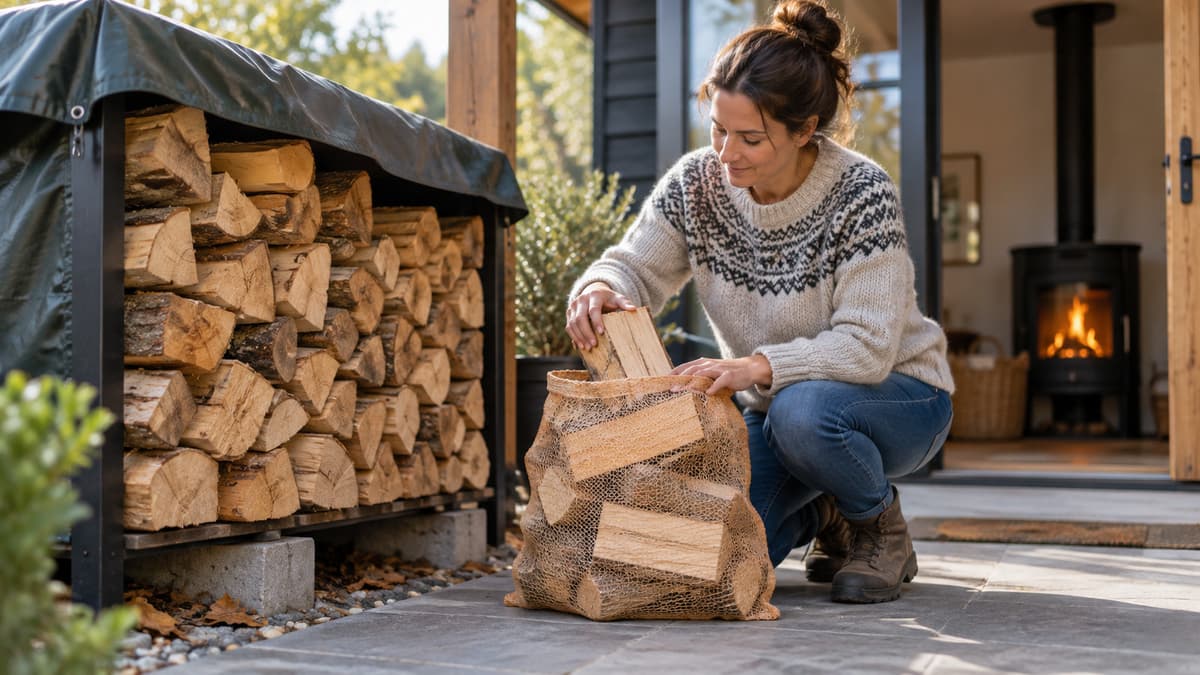
In England, wood under 2 cubic metres must be Ready to Burn at 20% moisture or less. Larger loads need the drying notice, and kiln dried is a separate claim.
On this page
The net of logs is already in the porch, or you are looking at a bag with kiln dried printed larger than the brand. Ready to Burn firewood is the England label for whether wood sold under 2 cubic metres was certified at 20% moisture or less. A load of 2 cubic metres or more follows a printed notice instead of that logo.
In short
In England, GOV.UK says wood fuel under 2 cubic metres may be sold only if it is certified Ready to Burn, confirming 20% moisture or less. Larger volumes skip that certification and still carry a statutory notice on drying, storage, and a moisture check. The two-year drying line is the wording of that notice, not a laboratory result for the log in your hand.
What 20% moisture and the logo mean
Ready to Burn is the scheme Defra appointed HETAS and Woodsure to run. Since 1 May 2021 it has been the route for small volumes of domestic wood in England under the Air Quality (Domestic Solid Fuels Standards) (England) Regulations 2020. Certification confirms a moisture content of 20% or less. The supplier audit takes a pin-meter reading, then splits sample logs, weighs them, dries them in a controlled oven for at least 15 hours, and weighs them again. That oven work checks the supplier. It is not a job for your kitchen oven.
The label is three details. GOV.UK requires the approved logo, the supplier's company name, and the unique certification number, on the pack, beside the wood, or next to the price. Online, the logo has to appear where that fuel is advertised. You can check the number against the list Woodsure holds. Kiln dried, seasoned, or hardwood describes a species or a drying story. On a volume under 2 cubic metres the England mark is the logo plus those two identifiers. Each certification lasts 12 months, with an annual test.
The logo does not lock the moisture if the nets then sit in the rain. GOV.UK tells sellers to keep certified wood indoors, off the ground, or under cover, and to rotate older stock first, because poor storage can push it back over 20%. A seller can receive a £300 fixed penalty, or a larger court fine, for wood stored over 20% moisture or for a missing or incorrect logo. A small volume without the logo, the name, and the number should not be on the shelf.
Bags under 2 cubic metres and larger loads
Below 2 cubic metres the wood has to be certified before it is sold. GOV.UK applies that to firewood and wood briquettes, as a single bag or a loose delivery that stays under the line. Ready to Burn also covers kindling. A loose load that crosses 2 cubic metres follows the other rule.
At 2 cubic metres or more the seller does not have to certify the load. Schedule 2 of the 2020 regulations is the set form of words the customer must receive. The notice says the wood is unsuitable until it has been dried, and that you should not burn it until moisture is 20% or less. Wet wood produces smoke and harmful particulates, can damage the stove and the chimney, and heats the house inefficiently. Dry it for at least two years in a sunny, well-aired space, and keep the rain off in winter.
Radial cracks and bark that comes away easily suggest the wood is ready. You still test a freshly split face with a calibrated moisture meter. The two-year sentence is that notice, not a lab certificate for your oak, ash, or softwood. A sheltered stack of split softwood can be further along than thick rounds that never saw moving air. Two years under a tarp pegged to the soil can still leave the middle wet. The seller may add a note that the wood is already dry. The notice stays.
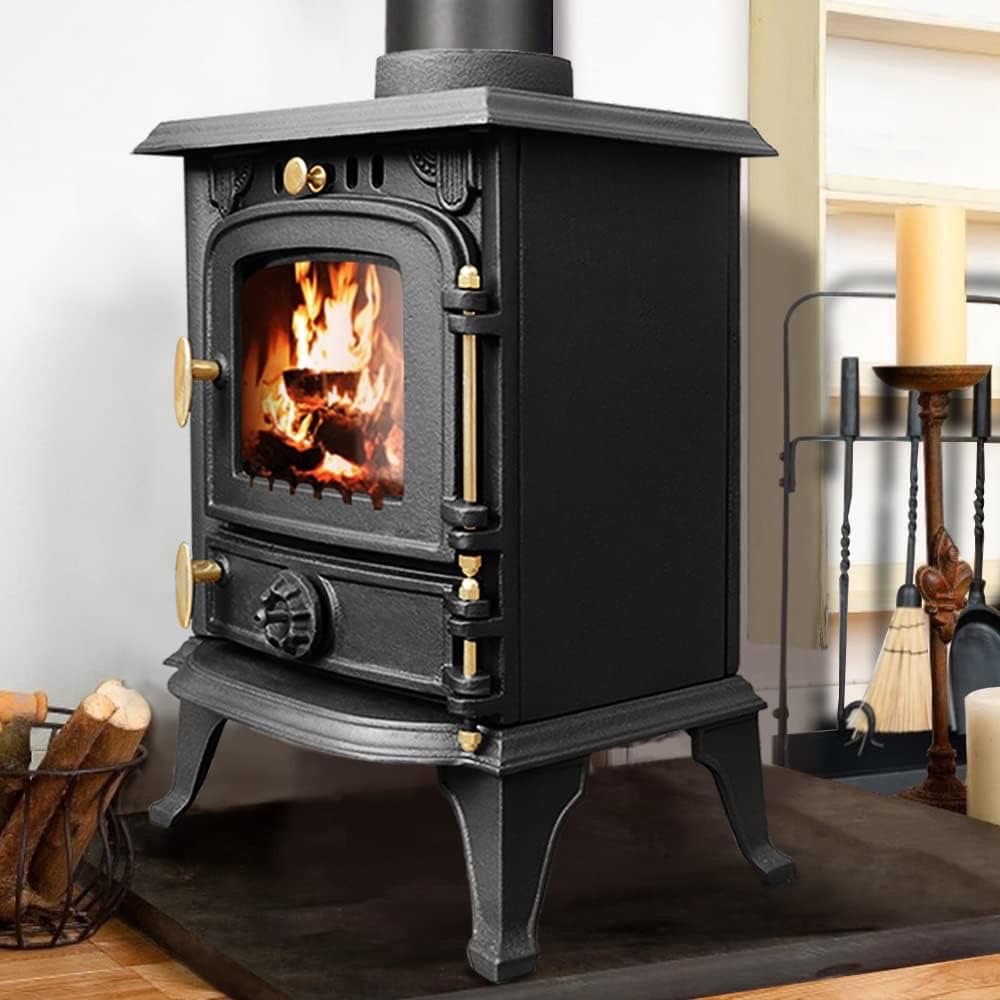
This sales rule is England's. It is not stated here as the law in Scotland, Wales, or Northern Ireland. Smoke control is a separate limit inside England: wood goes only in an appropriate exempt appliance. A certified bag can still need an exempt wood-burning stove on that street. The top pick there is the NRG 4.5 kW, about £238.99, with 4.6 from 30 amazon.co.uk reviews. Its listing says DEFRA approved, and that line was not matched to the exempt list.
How to store logs and check a split face
If the wood arrived certified, keep the moisture you paid for. A concrete slab wicks water into the bottom layer, so store off the ground. Schedule 2 tells buyers of larger loads to keep rain off in winter, and GOV.UK tells sellers the same idea: indoors, off the ground, or under cover. Air has to move. A plastic sheet pinned tight on every side turns the pile into a tent. Leave the sides open. A day or two indoors lets surface rain leave the bark of a log that is already at 20% or less. It will not dry the centre of a sodden round, and it is not a stand-in for two years under cover.
Test on a freshly split face after you calibrate the meter. Bark is the wrong face. Check more than one log, including the bottom and the heart of a large load. Cracks and loose bark only suggest readiness. With no meter, hold an uncertified bulk load until you can test it. The scheme's audit happened at the trade. It is not a sensor in your log store six weeks later.
What wet wood does to the stove and flue
Moisture in the log becomes smoke and harmful particulates. The notice says this can damage the stove and the chimney and heat the house inefficiently. A wet log hisses, the glass clouds, the flame stays lazy, and the room takes longer to warm because part of the fire is driving water off as vapour. Cooler, smokier flue gas is when deposits settle. A kettle-like tick from the log ends is water leaving the wood.
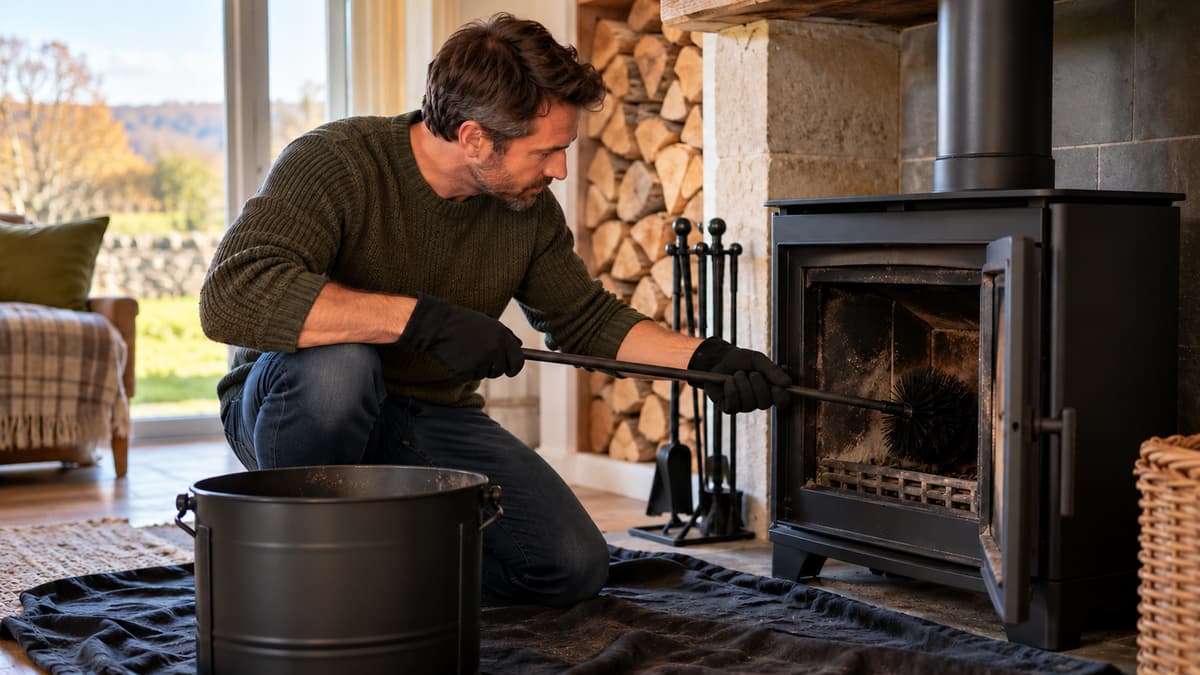
Ready to Burn says to have the chimney swept at least twice a year when you burn wood, by a registered business, and to follow the clearance in the stove manual. A sweep clears what has already landed. Timing is covered in how often to sweep a wood-burner chimney. Wood at 20% or less is what keeps that smoke out of the flue. A cold chimney can smoke for an hour on dry wood, so one poor lighting does not prove the stack is over the line. If the fresh face reads over 20%, leave that log out. Parking it in the firebox to finish drying bakes steam into the flue.
Why a stove fan will not dry the logs
A heat-powered stove fan moves room air once the stove top is hot. It has no path into the water in a log. Wet fuel leaves a cooler top, which is when this kind of fan struggles, because its electricity comes from the heat under the base. Turning blades do not pull a meter down to 20%. Still blades over a hissing fire are a cool plate.
The stove-fan comparison's top pick is the Valiant FIR361, B00LEO7W7U, at £39.99 on that listing, with 4.5 from 2,228 reviews. The box has the fan and a one-year warranty, and no thermometer. Valiant's sheet puts it at 199 mm tall, with a start around 50°C, an optimum of 80–250°C, and a maximum of 340°C. The listing's 8 × 7 × 4 cm size clashes with that 199 mm figure. The 340°C line is the fan's limit, not the stove's. If the top stays below the stated start, the blades can sit still over wet logs.
A qualifying purchase through our links can earn a commission at no extra cost to you. Products Compared has not moisture-tested firewood and has not run a stove or this fan in a lab. The 20% line and the notice are from GOV.UK and Schedule 2. Prices and review counts are from those amazon.co.uk listings. The fan height and temperature band are from Valiant's sheet. For a small bag in England, look for the logo, the supplier name, and the number. For a larger load, keep the notice and read a split face before you light it.
Common questions
What does Ready to Burn mean?
What moisture is dry enough to burn?
Does every load of logs need the logo?
How do I check firewood moisture?
Is kiln dried the same as Ready to Burn?
What does wet wood do to the chimney?
Does the Ready to Burn rule apply outside England?

Peter F. is the editor for DIY & tools at productscompared.co.uk. Comparisons in this category are checked against amazon.co.uk listings, review evidence and public UK sources.
Related articles

Smoke control area log burner: two checks before you buy
The logo covers fuel sold in England. A smoke control area still limits which stove you may burn wood in.
How often to sweep a chimney wood burner: the HETAS split
Sweeping clears deposits wet wood leaves in the flue. Dry fuel at 20% moisture is what keeps that smoke down.

Stove fan not spinning: heat, place, or failure
A heat-powered fan needs a hot stove top. Damp logs keep that top cooler, so the blades can stay still.