Independent comparisons. We may earn from shop links. More info

Slow release vs liquid fertiliser: which one to buy

Updated: October 2026

You have peat-free compost in the baskets and a choice between one spring charge of granules and a fortnightly watering can. Slow release vs liquid fertiliser is a job split, not a contest for which feed is stronger. Granules buy time. Liquid buys control. The [slow release fertiliser comparison](/hub/fertiliser-soil-and-bark-mulch/slow-release-fertiliser) holds the seven granule listings. This page is the pair: when to charge the compost, when to mix a can, and how to use both without stacking full rates. A purchase through our links may earn a commission. This is not a laboratory test.

You have peat-free compost in the baskets and a choice between one spring charge of granules and a fortnightly watering can. Slow release vs liquid fertiliser is a job split, not a contest for which feed is stronger.

Our top picks

On this page

What each one is for

A coated or blended granule is a compost charge. You mix it at potting, or you top-dress and water in, and the pack claims three or six months. Which? notes that a compost’s own base feed lasts about three to four weeks, which is why a pot needs that charge at planting. Westland Boost reviews call the 2 kg tub a useful alternative to liquid in containers. Topline’s bullets name baskets and containers and say water in to activate. A liquid is a decision for this week. You dilute it and pour, then you decide again in seven to fourteen days. The RHS treats liquids as the tool for containers you want to steer and for a deficiency you can see now. BBC gardening advice puts controlled-release in containers and liquid as a pick-me-up. Neither treats granules as a rescue for yellow leaves this afternoon. Growmore is not in this versus. It is reapplied every few weeks. If you still need the plant group first, the slow release fertiliser buying guide stays on that choice.

Choose granules when

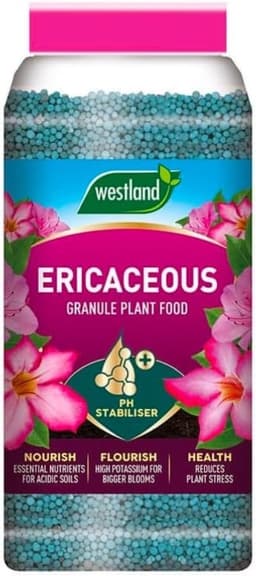
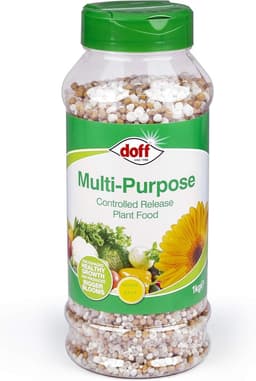
Choose granules when you pot once in April and will forget the can. A busy border, a row of troughs, or baskets you water with a hose rather than a measured feed suit a six-month all-purpose charge. Mix at potting, keep granules off stems, and water. Westland Boost 2 kg at about £11.64 is the tub reviewers used that way. Doff’s 1 kg shaker is the cheaper printed 10:5:11 if you will keep it off young plugs. Which? public text says controlled-release was cheaper and easier than liquid in its trial, while liquid grew larger plants. Those figures are Which?’s measurement, not this site’s test. The trade-off is less work and less mid-season steering. Skip granules when the leaf is already yellow and you need a result this week, on tomatoes that want a high-potash liquid once fruit is set, and on camellia or blueberry. The Westland 900 g ericaceous granule is the acid option, and its pairing bullet names a separate ericaceous liquid, sold separately. Doff’s file includes a plug-plant root-burn review. Topline prints an overdose warning.

Choose liquid when

Choose liquid when the leaf is pale now, or you want to change the recipe mid-season. A chelated iron or a high-potash tomato feed is a can job. A six-month all-purpose granule will not pivot for you in July. Weekly baskets you enjoy watering are also a liquid habit, if you will actually mix the can. Skip liquid as your only feed in a peat-free basket if you will miss fortnights. A late-summer nitrogen flush is a poor idea for both forms. Which? public text says use controlled-release if you forget the can. Do not leave the granule charge out at potting and then catch up with a strong can in June. Bottles sit in the liquid fertiliser comparison. How you water granules in sits on how to apply slow release fertiliser.

Using both

You can use both. Charge the compost at potting, then add an optional liquid later when the claim fades. Which? mentions a liquid from mid to late August. Quote that as Which?, not as a Products Compared trial. The ericaceous Westland jar points at a matching liquid sold separately. That pairing is for acid plants, not a reason to pour all-purpose liquid on a rhododendron. Do not double a full granule rate with a full can in the same week. If you charged the compost at the printed grams, a later liquid is a light top-up on moist compost. If you never mixed granules in, the can is the whole plan. Pot a 30 cm basket in April with Westland Boost at the brand’s 20 g per 10 litres, water it in, and leave the liquid until late summer if the plants fade.

Common questions

Which is better for hanging baskets?
Granules if you will pot once and forget the can. Liquid if you will mix every week or two and want to steer flowering. Which? public text found liquid grew larger plants and controlled-release was easier. This site has not repeated that trial.
Can I use both?
Yes, if you charge the compost at potting and keep later liquids light. Do not stack a full granule rate and a full can in the same week. The ericaceous Westland listing already names a separate matching liquid.
Will granules replace tomato liquid?
No. Once tomatoes set fruit they usually want a high-potash liquid. A six-month all-purpose granule will not make that switch for you.
Why are my leaves still yellow after granules?
Granules do not rescue an acute deficiency this week. Check watering, pH, and whether you used an all-purpose jar on an acid-lover. A yellow leaf now is a liquid or a soil problem, not a reason to double the granule rate.
Which is cheaper?
It depends on how many cans you actually mix. Which? published pence-per-pot figures in its trial. This site does not repeat those numbers as its own measurement. In these granule listings, a 2 kg Boost tub is about £11.64 and a 1 kg Doff shaker is about £8.38.
Which is safer for beginners?
Granules are simpler if you measure once and water in. They are not safer on plugs: Doff has a burn review, and Topline warns against overdose. Liquid is easier to stop, and easier to overdo every week.

Related pages

Sources

Public UK and maker sources used for this page in October 2026. Prices, stars and review counts are from the seven amazon.co.uk listings. A maker-page NPK is not the amazon card. There is no laboratory test and no Which? winner among these jars.

  1. RHS, fertilisers (retrieved October 2026)
  2. RHS, fertiliser labels explained (retrieved October 2026)
  3. Fertilisers Regulations 1991 (retrieved October 2026)
  4. GOV.UK, rules to prevent water pollution (retrieved October 2026)
  5. Gardeners' World, which fertiliser to use (retrieved October 2026)
  6. Love The Garden, plant feeding application (retrieved October 2026)
  7. Westland Boost granules (retrieved October 2026)
  8. Which?, controlled-release fertilisers (retrieved October 2026)