Independent comparisons. We may earn from shop links. More info

Best slow release fertiliser UK: which jar fits you

Updated: October 2026

You want a name for the patio baskets, and a search for the best slow release fertiliser UK often returns a paywalled trial or a US list. This comparison keeps seven amazon.co.uk listings. Best here means a stated job on those cards, not a laboratory crown. The [slow release fertiliser comparison](/hub/fertiliser-soil-and-bark-mulch/slow-release-fertiliser) holds the full table. This page is the pick and the skip: a top pick for a six-month all-purpose tub, a best value for a printed NPK, and a specialist acid jar. A purchase through our links may earn a commission. This is not a laboratory test.

You want a name for the patio baskets, and a search for the best slow release fertiliser UK often returns a paywalled trial or a US list. This comparison keeps seven amazon.co.uk listings.

Our top picks

On this page

How this page picks

A geranium basket in May, a rose border and a camellia in ericaceous compost are not the same purchase. The top pick is an all-purpose six-month granule with a usable review file and a pack you can finish on mixed plants. Best value is a printed analysis at the lower shelf price, with the burn caution left on the page. The ericaceous jar is a specialist, not an all-purpose winner. Which? has tested controlled-release feeds and has named Goulding, Miracle-Gro and Gro-Sure. Those scores stay behind membership and are not copied here. Checks before a brand are on the slow release fertiliser buying guide.

Top pick: Westland Boost 2 kg

Westland Boost 2 kg at about £11.64 is the top pick: a six-month all-purpose granule, 4.5 from 181 reviews, with 46 United Kingdom texts. The listing spells the duration line 6-moth. Reviewers use it on begonias, roses, hanging baskets, troughs and raised vegetable beds, and several treat one spring application as enough for the summer instead of a liquid in containers. A measuring spoon comes up in those texts even though it is not listed as included. Buyers report brittle plastic that arrives split, with granules loose in the outer bag. A few spring reviews say it is too early to judge. NPK is not stated on the amazon listing. The brand page prints 17.8-7-15.5, which is not imported as the listing analysis. Skip Boost for an acid feed, a printed NPK, or a tub that must arrive intact. The Miracle-Gro row is six 1 kg shakers at about £44.90, not the common 900 g jar. One review counted five jars in a well-wrapped packet. Topline’s 2 kg at about £17.99 is the same weight class as Boost at a higher price, with an overdose warning and split-tub reviews.

Best value: Doff 1 kg

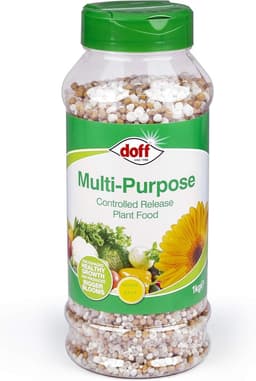
Doff Multipurpose Controlled Release 1 kg at about £8.38 is the best value: the only listing here that prints NPK 10:5:11, in a shaker bottle. The star line is 4.4 from 24, with eight United Kingdom texts, so the badge is the printed analysis and the shelf price, not a deep review win. Short comments say hanging baskets and pots did well. An experienced gardener reported burnt roots on plug plants in hanging-basket work and said the Doff label mentions burning leaves. There is no six-month line on the listing. Bullets say plants receive nutrients when they require them, and no grams-per-pot rate is printed. Treat the burn note as a caution on plugs, not a ban on the whole category. Skip Doff if you needed a printed six-month window, a 2 kg bed tub, or a sample deeper than 24 ratings. Application steps sit on how to apply slow release fertiliser.

If you needed a different job

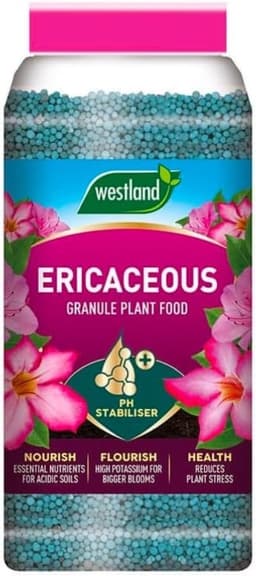
If the job is rhododendron, azalea, camellia or blueberry, the Westland 900 g ericaceous jar is the specialist: about £6.00, 4.5 from 282, a three-month claim and a high-potassium bullet. Reviews report greener foliage and recovery from yellow leaf. They also include plant-kill and blueberry-fail stories, and birds taking surface granules. The title is 900 g against a 770 g item-weight field. Reapply around the end of June if you started in March. It is not a six-month all-purpose substitute. Goulding G60114 (720 g, about £9.39, 4.4 from 281) is the general-purpose small jar. G60115 (720 g, about £9.37, 4.4 from 143) is titled rose, tree and shrub. One reviewer bought both and said the contents list was the same. Keep the titles as plant-group labels. Do not invent a chemical difference the bags do not print. Both leave NPK blank. Skip every all-purpose jar for lime-haters. There is no UK laboratory winner on this shelf, only a criterion and a pack you can finish.

Common questions

What is the top pick in this comparison?
Westland Boost 2 kg at about £11.64, for a six-month all-purpose charge on mixed plants, with 4.5 from 181 reviews. The badge is that job and review file, not a laboratory win. Skip it for camellia or blueberry.
What is the best value?
Doff 1 kg at about £8.38, because it prints NPK 10:5:11 on the amazon listing. The sample is thin, 24 reviews, and one gardener reported burnt plug-plant roots. Value here is the printed analysis at the entry price.
Is Miracle-Gro always the best?
Not in this comparison. The Miracle-Gro listing is a case of six 1 kg jars at about £44.90 with almost empty bullets. The common 900 g single jar is not this product. Buy the case only if you run many baskets.
Which jar is for rhododendrons?
Westland Ericaceous 900 g, with a three-month claim. Pair it with ericaceous compost. An all-purpose granule is the wrong chemistry for lime-haters.
Why is Growmore missing?
Two Growmore products were left out because they tell you to reapply every few weeks. That is a different product type from a three- or six-month granule.
Can you copy a Which? score?
No. Which? scores are paywalled, and this site has not run that trial. Public method notes, such as compost base feed lasting three to four weeks, can be quoted as Which?, not as a Products Compared measurement.

Related pages

Sources

Public UK and maker sources used for this page in October 2026. Prices, stars and review counts are from the seven amazon.co.uk listings. A maker-page NPK is not the amazon card. There is no laboratory test and no Which? winner among these jars.

  1. RHS, fertilisers (retrieved October 2026)
  2. RHS, fertiliser labels explained (retrieved October 2026)
  3. Fertilisers Regulations 1991 (retrieved October 2026)
  4. GOV.UK, rules to prevent water pollution (retrieved October 2026)
  5. Gardeners' World, which fertiliser to use (retrieved October 2026)
  6. Love The Garden, plant feeding application (retrieved October 2026)
  7. Westland Boost granules (retrieved October 2026)
  8. Which?, controlled-release fertilisers (retrieved October 2026)