Independent comparisons. We may earn from shop links. More info

Slow release fertiliser buying guide: first checks

Updated: October 2026

You are standing over a peat-free hanging basket in April, and amazon.co.uk is offering Growmore, coated granules and an ericaceous jar under the same shop phrase. A slow release fertiliser buying guide is the order of checks before you pay: the technology, the plant group, a label you can read, and a pack that matches the job. Stars and the cheapest kilo do not decide that. The [slow release fertiliser comparison](/hub/fertiliser-soil-and-bark-mulch/slow-release-fertiliser) holds the seven prices. What follows is how to read those jars, not a ranking. A purchase through our links may earn a commission. This is not a laboratory test.

You are standing over a peat-free hanging basket in April, and amazon.co.uk is offering Growmore, coated granules and an ericaceous jar under the same shop phrase.

Our top picks

On this page

What slow release means on a UK shelf

On a UK shelf, slow release usually means a garden granule that claims three or six months of feed. The Royal Horticultural Society keeps a stricter glossary: controlled-release is a coated inorganic such as Miracle-Gro Continuous Release or Osmocote; slow-release in that glossary is an organic meal that microbes break down. This comparison follows the shop phrase and then names the technology. It keeps coated or blended jars only. If the pack says apply every four to six weeks, it is a Growmore-style mineral feed, not a season-long charge. Aquarium tabs, empty baskets and lawn feeds sit outside these seven listings. A blend with a fast fraction greens foliage sooner and raises the burn risk on plugs if you overdose. Westland Boost talks of instant nutrients. Topline says fast-acting and slow-release. Organic meals sit on natural-fertiliser pages. One spring charge versus a fortnightly can is on slow release fertiliser or liquid.

Match the jar to the plant

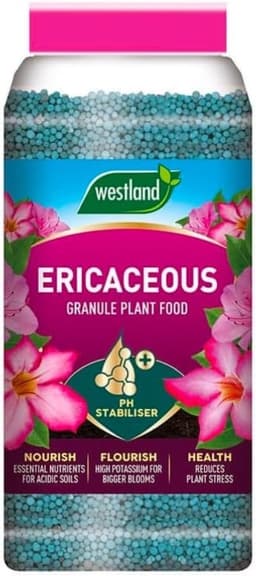
The second check is the plant group on the title. All-purpose six-month granules, Westland Boost 2 kg, Goulding G60114, Topline 2 kg and the Miracle-Gro six-jar case, are for mixed beds, baskets and most shrubs. Goulding G60115 is titled rose, tree and shrub. Westland’s 900 g jar is the only ericaceous listing here, with a three-month claim aimed at rhododendrons and other lime-haters. Camellia, blueberry, azalea and rhododendron need a matching acid feed and usually ericaceous compost. An all-purpose granule is the wrong chemistry for those pots. One Goulding G60115 reviewer used that rose jar on ericaceous plants. The title still does not make it an acid feed. A 30 cm geranium basket in May wants a six-month all-purpose charge mixed into the compost. A camellia in March wants the Westland 900 g ericaceous jar and a second dose around the end of June, because the claim is three months, not six. Litre rates sit on slow release fertiliser for pots.

Read the bag, then pick a pack

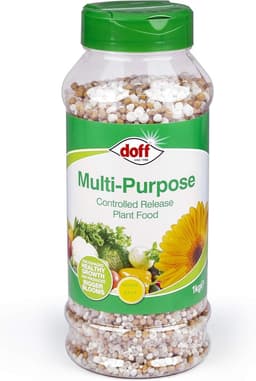
Great Britain packs must carry a statutory declaration under the Fertilisers Regulations 1991: the name, NPK, forms of nitrogen, phosphorus solubility, maker and weight. Oxide numbers are not elemental percentages. Growmore 7:7:7 is about 7:3.1:5.8 as elements, a high-nitrogen dressing, not an equal elemental feed. Only Doff prints 10:5:11 on the amazon listing in this comparison. Westland Boost’s 17.8-7-15.5 sits on the brand page, not on the listing. Do not copy a brand-page analysis onto a card that does not print one. Westland Boost, both Goulding jars and Topline claim six months or up to six months. The ericaceous Westland claims three. Doff and the Miracle-Gro six-pack listing leave months blank. A six-month line is a manufacturer window. Release tracks moisture and temperature, so dry compost does not feed. A 720 g Goulding or a 1 kg Doff shaker suits a few pots. Westland Boost 2 kg is about £11.64, about £5.82 per kilo. Topline’s 2 kg is about £17.99. Miracle-Gro is six 1 kg jars at about £44.90, not the common 900 g jar. Buy the volume you will use before the lid cakes.

What this page will not choose for you

This page does not rank the seven products. Which? scores for controlled-release feeds are paywalled and are not copied here. Named picks sit on the best page. Hazard lines commonly include gloves, eye irritation, storage away from children and pets, and harm to aquatic life with long lasting effects. Pet friendly as directed is not a chew test. Do not spread on frozen or waterlogged soil, and keep manufactured fertiliser off ponds and drains.

Common questions

Is slow-release the same as controlled-release?
Not in the RHS glossary. Controlled-release is a coated inorganic. Slow-release there is an organic meal. On amazon.co.uk the shop phrase usually means a three- or six-month granule. This comparison follows the shop phrase and then names the coat or blend.
Is Growmore a slow-release fertiliser?
No. Growmore is a balanced mineral feed, often 7:7:7 oxide, that you reapply every few weeks. Two Growmore products were left out of this comparison. If the pack says apply every four to six weeks, you are in the wrong aisle.
Do I need an ericaceous jar or all-purpose?
Camellia, blueberry, azalea and rhododendron need the ericaceous jar and usually ericaceous compost. Mixed beds, geraniums and most shrubs take an all-purpose six-month granule. Westland 900 g is the only acid jar in this comparison.
What NPK should I look for on the bag?
Look for the statutory declaration on the pack you hold. Only Doff prints 10:5:11 on the amazon listing here. A brand-page analysis is not copied onto a listing that does not print one. Oxide numbers are not elemental percentages.
What pack size do I need for a few pots?
A 720 g Goulding or a 1 kg Doff shaker is the small-job size among these listings. A 2 kg tub suits beds. The Miracle-Gro six-jar case at about £44.90 is for many baskets, not a single trough.
Are organic pellets in this comparison?
No. Organic meals sit on natural-fertiliser pages. These listings are coated or blended garden granules sold as a three- or six-month feed.
Can I use garden granules on a lawn?
Not from these listings. They are garden plant food, not a lawn controlled-release feed. Use a product labelled for turf.

Related pages

Sources

Public UK and maker sources used for this page in October 2026. Prices, stars and review counts are from the seven amazon.co.uk listings. A maker-page NPK is not the amazon card. There is no laboratory test and no Which? winner among these jars.

  1. RHS, fertilisers (retrieved October 2026)
  2. RHS, fertiliser labels explained (retrieved October 2026)
  3. Fertilisers Regulations 1991 (retrieved October 2026)
  4. GOV.UK, rules to prevent water pollution (retrieved October 2026)
  5. Gardeners' World, which fertiliser to use (retrieved October 2026)
  6. Love The Garden, plant feeding application (retrieved October 2026)
  7. Westland Boost granules (retrieved October 2026)
  8. Which?, controlled-release fertilisers (retrieved October 2026)