Vegetable fertiliser or universal fertiliser?

Choosing a vegetable fertiliser or universal fertiliser for a UK plot? See when a base dressing works and when fruiting crops need high potash.
On this page
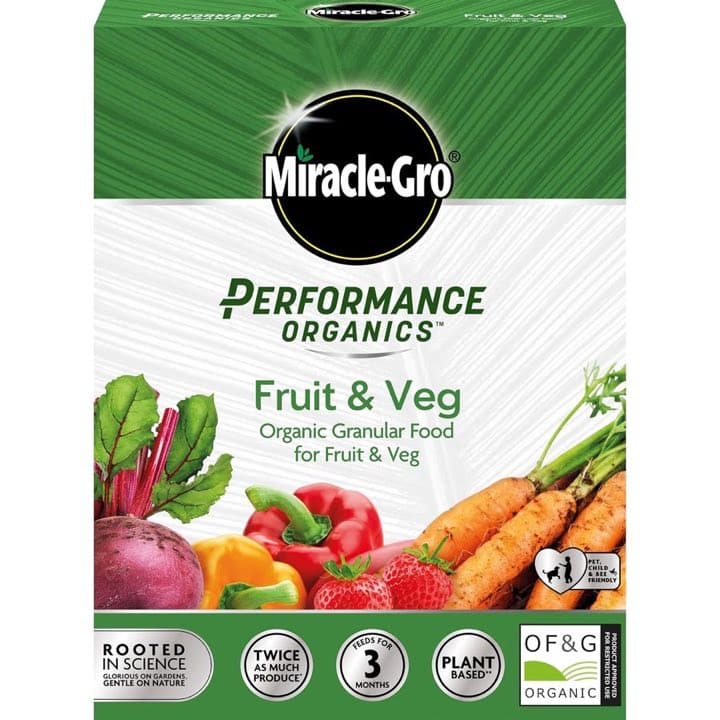
Standing in a garden centre aisle in March, it is easy to wonder whether you need a dedicated vegetable fertiliser or universal fertiliser when you prepare the beds. Boxes printed with cabbages and carrots sit next to tubs of Growmore, fish, blood and bone, and all-purpose liquid plant food, often at different prices per kilogram. What follows uses Royal Horticultural Society guidance, UK label rules and amazon.co.uk specifications.
The Products Compared editorial team did not run laboratory soil trials. We evaluated public horticultural advice and UK packaging declarations. A qualifying purchase through our links may earn a commission at no extra cost to you.
In short
For bare ground in March or April, a universal fertiliser put down about a week before sowing does the same job as a dedicated vegetable fertiliser, if you follow the rate on that bag. The split comes mid-season. Leafy greens and brassicas stay on balanced or higher-nitrogen feeds. Fruiting crops such as courgettes, beans and outdoor tomatoes do better on a high-potash tomato fertiliser once flowers set.
In open soil, bulky organic matter comes first. In containers, starter nutrients last about six weeks, then liquid feeding takes over.
Most beds start with soil, not a speciality bottle
The soil decides whether a vegetable fertiliser or a universal fertiliser can do any work. Royal Horticultural Society guidance on feeding plants says a yearly bag is not always necessary on fertile soils that already receive a regular organic mulch. Spread 5 cm to 7.5 cm of well-rotted garden compost or farmyard manure in late winter or early spring. That rebuilds crumb structure, holds summer moisture, and releases a slow background of nutrients as microbes break the matter down.
Bagged mineral or organic-based fertiliser earns its place when the soil is light and sandy, when winter rain has leached soluble nitrogen below root depth, or when you grow hungry crops such as cabbages, Brussels sprouts, leeks and sweetcorn. Pellets will not repair compacted clay or parched sand. If water runs off a raised bed in July, extra granules around wilting courgettes only raise the salt level around stressed roots and can scorch the leaves.
Keep a fresh base dressing out of the root-crop year. Carrots, parsnips and long beetroot should not be sown into beds that have just had fresh manure or a heavy nitrogen-rich general feed. High nitrogen in the top few centimetres pushes leaf growth, and the taproot splits or forks. In a four-bed rotation, give the freshly mulched and fed plots to brassicas, potatoes and squashes. Let parsnips follow in year two on what remains in the soil.
A general fertiliser before sowing and what 7-7-7 means
On a seedbed or planting trench in March or April, a general garden fertiliser and a general-purpose vegetable base dressing do the same job. RHS advice is to apply a general fertiliser about a week before sowing or transplanting, and to rake the granules in so moisture starts to dissolve them before young roots arrive.
Seedlings need nitrogen for leaves and stems, phosphorus for roots in cool spring soil, and potassium for cell strength and water control. Growmore's familiar 7-7-7 is not three equal elemental shares. UK rules declare phosphorus and potassium as oxides, phosphorus pentoxide (P2O5) and potassium oxide (K2O). Convert 7% N, 7% P2O5 and 7% K2O into elemental weight and the ratio is 7-3.1-5.8, a higher-nitrogen general feed that suits spring beds and leafy growth.
Rates do not travel from one tub to another. Westland Growmore Plant Food specifies 135 g per square metre forked in before planting vegetables, then 70 g per square metre on established plants every four to six weeks between February and October. Another general feed, or pelleted chicken manure, prints its own figure. Weigh one handful into a yoghurt pot in spring so you can see that rate on the soil.
Fish, blood and bone releases more slowly than inorganic Growmore, because soil bacteria must mineralise the organic nitrogen before roots can take it up. That is gentler in warm, moist soil. In cold March ground below 8 °C, microbial activity is sluggish and inorganic granules release more predictably. Foxes and dogs will dig up freshly planted modules to reach bone meal unless you rake the feed in and cover the bed with mesh.
Leafy crops and fruiting crops diverge after establishment
Until flowering, most kitchen-garden plants need steady vegetative growth. From late May, feed according to the part you harvest.
Leafy crops, stems and brassicas
Summer cabbage, cavolo nero, kale, spinach, Swiss chard, lettuce, celery and leeks do not need to set fruit. Their job is broad, dark green leaves and thick stems. Nitrogen builds chlorophyll and leaf protein, so keep these rows on a balanced liquid feed or a mid-season top-dressing of general garden fertiliser or a higher-nitrogen vegetable feed. A low-nitrogen, high-potash liquid meant for fruiting crops stalls summer cabbage, and the outer leaves turn pale yellow-green before the heart firms.
Fruiting crops
Outdoor and greenhouse tomatoes, courgettes, marrows, winter squashes, sweet peppers, chillies, aubergines, runner beans and French beans go the other way. RHS vegetable feeding guidance is to move fruiting crops from a balanced feed onto a high-potash liquid once they flower and set the first small fruits. Potassium moves sugars and supports ripening. Holding nitrogen back stops the plant pouring energy into giant shading leaves at the expense of flower trusses.
One high-potash tomato fertiliser covers courgettes, chillies and beans once flowers set. A mixed UK plot needs that bottle plus a bag of universal fertiliser, or a granular vegetable fertiliser, for the spring base dressing and for brassica top-dressing.
Time the switch. Moving courgettes or runner beans onto a high-potash, low-nitrogen feed while the plants are still small and struggling up their canes stunts the framework and cuts the yield. Wait until there is a sturdy leafy canopy and the first flowers are setting pods or fruitlets. Keep peas and broad beans light on nitrogen once they are established, because root-nodule bacteria fix atmospheric nitrogen.
Containers and raised planters run on a shorter clock
Salad leaves, dwarf French beans, patio courgettes and chillies in pots, troughs and grow-bags run on a shorter clock, because the root volume is finite. Fresh multi-purpose or vegetable compost in a 30-litre container in April or May usually carries a factory base charge. Across UK bagged composts, that starter feed lasts roughly four to six weeks.
After six weeks, and often sooner when June watering washes nitrates out of the drainage holes, the compost is mainly an anchor. Granules meant for open beds crust on dry peat-free wood fibre, release unevenly, and can scorch roots in a 25 cm pot. A liquid every seven to fourteen days is the steadier route.
- Weeks 1 to 6 after potting: rely on the starter nutrients in fresh potting compost, and keep the rootball evenly moist without flooding the saucer.
- Week 6 until the first fruit set, or until harvest for leafy pots: apply a balanced liquid universal fertiliser at the bottle's container rate once a week for cut-and-come-again salads, herbs, chard and young fruiting plants still building stems.
- From the first fruit set until late August: switch patio tomatoes, peppers, aubergines and container courgettes onto a high-potash liquid tomato fertiliser at the manufacturer's pot dilution.
In July and August, peat-free coir, bark fines and wood fibre shrink off the pot wall when they dry. Water a dry rootball with tap or rain water first, then apply the measured feed about half an hour later, so you avoid osmotic burn. Stop high-nitrogen feeds on overwintering crops by late August, so soft growth is not left to the frost.
Common questions
Can one bag of universal fertiliser feed the whole vegetable plot?
When should you put a general fertiliser down on a vegetable bed?
Is Growmore truly an equal 7-7-7 balanced fertiliser?
Which vegetables need a switch to high-potash tomato feed?
Do you still need garden compost or manure if you buy vegetable fertiliser?
How long do the nutrients in multi-purpose container compost last?
Can you use Westland Growmore gram rates for another brand of general feed?

Products Compared publishes British-English buying guides based on amazon.co.uk listings and public UK sources. We do not run a lab and we do not invent test scores.
Related articles
What a UK fertiliser label must show
How to read N, P2O5 and K2O oxide figures on UK fertiliser bags without confusing them with elemental ratios.
Tomato feed or tomato compost
Why potting compost is your root environment while a high-potassium liquid is a later feed once trusses set.
Bark mulch and feeding the bed underneath
How mulch depth, stem gaps and spring base dressings fit together on UK beds and borders.