Tomato feed or compost: when UK tomatoes need both
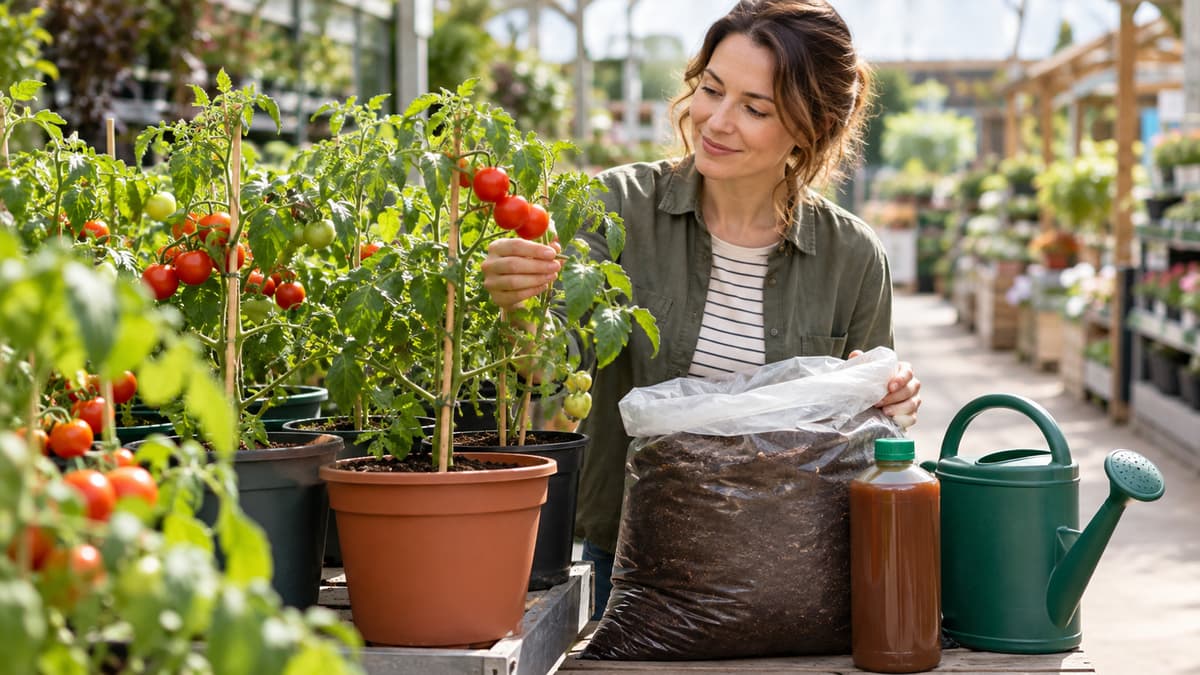
Tomato feed or compost? Compost holds roots and starter feed for the first weeks. A high-potassium liquid then tops up UK pots and grow bags.
On this page
- 1.In short
- 2.Tomato feed or compost: why they do two different jobs
- 3.Compost is where the roots live in pots and grow bags
- 4.Tomato feed is the later potassium top-up
- 5.Why containers and grow bags run out of nutrients first
- 6.Do tomatoes in the ground need feed or just compost?
- 7.Watering mistakes that tomato feed cannot fix
- 8.How to pair tomato feed or compost across the UK season
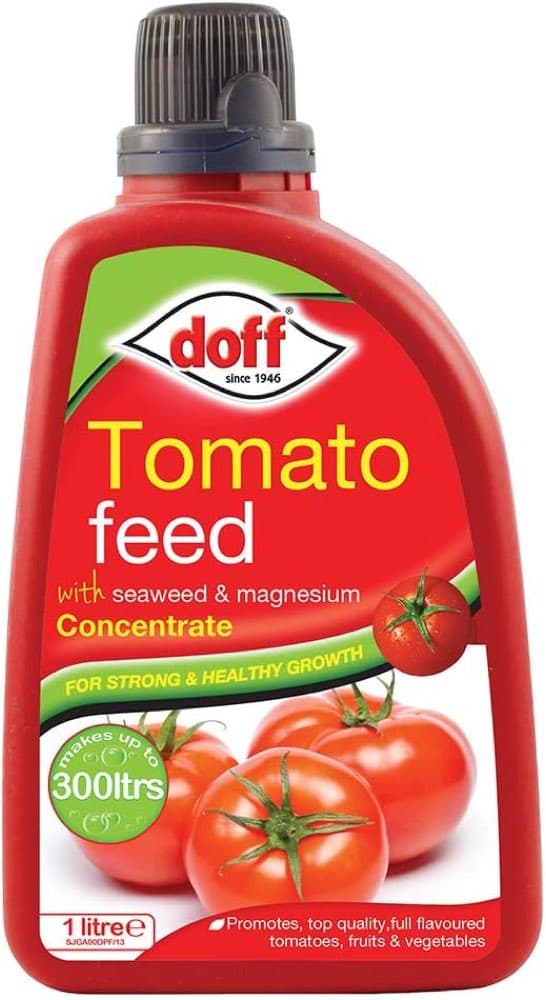
Walk down a UK garden-centre aisle in May and you will see planter sacks beside brown liquid bottles, both printed with ripe tomatoes. When you set up patio pots, a greenhouse border or grow bags by the door, tomato feed or compost can look like one purchase. Buying both without a job for each product leads to leafy stems in June or pale foliage by mid-July.
In short
Tomato compost is the bulky root environment that holds moisture and starter nutrition for the first few weeks. Tomato feed is a concentrated high-potassium top-up used later in the season. In a 30 to 45 cm pot or a standard grow bag, plant into peat-free compost first, then feed every 10 to 14 days once the first fruits swell. In fertile garden soil already enriched with organic matter, RHS guidance is that those plants may manage without a bottled feed.
Tomato feed or compost: why they do two different jobs
The mix-up starts on the label. Bags and bottles both promise heavy trusses and may mention potash or seaweed. Growing media and fertilisers still have different physical jobs, timings and limits.
Compost, sold as a planter bag or as tomato soil and peat-free multi-purpose compost, is the physical home for the roots. It anchors a heavy stem, holds water between soakings and keeps air pockets open. Most UK potting composts also carry a starter fertiliser that feeds a transplant for roughly four to six weeks.
Tomato feed is a concentrated supplement, sold as a liquid, a soluble powder or pellets, and compared in our tomato fertiliser guide. You dilute a capful into a watering can once the crop is fruiting, replacing minerals that fruiting plants draw out of a container from mid-summer.
Compost is where the roots live in pots and grow bags
Every container tomato depends first on the medium in the pot. RHS guidance for UK tomatoes is to use peat-free multi-purpose compost or a standard grow bag. Peat-free tomato compost blends use composted bark fines, wood fibre, coir and green compost so the structure stays open across a four-month season.
The RHS spacing rules are one tomato in a 30 to 45 cm pot, or two plants in a standard grow bag. A pot that size holds roughly 20 to 40 litres. Two plants to a grow bag gives each root ball a share of moisture and starter feed.
A 15 cm pot, or three plants in a thin grow bag, dries within hours in warm weather. Fine root hairs die, and a July liquid feed cannot replace them. Give every plant a full pot, or half a grow bag.
Tomato feed is the later potassium top-up
After the first month in a pot or grow bag, demand changes. Early growth uses the balanced starter in fresh compost to build roots, stems and leaves. Once flowers set into tiny green fruit on the lowest truss, energy goes into swelling fruit and sugars. That stage wants more potassium, declared on UK labels as K2O, or potash, relative to nitrogen.
A UK tomato fertiliser is therefore a high-potassium tomato feed. A high-nitrogen lawn feed, or a leafy-crop feed, pushes dark foliage while trusses abort or ripen slowly.
RHS advice on when to start feeding tomatoes is to begin a high-potassium liquid once the first fruits swell, then repeat every 10 to 14 days. Starting at transplanting in May adds salts on top of that starter charge and can scorch young roots. Wait until pea-sized green fruit are swelling, then follow the dilution on the bottle.
Why containers and grow bags run out of nutrients first
A potted tomato often pales on the lower leaves if a July feed is missed. In a 30 to 45 cm pot or a two-plant grow bag, the roots cannot forage sideways when local nutrients run out. A fruiting plant under glass or on a sunny wall can drink several litres a day, and water that drains from the base washes dissolved minerals out.
RHS guidance on container vegetables notes that potting media run out of nutrients, so liquid feeding becomes routine. For mixed planters, a general liquid fertiliser every two weeks is one option. For tomatoes, the same guidance specifies a high-potassium liquid every 10 to 14 days once fruits swell, stretching toward 14 days in cooler weather so potassium is replaced without a heavy salt build-up.
Do tomatoes in the ground need feed or just compost?
In an open plot or a greenhouse border, the balance between tomato feed or compost changes. Shop pages rarely say so. Many growers still ask whether tomatoes in the ground need feed on the same schedule as pots.
The RHS qualifier is clear: tomatoes in ground enriched with organic matter may not need extra feeding. Well-rotted garden compost or manure dug in before planting gives a deep, moisture-retentive root zone and slow-release nutrition. Roots spread and draw potassium and trace minerals through the summer without a fortnightly bottle. If the soil is thin, rake in a general balanced dressing before planting, compared in our vegetable fertiliser guide, and move to a higher-potash feed later if plants look hungry.
Watering mistakes that tomato feed cannot fix
Split skins and blossom end rot get blamed on a weak fertiliser, and the temptation is to double the dose of tomato grow bag feed. Both follow erratic watering, and extra fertiliser salts make them worse.
Blossom end rot is a sunken dark patch at the base of a developing tomato, where cells did not receive enough calcium. UK mains water and potting composts are seldom short of calcium. Calcium moves only when dissolved in a steady flow of water. If a pot dries on a hot afternoon, that flow stalls. When dry compost is then flooded, the pulp swells faster than the skin can stretch, and the fruit splits.
The RHS tomato guide stresses an even moisture level. That evenness is what limits both splitting and blossom end rot.
How to pair tomato feed or compost across the UK season
A British summer then pairs the two products in five steps.
- Set up the root zone in late spring. In open ground, dig in well-rotted garden compost, or apply a general vegetable fertiliser if the soil is poor. In containers, use peat-free tomato soil or multi-purpose compost for a 30 to 45 cm pot per plant, or two plants per standard grow bag.
- Water for even moisture in the first month. Check below the dry surface crust so roots do not swing between drought and flood while the starter fertiliser is still working.
- Watch the lowest truss. In June, wait until the yellow petals fall and tiny green fruits begin to swell.
- Feed containers every 10 to 14 days. Dilute a high-potash tomato fertiliser to the label rate and apply it to damp compost. In enriched ground, skip routine liquid feeds unless growth pales.
- Keep moisture even until harvest finishes. Steady watering through August limits split skins. Stop liquid feeding once the top trusses are full-sized and ripening.
How we compiled this guide
Prepared by the Products Compared editorial team on 15 October 2026 for UK gardeners. This guide uses Royal Horticultural Society guidance and pack specifications on amazon.co.uk. We do not run physical lab tests. The 30 to 45 cm pot size and the 10-to-14-day feed interval come from published RHS advice. Qualifying purchases via our amazon.co.uk links, tag pcuk26-21, may earn a commission at no extra cost to you.
Common questions
Is tomato compost the same as tomato fertiliser?
When should you start feeding tomatoes with liquid feed in the UK?
How often do container tomatoes need tomato feed?
Do tomatoes planted in the ground need liquid tomato feed?
What size pot or grow bag do tomatoes need?
Can high-potassium tomato feed prevent blossom end rot or split skins?
Can you use peat-free multi-purpose compost for tomatoes?

Products Compared publishes British-English buying guides based on amazon.co.uk listings and public UK sources. We do not run a lab and we do not invent test scores.
Related articles
Vegetable fertiliser or a universal bag
When a general base dressing before sowing is enough and when fruiting crops need higher potash.
What a UK fertiliser label must show
How to read N, P2O5 and K2O declarations on British fertiliser bags and liquid bottles.
Wormery liquid versus a bag of feed
What homemade worm liquid can replace in containers and where a measured NPK feed still wins.