Bark Mulch and Fertiliser: Feed Beds Without Scraping Back
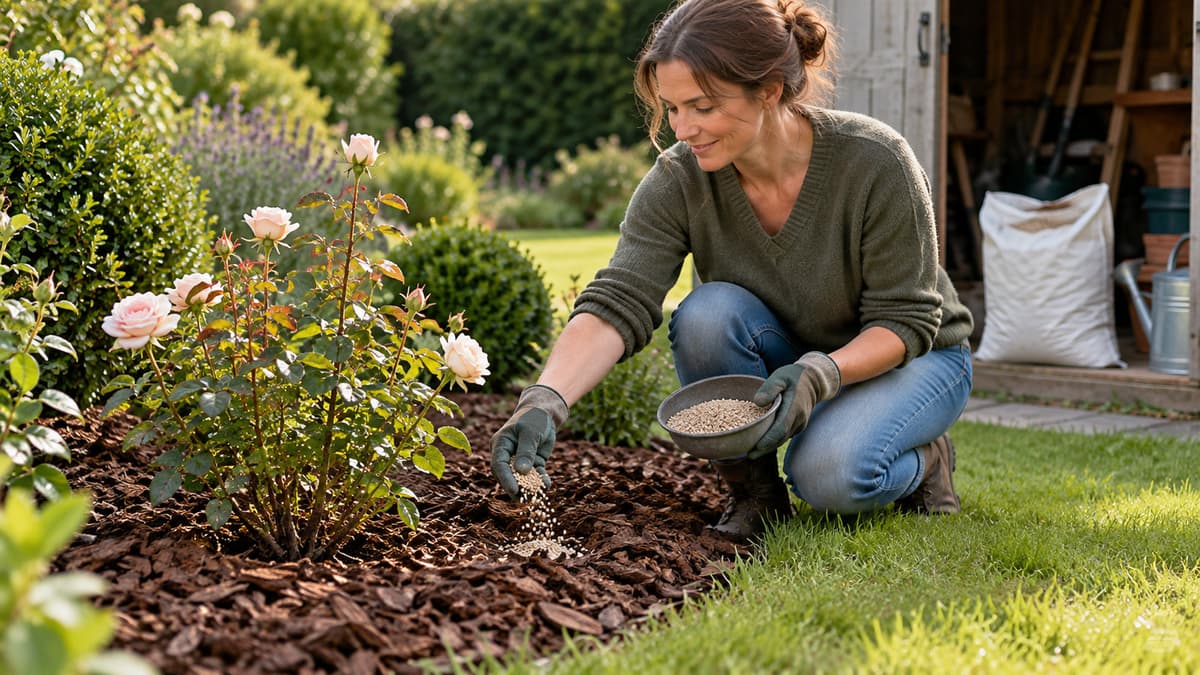
Bark mulch and fertiliser explained for UK borders: how deep to spread it, the gap to leave at stems, and when to feed on top in late winter.
On this page

You have just spread bark around the roses and the shrubs, and a half-open bag of granular feed is still in the shed. Raking it back to feed, then spreading it again, is almost certainly unnecessary. Bark mulch and fertiliser are two jobs that share a bed. Depth, the gap at the stem, and feeding on top matter more than the order.
In short
Spread at least 5 cm, keep it off stems and trunks, and feed on top in late winter. Rain carries granules through the bark, so you do not scrape it back. Bark improves soil slowly. It does not replace a bag in containers, on poor ground, or where you can see a deficiency.
What a mulch is for
A mulch is a layer on the soil surface, and its first job is not feeding. It slows drying between waterings, blocks light from weed seeds, and softens the swing between a hard frost and a hot afternoon. The RHS guide to mulches includes processed bark among biodegradable mulches. Those break down into organic matter and help soil structure over time.
Bark looks like a feed because it is brown and organic, yet a hungry plant can still look pale. Its nutrient contribution is modest and slow, and you cannot read it off a label. A 5 cm layer over a typical 10 square metre border needs roughly half a cubic metre.
The RHS advises leaving some Mediterranean-type plants unmulched where a thick layer would keep heavy soil too wet. Check lavender, cistus and similar sun-lovers before you blanket them.
Depth and the gap at the stem
The RHS recommends a depth of at least 5 cm. Take that figure literally. A scatter of 2 cm looks tidy for a week, then thins by midsummer, lets light through to weed seeds, and does little for moisture. If the bag quotes coverage at a shallower depth, work out the real area at 5 cm before you buy.
November to February is the main window, while the soil is damp. Mulch laid on dry soil keeps that dryness in. Water a dry border first, or wait for rain.
Leave a gap
Mulch piled against a trunk or stem stays damp against the plant's bark. A constantly damp collar is where rot and some pests find shelter. Pull the bark back so a ring of bare soil surrounds each stem or trunk, and slope the mulch away from it rather than building a volcano.
The width is not a standard. As a rule of thumb, a hand's width around a small shrub, and more around a tree trunk, is a sensible start. Keep granules off the stem as well, so the ring is also a no-feed zone. Hand-weed that ring in spring.
Processed bark or fresh woodchip
Not every brown chip is the same product. Processed bark is on the RHS list of biodegradable mulches. Fresh woodchip from a tree surgeon is less treated and less consistent, and it varies by species and by how long it has been stacked.
You will hear that fresh wood chips rob nitrogen from the soil. This guide does not give a figure for that, because the RHS mulch page used here does not state one. Keep fresh chippings on the surface rather than digging them in, and take more care around young or shallow-rooted plants.
On a bag, composted, ornamental and play bark are marketing categories that change from one supplier to another. If the bag does not say what the material is, ask the seller or choose another.
- Mixed sizes knit together and stay put on a slope better than uniform pieces.
- Fine bark shifts less in rain but can crust; fork it lightly if it does.
- Do not use bark as a lawn feed or a lawn top dressing. It belongs on beds.
Chunky bark lasts longer. Fine bark looks smart for a season.
Feed on top in late winter
You do not need to remove mulch to apply fertiliser. The RHS describes fertiliser spread over mulches in late winter and washed in by rain. Scatter granules evenly at the label rate, keep them off stems and leaves, and leave the weather to carry them down.
- Use the label rate. The mulch does not change the dose. Measure grams per square metre once with a scoop, then use that scoop each time.
- Time it before rain. If the forecast stays dry for weeks, water the feed in. Granules left on dry bark have not reached the soil.
- Keep the feed off the stem ring. The bare gap is a no-feed zone as well as a no-mulch zone.
Late winter is also the mulching window, so top up thin bark first, then scatter the feed.
Rain moves nutrients through bark more slowly than through bare soil. If you have laid far more than 5 cm, use a lighter hand, split the dose, or water it in.
For help reading the pack, see our guide to what a UK fertiliser label must show. It explains why the middle and last numbers are not what they seem.
When a bag still earns its place
Bark does not replace fertiliser. An organic mulch of about 5 cm each year, or at least every three years, can reduce how much bagged feed a bed needs. The word is reduce. Four cases still call for a bag.
Containers hold a small volume of compost, and the plant cannot root further for more. The RHS lists them among the situations where fertiliser is most useful. Poor soil is the second case: a thin, sandy or heavily worked bed does not have the reserves of an old border. Mulch builds that reserve over years. A feed bridges the gap.
Hungry crops are the third. Some vegetables take more than a bark layer returns in one season, so a vegetable fertiliser is the more targeted choice. The fourth is a visible deficiency: pale new leaves, weak flowering or very slow growth, despite a decent mulch, is a cue to feed, not to pile on more bark.
A mixed border of shrubs, roses and perennials usually needs only a universal fertiliser. Vegetable fertiliser or a universal bag explains how that differs from a crop feed.
Tomatoes differ because the compost carries much of the load. See the tomato feed comparison and the tomato soil comparison.
The honest trade-off
Mulch costs more up front and works slowly. A bag costs less per application and works within weeks. Many gardeners run both: mulch each year for the soil, and a light feed on top only where a plant has shown it needs one.
A yearly routine for a mulched border
- From November to February, pull perennial weeds out by the root. Mulching over live weeds only thickens them.
- Water a dry border first. Mulch seals in whatever moisture is already there.
- Spread at least 5 cm of bark, keep the stem ring clear, and slope it away from trunks.
- In late winter, scatter granules at the label rate, keep them off stems, and let rain or a watering can wash them in.
- In spring, feed again only if growth is pale or weak and the label allows it. Check drainage and light before you blame the bark.
- When soil shows through, top up. Do not strip the old layer first.
Lift a corner in summer. Moist, dark soil underneath means the mulch is working. Dry, pale soil means the layer was too thin, or it went on dry.
How this guide was put together
This article uses public RHS guidance on mulches and feeding, and the comparisons in this hub. We did not run a lab test. Rules of thumb are labelled as such. Some amazon.co.uk links carry our affiliate tag, and a qualifying purchase can earn a commission at no extra cost to you. Last reviewed on 15 October 2026.
Common questions
How deep should bark mulch be on a UK border?
Do I need to pull bark mulch back before I feed?
Can bark mulch touch the stem of a shrub?
Does bark mulch replace fertiliser?
Is fresh woodchip the same as processed bark?
When is a bag of fertiliser still the right choice?
Should I mulch every plant in the garden?

Products Compared publishes British-English buying guides based on amazon.co.uk listings and public UK sources. We do not run a lab and we do not invent test scores.
Related articles

Vegetable fertiliser or a universal bag
See when a general feed is enough and when fruiting crops need a more targeted nutrient balance.
What a UK fertiliser label must show
Read NPK figures, oxide declarations and weedkiller claims before you choose a bag.
Tomato feed or tomato compost
Decide whether a container tomato needs a better compost, a regular feed, or both.