Brushless vs brushed cordless drill
You are about to pay extra because the title says brushless, or you wonder whether the brushed drill in the cupboard is finished. This page is that decision for light DIY, not a trade day. Every drill in the [Brushless cordless drill comparison](/hub/drilling-and-accessories/brushless-cordless-drill) is listed as brushless, so this page compares the motor type. A brushed twin was not measured beside them. Which?’s guide, the listings from 19 October 2026, and the seller lines were used. No minutes were invented. A qualifying purchase can earn a commission at no extra cost to you.
You are about to pay extra because the title says brushless, or you wonder whether the brushed drill in the cupboard is finished. This page is that decision for light DIY, not a trade day.
You are about to pay extra because the title says brushless, or you wonder whether the brushed drill in the cupboard is finished. This page is that decision for light DIY, not a trade day. Every drill in the Brushless cordless drill comparison is listed as brushless, so this page compares the motor type. A brushed twin was not measured beside them. Which?’s guide, the listings from 19 October 2026, and the seller lines were used. No minutes were invented. A qualifying purchase can earn a commission at no extra cost to you.
Our top picks
| Badge | Product | Motor claim | In the box | Torque | Note | Price | Offer |
|---|---|---|---|---|---|---|---|
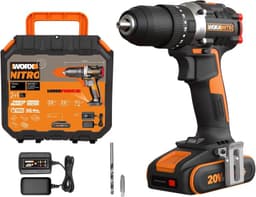
| Best overall |  WORX WORX WX355.1 20V brushless combi, 55 Nm | Listed as brushless | One 2.0 Ah in the highlight | 55 Nm stated | 9.1 | about £89.00 | View offer |
| Best value |  LEEIKOO LEEIKOO 21V brushless hammer drill, two 2.0 Ah batteries | Listed as brushless | Two 2.0 Ah in the bullets | 45 Nm stated | 9.2 | about £32.20 | View offer |
 Ginour Ginour 21V brushless combi drill, two 2.0 Ah batteries | Life and torque ratios are seller copy | Two 2.0 Ah in the bullets | 50 Nm stated | 9.6 | about £55.99 | View offer |


On this page
What the motor actually changes
Light jobs and long jobs
What these listings claim
When brushless is the sensible buy
Common questions
What is the mechanical difference?
Do you feel it on flat-pack and light shelves?
When does Which? say the difference shows up?
Are the 50% and five-times claims on these listings measured?
Do carbon brushes wear out, and is that a reason to bin a working brushed drill?
Does brushless add torque by itself?
If every drill in this set is brushless, what are you actually comparing?
Related pages
Sources
Public UK sources from the research digest, last checked on 19 October 2026. Shelf prices and star lines are the amazon.co.uk figures in the display file.
- Which?: how to buy the best cordless drill (retrieved 19 October 2026)
- BSI: BS EN 62841-2-1 hand-held drills and impact drills (retrieved 19 October 2026)
- GOV.UK: Electrical Equipment (Safety) Regulations 2016 (retrieved 19 October 2026)
- HSE: hand-arm vibration responsibilities (retrieved 19 October 2026)
- Control of Vibration at Work Regulations 2005 (retrieved 19 October 2026)
- HSE: PUWER overview (retrieved 19 October 2026)
- NFCC: lithium-ion batteries (retrieved 19 October 2026)
- London Fire Brigade: batteries and chargers (retrieved 19 October 2026)