Independent comparisons. We may earn from shop links. More info

Wi-Fi thermometer for a greenhouse, shed, or loft

Updated: October 2026

You want the temperature in the greenhouse, the shed, or the loft while you are in the house, and a 500 m line makes that sound easy. A Wi-Fi thermometer for a greenhouse only helps if 2.4 GHz reaches that building. This page stays on that problem. It is not a growing calendar. The table is on the [Wi-Fi thermometer comparison](/hub/climate-measuring/wifi-thermometer). Products Compared editorial team used the amazon.co.uk listings in this set and RHS notes on where a thermometer sits. We did not log a winter in a UK greenhouse. A qualifying purchase can earn a commission at no extra cost to you.

You want the temperature in the greenhouse, the shed, or the loft while you are in the house, and a 500 m line makes that sound easy. A Wi-Fi thermometer for a greenhouse only helps if 2.4 GHz reaches that building.

Our top picks

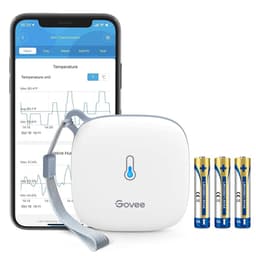
Govee Govee H5179

Best overall

Govee Govee H5179
8.6/10about £23.99
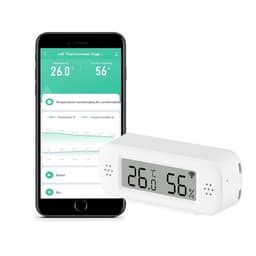
GoveeLife GoveeLife H5103

Alternative

GoveeLife GoveeLife H5103
7.8/10about £34.99
QXMH QXMH TH02 Pro

Best value

QXMH QXMH TH02 Pro
6.8/10about £15.99
On this page

The signal has to reach the glass

The radio path is two hops when you buy a base-station kit. X-Sense states about 500 m in the open between the STH55 sensors and the base, and AEGISLINK carries the same kind of open-area claim, up to 500 m or about 1,700 ft. That distance is not the distance from the sensor to your router. The base still has to join Wi-Fi in the house. Walls, a steel shed, and wet foliage cut an open-air figure hard. A sensor that pairs on the kitchen table can go quiet once it is on a bench in the garden. The Govee H5179 bullet is a different scale: about 50 m of Wi-Fi, with no promise that the path is clear. Direct sensors each need the house network. A base in the kitchen can hear sensors that never see the router, and it still fails if that base is on 5 GHz. Where a listing states a band, it is 2.4 GHz only.

What the listings promise about a greenhouse

Three rows name a greenhouse in the material we have. The STH55 covers greenhouse, home, and office, at about £46.95, with four sensors, a base, and a stated ±0.2°C and ±2% RH. The H5103 names a greenhouse, at about £34.99, with an e-ink screen and ±0.3°C and ±3% RH. The UbiBot GS1-AETH names a greenhouse, a cold room, and laboratories, at about £165.99. Its external probe is ASIN B083JXBD7S and is not in the box. None of the 23 UbiBot reviews in the file is marked United Kingdom. ZenithCove's bullets name greenhouses, and the attribute table marks the WF001 indoor, at about £10.99, with no accuracy figure. The H5179 attribute says indoor, so do not hang it outside on the strength of a shed review. The H5151 says indoors and outdoors. QXMH and AEGISLINK do not name a greenhouse. No IP rating appears in these technical tables.
Govee Govee H5179

Testsieger

Govee Govee H5179
8.6/10about £23.99

Hang it with the plants, out of the sun

The RHS wants a thermometer among the plants, not beside the heater, because a thermostat by the heater can be several degrees off. If the house builds up, typically above 27°C, the RHS says plants can be damaged. That line is horticulture, not a setpoint these listings print. Sun on the case heats the plastic, not the air. A shaded spot among the pots is the domestic version. Most of these apps only notify. ZenithCove is the row that talks about triggering other Smart Life devices, and we did not verify a vent scene.

Condensation, night cold, and when to stop

Electronic humidity sensors are the weak instrument in a wet house. Growsave says they are less trustworthy at high relative humidity. That is not a failure rate for these ASINs. Treat a 95% reading as a trend. UbiBot's line says 10% to 90% RH with no condensation. No listing here states an IP rating. These sensors are not a food logger. Call someone for a leak, visible mould, or a vulnerable occupant. A humidity percentage does not diagnose damp. If 2.4 GHz never reaches the glass, another app will not fix the garden. Pairing steps are on how to set up a Wi-Fi thermometer. Which architecture to buy first is on the Wi-Fi thermometer buying guide. Whether the Wi-Fi client is the sensor or the base is on direct Wi-Fi or a base station.

Common questions

Will house Wi-Fi reach the greenhouse?
Only a test at the building will tell you. Pair on 2.4 GHz in the house, then walk toward the greenhouse and watch the app drop. A steel shed and brick cut an open-air claim. A base indoors can hear sensors that never see the router, and the base itself still needs house Wi-Fi. If the join dies at the back door, the metre figure will not rescue it.
Can I leave an indoor sensor in a damp house?
You can, and the listing's limits still apply. No IP code is stated. UbiBot's humidity line excludes condensation. High relative humidity is where electronic sensors drift, in commercial glasshouse guidance, which is not a return rate for these models. If the case is wet, bring it in.
Where should it sit, relative to the heater and the sun?
Among the plants, in shade, not on the heater and not in direct sun. The RHS uses that placement because a sensor by the heater reads the heater. A buildup typically above 27°C can damage plants. That figure is horticulture, not a button in these apps. Prove the alert before a cold night.
Do I need a soil probe?
Not for the air among the pots, which is what these listings measure. The UbiBot probe is a separate ASIN and is not in the GS1-AETH box. Soil and a water tank are different sensors. If you only need the air, you have not bought a probe.
When is this the wrong tool?
When the garden has no 2.4 GHz path, when you need a food or laboratory logger, or when there is a leak, visible mould, or someone vulnerable in a damp room. A Wi-Fi graph does not open a vent on most of these apps, and a humidity percentage does not diagnose damp. If the unit is too hot to hold, stop using it.

Related pages

Sources

Public UK sources used for this comparison. Listing prices are the figures in this category's files on 15 October 2026.

  1. Radio Equipment Regulations 2017, GOV.UK (retrieved 16 October 2026)
  2. Ofcom, rules on using radio equipment (retrieved 16 October 2026)
  3. Electrical Equipment (Safety) Regulations 2016, GOV.UK (retrieved 16 October 2026)
  4. NHS, sudden infant death syndrome (retrieved 16 October 2026)
  5. The Lullaby Trust, room temperature (retrieved 16 October 2026)
  6. GOV.UK, damp and mould health risks (retrieved 16 October 2026)
  7. ICO, smart products (retrieved 16 October 2026)
  8. NCSC, smart devices at home (retrieved 16 October 2026)
  9. Govee UK, Wi-Fi thermo-hygrometer (retrieved 16 October 2026)