Ideal indoor humidity UK: the bands that matter
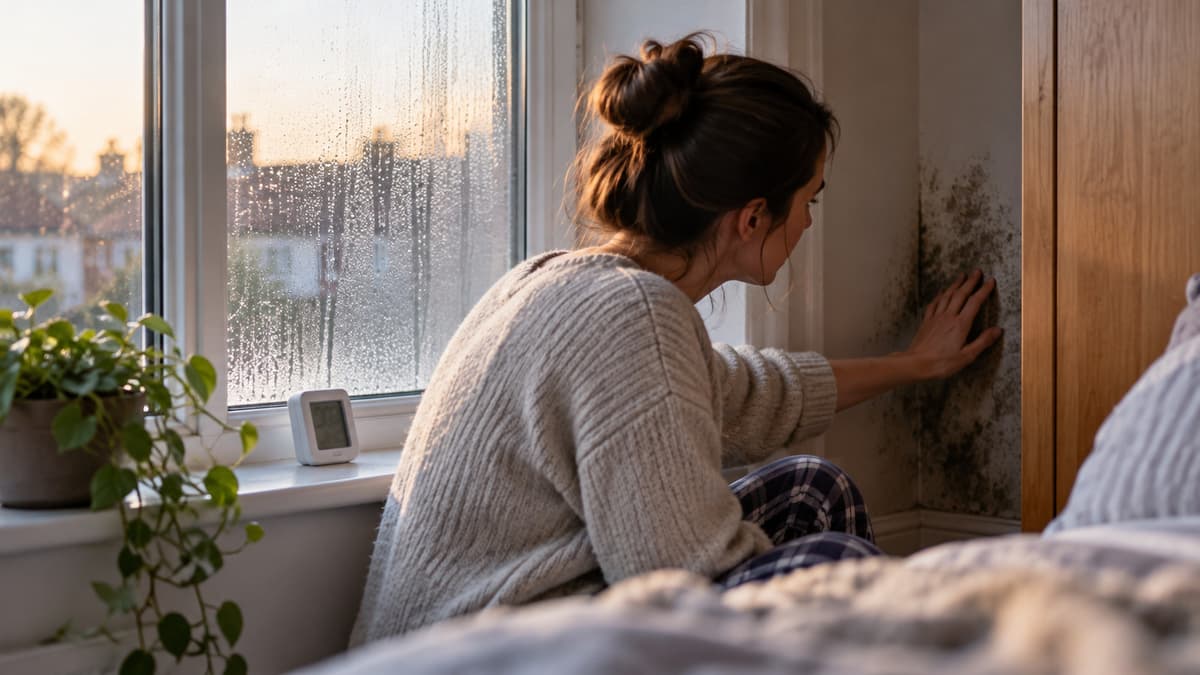
UK advice commonly aims at about 40–60% relative humidity. Above that, condensation is more likely. A hygrometer shows the air. It does not repair a leak.
On this page
The bedroom window is wet again, and a dark spot has shown up on the cold corner behind the wardrobe. Ideal indoor humidity UK advice is the check you want before a meter goes in the basket and the moisture stays where it is. Relative humidity is the water vapour in the air as a percentage of the most that air could hold at that temperature, measured at the sensor.
This page sets the bands from the Centre for Sustainable Energy, Wiltshire Council and TFA Dostmann side by side, as those pages stood for our check on 15 October 2026, next to amazon.co.uk prices captured the same day. We did not run a lab test. A qualifying purchase through our links can earn us a commission at no extra cost to you.
In short
These sources do not share one legal humidity limit. The Centre for Sustainable Energy aims at about 40–60% relative humidity and treats mould risk as higher above 60%, while Wiltshire Council and TFA’s English instructions point at lengthy or sustained figures above about 65%. A hygrometer shows the air in the room. It does not repair a leak.
Condensation is moisture on a cold surface
The water on the glass in the morning is condensation on windows. Warm room air meets a surface colder than the dew point, and the vapour turns into a film. The same air can film an outside wall, a mirror, or the plaster behind a wardrobe in a cold corner. One steamy shower is a poor verdict on the house.
Take the reading after the steam has gone. Stand the meter clear of the kettle, the shower and your breath, and note the bedroom morning and evening for several days. A short spike is not Wiltshire Council’s warning about lengthy periods. The Centre for Sustainable Energy pairs about 18–21 °C with its 40–60% band, because cooler air holds less vapour and the same moisture becomes a higher percentage. Warming a cold wall can move the film. It does not extract the water from cooking, washing or breathing.
Glass that is wet in the morning and clear by lunchtime is a surface film. A patch that darkens after rain, a tide mark that never dries, or a stain under a bath is penetrating damp or a leak. A dry window does not prove the corner behind the furniture is dry.
What ideal indoor humidity UK advice quotes
The Centre for Sustainable Energy’s condensation page aims at about 40–60% relative humidity and treats mould risk as higher above 60%. If you use a dehumidifier, it says to set the machine under 60%. The same charity’s air-testing page puts a home column at about 18–21 °C, 40–60% relative humidity, and carbon dioxide below 1,500 ppm. That is a target for the air you are monitoring. It is not a survey of water inside the walls.
Wiltshire Council recommends about 40% as a household level and links lengthy periods above 65–70% relative humidity with condensation risk. Their 40% sits at the bottom of the charity’s band, and their warning starts higher than the charity’s 60%. A night at 55% is inside the Centre for Sustainable Energy aim and above the council’s “about 40%”. Keep both figures. These pages do not contain one legal limit.
TFA Dostmann’s English instructions describe sustained indoor humidity above 65% as encouraging mould. That line is the maker’s wording in the English PDF. It does not become a UK limit because it sits beside a dial. GOV.UK’s damp and mould guidance for rented housing treats the moisture as a health risk that has to be dealt with, and it does not set one statutory percentage. Log the room, the time, the percentage and whether the window was wet.
What to do before you buy another gadget
Walk the wet places in daylight before you buy. Window glass and a cold external corner, wet in the morning and easing once the room is aired and warmed, point at condensation. A stain along a soil pipe, a ceiling under a bathroom, or an outside wall that soaks in driving rain points at a leak or penetrating damp. A hygrometer for damp air still prints a percentage. It does not show you the pipe.
Ventilation comes first. Run the extractor while the shower or the hob is steaming, and leave it on afterwards. A shut room with wet washing on a rack holds the water you have just added, so leave trickle vents open. A few minutes’ airing changes the air. A window on the latch all day in January can chill the glass back towards the dew point.
If the air is still too wet, a dehumidifier is the next tool, set under 60% relative humidity, which is the Centre for Sustainable Energy’s line. Their 5-litre-a-day note is an extraction example, not a size every flat needs. Their running-cost illustration is November 2023 at 27p per kWh, not your tariff this winter. These sources do not support a claim that a 50 W heater or an air purifier removes mould. If you rent and the damp persists after you have aired and logged the room, write to the landlord.
What a hygrometer will and will not show
A hygrometer reports relative humidity at the sensor, usually with temperature. That is the number you set beside 40–60%, beside Wiltshire’s 65–70%, or beside TFA’s sustained 65%. It measures the air it sits in. It does not measure water in plaster, and it does not repair the building. Place it around sitting height in the room you use, off the cold windowsill and off a shelf above a radiator, or the percentage describes that spot alone.
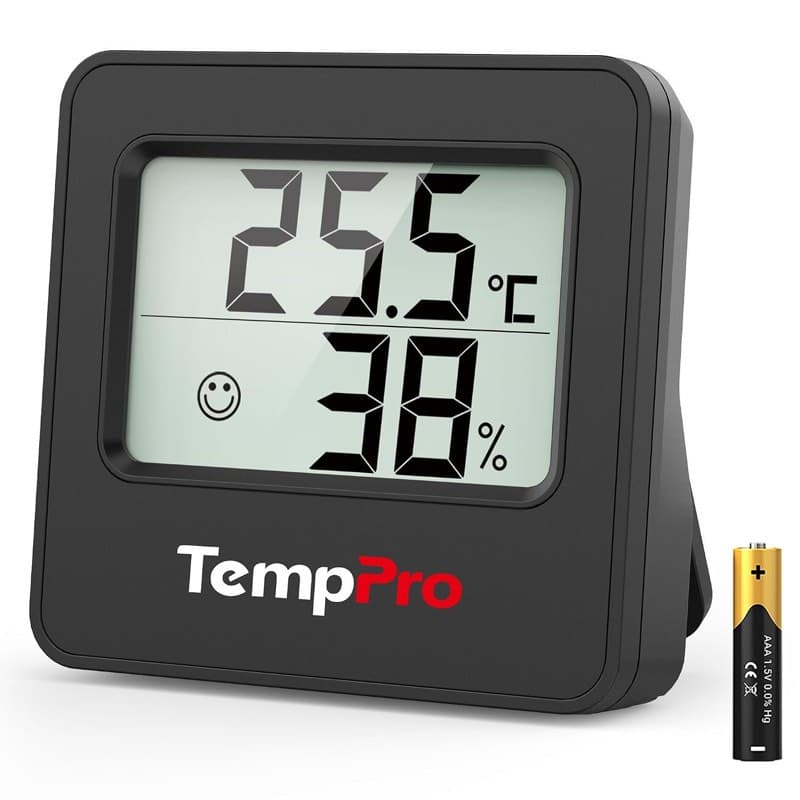
For a digital face, use the hygrometer comparison of amazon.co.uk listings captured on 15 October 2026. The top pick for a small room is the TempPro TP157, the tightest stated humidity tolerance in the set at ±2% to 3% RH and ±0.5 °C. Across 9,551 ratings it sits at 4.5 and about £5.29, the lowest price among listings at 4.5 or above with at least 1,000 ratings, so it is also the best value on that method. The span is not printed, and the listing says it is not waterproof. Skip it for a log or a wet zone.
Analogue dials sit in the TFA Dostmann hygrometer comparison, from about £9.71 to £17.96. The indoor top pick is the TFA 45.2027 at £17.39 when a German scale is acceptable, with the English page’s synthetic-hair line and 4.2 stars from 1,916 reviews. The best value is the 45.2045.02 at £9.71, the lowest price among listings at 4.2 or above with at least 1,000 reviews, for an indoor and outdoor job. The Centre for Sustainable Energy’s “from about £8” is their shopping note, not these shelf prices. A stated tolerance is a listing claim, not a calibration certificate for your bedroom.
When the meter is the wrong next purchase
An air quality monitor can put humidity next to carbon dioxide or particles. The Centre for Sustainable Energy’s home column cites CO2 below 1,500 ppm, so a shut bedroom may be a carbon dioxide question as well as a humidity question. Humidity on that screen is still air at the sensor. Filtering the air does not fix a leak, and a multi-gas title is not a mould repair.
A weather house moves a figure and does not print a percentage. The weather house comparison treats those chalets as ornaments. They will not tell you whether the night sat above 60% or above 65%. Leave the chalet in the hall and read a hygrometer in the room that grows the spots.
Landlord damp and mould, once it persists in a rented home, is a letter with dates and photographs. GOV.UK’s guidance is that the moisture has to be dealt with because of the health risk, and NHS inform is where you check who is more sensitive. A spreading stain, a drip, or mould back within days of cleaning is past another small gauge.
Common questions
What humidity should a UK home sit at?
Why do some pages say 60% and others 65%?
Will a dehumidifier fix mould on its own?
Should trickle vents stay open?
Can an air quality monitor tell damp from a leak?
Does a weather house give a percentage?
When do you write to a landlord?
Which meter comparison is the next step?

Peter F. is the editor for DIY & tools at productscompared.co.uk. Comparisons in this category are checked against amazon.co.uk listings, review evidence and public UK sources.
Related articles

How to regenerate an analogue hygrometer
The damp-cloth step restores a hair dial. It is not a calibration reference you can quote as a percentage.
A home radon test is not an air quality monitor
The UK action level is an annual average from a validated three-month test, not a figure on a live room screen.

Carbon monoxide alarm rules for UK landlords
England, Scotland and Wales do not use the same sentence, and a multi-gas meter is not the alarm.