Geotextile UV sunlight: cover the fleece after laying

White drainage fleece is meant to be covered. Sunlight is an installation exposure, not a finished surface, and a buried 25-year figure is a separate claim.
On this page

The trench is backfilled except for a white strip still lying on the grass. The pipe is in, the stone is in, and the flaps are on the lawn because the turf was wet and you meant to return. That leftover sheet is the whole subject of geotextile UV sunlight. Polypropylene drainage fleece is specified to be covered. The open time is the installation, and the notes used here do not give a UK day-count for how long it may last.
This page is from Peter F., editor for DIY & tools. It follows durability notes for Lotrak and Ekotex, a Hy-Tex surface-cover sheet, and a Sherborne line that ties a stated life to covered fabric, plus the amazon.co.uk listings used for this hub. We did not run a UV cabinet or a tensile test. A qualifying purchase through our links can earn a commission at no extra cost to you.
In short
Cover drainage fleece as soon as the flaps are closed. Sunlight is an installation exposure, and the passages used here do not publish a safe number of days in the sun. A buried lifespan, including a planned 25-year figure for natural soils, applies inside the conditions that datasheet names. White fleece left as a path is the wrong finish for this material.
Geotextile UV sunlight while you install
You can see the problem because the fleece is white. The lap is obvious, and so is the temptation to leave it as a pale path because the listing also mentioned weeds. Weed suppression on a drainage-fleece title does not make the sheet a surface. Lotrak's durability note treats ultraviolet light as an installation exposure. Inhibitors help for that period. You then cover the fabric to the manufacturer's guidance.
"Until next weekend" is not a number those passages supply. Shade from a fence for part of the day still leaves the sheet in the sun afterwards. A tarpaulin that blew into the border is not a cover. If the roll is in the shed, leave it wrapped. If a length is already in the trench, cover that length before you stop.
A torn first metre is a laying fault. Cut back to sound fabric before that edge becomes the overlap, because a hole you bury is a silt path, and keep the spare roll out of the sun. The drainage fleece comparison lists the cuts. The top pick is the Spudulica 1.1 m by 8 m cut, 100 gsm, 8.8 square metres, listed at £29.55 with 4.9 stars from 45 reviews. Forty-five reviews are not a laboratory test. The technical row says plastic while the bullets say non-woven geotextile, so read the live amazon.co.uk page. That price can move.
Cover drainage fleece before you finish
Covered means the sheet is out of daylight. Soil, turf, or the aggregate the design uses sits over the closed fabric, including the laps. A corner at the lawn edge, a flap you can see from the kitchen, or a tail at the outfall is still in the sun.
Close the sides only after the stone covers the pipe. Fold them too early and you cannot see whether the pipe is bedded. Leave them down while you backfill and soil falls into the stone, which is the silt the fleece was there to keep out. A 1.1 m strip can be used up by the two sides and the bottom, so no flap remains. Forcing it leaves a gap, which is the moment for a wider piece. The sequence sits on how to lay drainage fleece.
Once the flaps are closed, cover them before you pack the tools away. A buried French drain is out of that exposure only where the backfill hides the fabric. Walk the line. If you can see white, daylight can see it too. Rain on an open sheet is a soaking, not a cover.
Covering the fleece does not create a fall or an outfall. A trench that holds water is a drainage problem with a fabric detail attached. Where the pit is a building-control soakaway, or the base will carry vehicles, buy the named sheet the design asks for, then hide that sheet.
Weed fabric is a different exposure
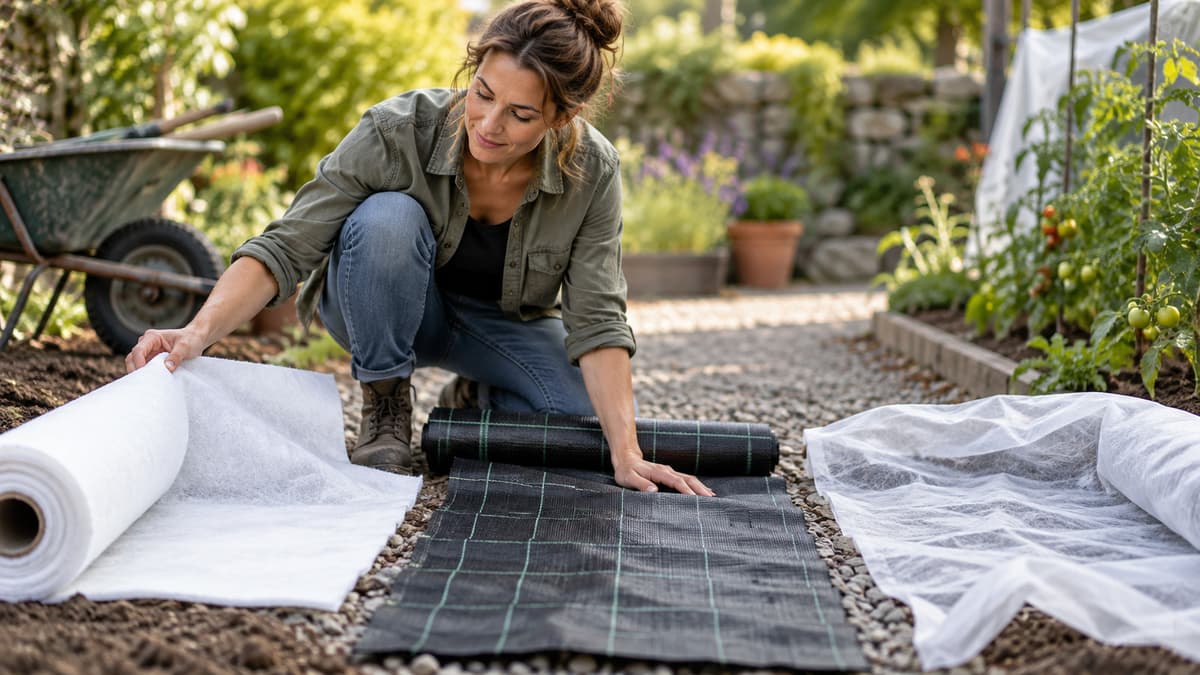
A weed membrane and a drainage fleece both get called fabric, and both get left on show because the mulch or the gravel has not arrived. They do different jobs. Non-woven drainage fleece is a filter and a separator. Water passes, and soil stays out of the stone. Woven weed membrane is there to block light under a mulch. The rolls for that job are on the weed membrane comparison. Using one as the other fails the job in front of you.
Weed fabric sold to live under mulch still wants that mulch. Sherborne's note ties a stated life to the fabric being covered. A black sheet on a bed, with the edges flapping, leaves the membrane exposed. Stabiliser in the weave can serve the laying period and still leave the sheet short of a path surface. A heavier woven garden sheet, including the rolls on the 150 g weed membrane comparison, remains a weed fabric. More grams per square metre do not replace the bark.
Hy-Tex Covertex is the contrast, and it is not a buried fleece. It is a UV-stabilised woven ground cover meant to cope with surface use. If you want a visible surface that stays uncovered, a white 100 gsm trench fleece is the wrong family. Both can be polypropylene. That shared material does not move a drainage sheet into the surface-cover group. If you are unsure which roll is in the barrow, drainage fleece versus weed membrane separates them before you backfill.
White fleece in the sun
Bark and gravel count as cover when they hide the sheet and stay put. A UK review of a white Spudulica cut noted the fleece showing under light chippings. Decorative gravel one stone deep, with pale patches between the stones, is neither a drainage build-up nor a mulch. If you can see the fibres, geotextile UV sunlight has not stopped.
Bark does the job when it stays continuous enough that the sheet remains dark after weather. A sprinkle that blows off the laps will not. This research does not give a millimetre depth for every bark and every slope, so none is invented here. On a slope the mulch migrates, so a cover that looked complete on Saturday can be striped a few days later.
On a drive or a patio the cover is the sub-base and the surface. A sheet left bare because the stone has not arrived is back in the installation exposure. Keep the roll wrapped, or put a light-blocking cover over fabric already laid, until the aggregate is there. A dry forecast is not a clearance.
What a 25-year claim depends on
Ekotex states a planned minimum of 25 years for natural soils, inside a pH and temperature band, and the same text says to cover the geotextile after application. That is a buried, conditional figure. It is a poor caption for a white sheet on a patio, and a poor caption for every brand in the same search. This page does not reprint the band. If the job needs the numbers, read the datasheet for the product you are buying. A marketplace title is not that datasheet, and soil outside the stated band is outside the claim.
Polypropylene geotextile durability, in the Lotrak note, splits the same way. Ultraviolet inhibitors help during installation. The buried service life is a separate claim. Quoting 25 years beside exposed white fleece mixes the two. Lotrak UV protection, in that note, is for the laying period, not for a summer path you bury later.
A torn delivery does not extend the exposure while the parcel is in dispute. The £29.55 price and the 4.9 star line from 45 reviews say nothing about days in the sun. Twenty-five years is not a warranty this site can enforce. During laying, cover to the maker's guidance. After laying, any lifespan you quote is the buried one, and only inside the conditions that product states.
Common questions
Can I leave white drainage fleece on the surface?
How fast does sunlight damage geotextile?
Is a buried French drain safe from UV?
Does a weed membrane follow the same rule?
What does a 25-year geotextile claim depend on?
Will bark be enough cover?
What if the first metre arrived torn?
Which page shows the drainage fleece?

Peter F. is the editor for DIY & tools at productscompared.co.uk. Comparisons in this category are checked against amazon.co.uk listings, review evidence and public UK sources.
Related articles

Weeds coming through decorative gravel
Drainage fleece and weed membrane are both sold for gravel, and they are not the same job.
Choosing ground fabric
Fleece, weed membrane, and frost fleece share a word and do three different jobs in a garden.

Geotextile under a domestic drive
A 100 gsm sheet is a merchant starting point. It is not a published strength for every drive.