Independent comparisons. We may earn from shop links. More info

How to care for a kentia palm

Updated: October 2026

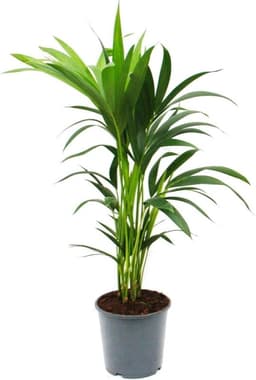
You have a living Howea forsteriana in a British room, or you are about to, and the leaves will tell you within a month if the watering habit is wrong. This is how to care for a kentia palm when the published temperature figures do not match and the amazon.co.uk listing only says moderate watering. The [kentia palm comparison](/hub/trees-and-palms/kentia-palm) is where the product rows sit. Care lives here. The Products Compared editorial team updated this page on 16 October 2026 from RHS and BBC Gardeners' World advice, not from a grow trial of our own. A qualifying purchase can earn a commission at no extra cost to you.

You have a living Howea forsteriana in a British room, or you are about to, and the leaves will tell you within a month if the watering habit is wrong.

Our top picks

On this page

Light in a UK room

Give it bright light that is not a direct beam through the glass. The RHS says Howea tolerates quite low light, more so than an areca. Low light is not a dark hallway. Put it where you can read by daylight, and turn the pot when you water so the fronds do not all lean one way. Direct sun through glass scorches leaflets. A west-facing sill in July is the usual mistake. A metre back from the pane is enough in most rooms. A cold window in January can chill the pot overnight. If the only spot is a dim corner, an artificial kentia is the honest object, on the artificial kentia palm page. The living listing in this comparison, B07V8FQXNF, says partial sun. That is a seller field, not a care manual. Read it as not a sun trap, then follow the RHS line: bright, indirect, and out of scorch.

Water, feed, and the saucer

Water when the top few centimetres of compost are dry, then let the excess drain. BBC Gardeners' World puts it that way, with less water from autumn into winter. The RHS says no standing water. In a heated flat in July that can mean a soak about once a week. In a cool room in January it can mean a small drink every two or three weeks. If the compost is still cool and damp, wait. The listing's moderate watering means that finger test. Feed in the growing season only. The RHS suggests a fortnightly feed from April to mid-September, after a pause of about six to eight weeks on a newly potted plant. BBC says monthly in spring and summer. Do not feed a plant that is sitting wet and cold. The usual failure is a cachepot left full of water. Tip the cover out after watering. Misting is a humidity trick, not a substitute for watering the roots.

Winter temperature, with both published figures

Keep it indoors once nights fall, and do not pretend the two published minima are the same number. RHS hardiness for this species is H1A: heated glass, warmer than 15°C, all year. The RHS indoor-palm advice asks for winter nights nearer 16°C for Howea. BBC Gardeners' World prints a minimum of 12°C and an ideal of about 18–24°C. A porch that drops to 8°C is outside all of them. The RHS allows time outside from June to September, then back in. That is not a winter plan. If the plant might be an areca or a sago, use the kentia palm or areca palm page. Do not run this routine on a label that says Cycas.

Brown leaves and pests

An old lower frond that yellows, then browns, can be cut once it is spent. Browning across many leaves points to cold, wet compost, which is the BBC reading. Check the saucer before you feed. Pale patches facing the glass are scorch. Move the plant. The RHS calls the species generally disease-free and still names glasshouse red spider mite, thrips, and scale. A dry heated room in February is where mite shows: fine speckling, sometimes webbing. Scale sits as bumps on the stalk. Thrips leave silvery streaks. An RHS note also mentions mealybugs in dry air. If the crown collapses or the stem feels soft, ask a nursery. Call a vet only if a pet may have chewed a sago or a plant you cannot name.

Repotting without a huge new pot

Repot when the roots are packed, not because the plant looks shorter than a photo. Kentias are slow. A much larger pot holds wet compost around a small root ball. One size up, with drainage holes, in that peat-free loam mix, is the usual step. Spring is the sensible moment. After repotting, wait those six to eight weeks before you feed. The 19 cm pot on the £29.99 plant in this comparison is a nursery size, not a cue to jump to a 30 cm bowl in the first week. If you are still choosing, the kentia palm buying guide covers height, the cover pot, and the passport. Once it is home, the weekly job is a finger in the compost, a glance at the saucer, and a winter temperature inside the band the RHS and the BBC actually print.

Common questions

How often should I water in a British winter?
Less often than in summer, and only when the top few centimetres are dry. In a cool room that can be every two or three weeks. In a warm, bright room it may still be weekly. The listing's moderate watering does not name a day count. A standing saucer in January is the mistake that browns the plant.
Can it sit away from the window?
It tolerates lower light than an areca, on the RHS indoor-palm page, and it still needs daylight. A spot where you can read without a lamp is a fair test. A dark corner will not hold a living kentia in good leaf. Direct sun through glass is the other extreme, and it scorches.
What compost should I use when I do repot?
A peat-free loam-based mix with bark or leaf mould, and grit if drainage is slow, which is the RHS plant-record mix. The amazon.co.uk listing in this comparison does not name a compost. Keep the new pot one size up, with holes, and do not feed for about six to eight weeks afterwards.
When is a brown frond normal?
When it is an old lower frond that yellows and then browns while the crown stays green. Cut it once it is spent. Browning across many leaves, with wet compost, points to cold and overwatering, which is the BBC reading. Pale patches facing the window point to scorch.
Is misting a substitute for watering?
No. A pebble tray or a light mist is only about humidity. The roots still need a drink when the top compost has dried, and they still need that water to leave the pot. Do not mist a silk tree. Silk wants a dry dust, on the artificial page.
What pests show up in a dry centrally heated room?
Glasshouse red spider mite, thrips, and scale are the three the RHS names, and mealybug is an additional dry-air note. Look under the leaflets before you spray the whole flat. If the growing point collapses or the stem is soft, ask a nursery rather than adding another treatment.

Related pages

Sources

Public UK sources from the research digest, last checked on 16 October 2026. Shelf prices and the single review line are the amazon.co.uk figures in the display file, captured on 15 October 2026. Hardiness and care lines are quoted from the RHS and BBC Gardeners' World, which disagree on the winter minimum.

  1. RHS: Howea forsteriana (retrieved 16 October 2026)
  2. RHS: Indoor palms (retrieved 16 October 2026)
  3. RHS: Hardiness ratings (retrieved 16 October 2026)
  4. BBC Gardeners' World: kentia palm (retrieved 16 October 2026)
  5. ASPCA: Kentia palm (retrieved 16 October 2026)
  6. RHS: Cycas revoluta (retrieved 16 October 2026)
  7. Animal PoisonLine: plants and poisons (retrieved 16 October 2026)
  8. GOV.UK: plant passports in Great Britain (retrieved 16 October 2026)