Independent comparisons. We may earn from shop links. More info

Kentia palm buying guide

Updated: October 2026

You are looking at an amazon.co.uk title that says kentia or palm, and you need to know whether it is Howea forsteriana, how tall it is with the pot, and whether a British winter will kill it. This kentia palm buying guide is that checklist. The [kentia palm comparison](/hub/trees-and-palms/kentia-palm) holds the three listings we captured. The Products Compared editorial team updated this page on 16 October 2026 from amazon.co.uk extracts, the Royal Horticultural Society, and GOV.UK. We did not grow these plants in a lab. A qualifying purchase through our links can earn a commission at no extra cost to you.

You are looking at an amazon.co.uk title that says kentia or palm, and you need to know whether it is Howea forsteriana, how tall it is with the pot, and whether a British winter will kill it.

Our top picks

On this page

Read the botanical name before the word palm

The search mixes four different plants, and the English word palm does not sort them. A kentia for a UK living room is Howea forsteriana, a single-stemmed palm from Lord Howe Island, sold as a houseplant. An areca is usually Dypsis lutescens, a clump that wants brighter light. A parlour palm is Chamaedorea elegans, smaller and also shade-tolerant, and it is not a young kentia. A sago is Cycas revoluta, a cycad, and it is the one you should refuse if a pet might chew it. The kentia palm or areca palm page sets those names out. Start with the botanical line, not the photo. If the title says artificial, silk, or plastic, you are buying décor, not a living Howea. A listing that says Kentia Palme is still worth opening only when Howea forsteriana is printed as well. The exotenherz row, B07V8FQXNF, does both, and it puts Organic in a feature field with no certification named. Treat that as an empty claim. If the label is Dypsis, Chamaedorea, or Cycas, leave the page.

Height, nursery pot, and the cover pot

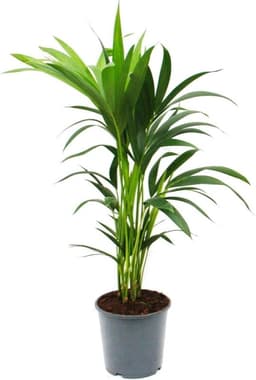
Height is the next place a listing goes soft. Shops such as Hortology and The Stem measure from the base of the grow pot to the tallest leaf, and they often allow about ±10%. That is their habit, not a promise that every amazon.co.uk plant arrives inside the band. The Consumer Rights Act 2015 still expects the plant to match the description, so approx is an estimate you check on the doorstep. The only living plant in this comparison states a 19 cm pot and about 80 cm total, at £29.99, weighing 1.8 kg. It does not say the decorative cover in the photo is in the box. A cachepot left full of water is how these palms fail, which is why the how to care for a kentia palm page starts with the saucer. On this listing the height is the total. A cover pot is not included. Crocus calls a kentia multi-stemmed. The RHS record says single-stemmed. Several young plants in one pot, which Palm Centre sells, can look like several trunks.

Winter, pets, and the parcel

A kentia is not a hardy garden palm. The RHS rates Howea forsteriana H1A, meaning a heated glasshouse warmer than 15°C all year. Its indoor-palm advice is a little tighter for winter nights, nearer 16°C, and it allows time outside only from June to September. BBC Gardeners' World prints a minimum of 12°C. Do not collapse those into one number, and do not copy a shop line that claims tolerance to −5°C. A Chusan palm in a neighbour's border is a different species. If your porch drops with the weather, this is the wrong plant. ASPCA lists Howea forsteriana as non-toxic to cats and dogs. The captured file asks pet friendly and does not answer, and that line is false for a sago. A distance sale of regulated plants in Great Britain still needs a UK plant passport. These listings do not show one, so we do not claim it was checked. Artificial plants sit outside the rule.

What this comparison actually captured

The captured set is one living plant and two artificial trees, and this page does not rank them. Ten pence separates the living Howea at £29.99 and the 70 cm plastic tree at £29.89, and they solve different rooms. The silk tree is arranged at 120 cm by 90 cm by 90 cm, at £50.07, with 5.0 from one rating. The origin line on the living listing says Lowd-Howe Islands. Use the best kentia palm page when you already know you want a living plant, a short plastic tree, or a taller silk one. If the botanical name, the height including the pot, or an indoor mark is missing, the cheaper title is not the better buy.

Common questions

Does the pot in the photo come with the plant?
Often the nursery pot is included and the decorative cover is not. The living listing in this comparison states a 19 cm pot and about 80 cm total. It does not describe a cover pot in the box. If you need the ceramic pot in the lifestyle image, treat it as a separate buy until the bullet says otherwise.
Is 80 cm the leaf tip or the pot as well?
On this listing, about 80 cm is the total height, with the 19 cm pot stated beside it. Other UK shops measure from the base of the pot to the tallest leaf and allow roughly ±10%. That is their habit, not a guarantee for every amazon.co.uk plant marked approx. Check the plant when it arrives.
Can I leave it outside in a British winter?
No. RHS hardiness for Howea forsteriana is H1A, warmer than 15°C under glass all year. Time outdoors is June to September only, in the RHS indoor-palm advice. BBC's 12°C minimum is a different figure, not permission for a border. Ignore any shop claim of −5°C.
Is it safe for a cat or a dog?
ASPCA lists Howea forsteriana as non-toxic to cats and dogs. The captured listing asks pet friendly and does not answer. That non-toxic line does not cover a sago, Cycas revoluta, which can cause severe liver damage if eaten. Read the botanical name before you rely on it.
Why does another listing at a similar height cost more?
Search snippets on 16 October 2026 showed other living plants near 80 cm from about £39 to about £59, against £29.99 here, and a 130 cm plant at £109.99. Those pages were not opened. A higher price can be a larger pot, several young plants in one pot, or another seller's margin. It is not, by itself, a better kentia.
How do I spot an areca or a sago in the same search?
Look for Dypsis lutescens on an areca, Chamaedorea elegans on a parlour palm, and Cycas revoluta on a sago. A clump of thin stems is not a kentia trunk. A sago is the plant to keep away from pets. The species page walks through the split.

Related pages

Sources

Public UK sources from the research digest, last checked on 16 October 2026. Shelf prices and the single review line are the amazon.co.uk figures in the display file, captured on 15 October 2026. Hardiness and care lines are quoted from the RHS and BBC Gardeners' World, which disagree on the winter minimum.

  1. RHS: Howea forsteriana (retrieved 16 October 2026)
  2. RHS: Indoor palms (retrieved 16 October 2026)
  3. RHS: Hardiness ratings (retrieved 16 October 2026)
  4. BBC Gardeners' World: kentia palm (retrieved 16 October 2026)
  5. ASPCA: Kentia palm (retrieved 16 October 2026)
  6. RHS: Cycas revoluta (retrieved 16 October 2026)
  7. Animal PoisonLine: plants and poisons (retrieved 16 October 2026)
  8. GOV.UK: plant passports in Great Britain (retrieved 16 October 2026)