Independent comparisons. We may earn from shop links. More info

Kentia palm comparison 2026

The best kentia palms, compared.

Top pick: Leaf artificial kentia, 120 cm – Highest score in this comparison, 4.8 out of 10, from 1 amazon.co.uk reviews. Updated October 2026.

Peter F.
Peter F.Editor

A kentia palm in a UK shop is forsteriana, a single-stemmed palm sold as a houseplant, not as a hardy garden tree. The Royal Horticultural Society rates it, meaning heated glass warmer than 15°C all year. amazon.co.uk also lists silk and plastic trees under the same search. Areca, parlour palm and sago turned up in the wider search and are not kentias. Species, height, pot and hardiness are set out in the [kentia palm buying guide](/hub/trees-and-palms/kentia-palm/sub/kentia-palm-buying-guide). Indoor-palm advice from the same source says tolerates fairly low light and wants a winter night nearer 16°C, and it allows a plunge outside from June to September, not a UK winter in the border.

A kentia palm in a UK shop is forsteriana, a single-stemmed palm sold as a houseplant, not as a hardy garden tree. The Royal Horticultural Society rates it, meaning heated glass warmer than 15°C all year.

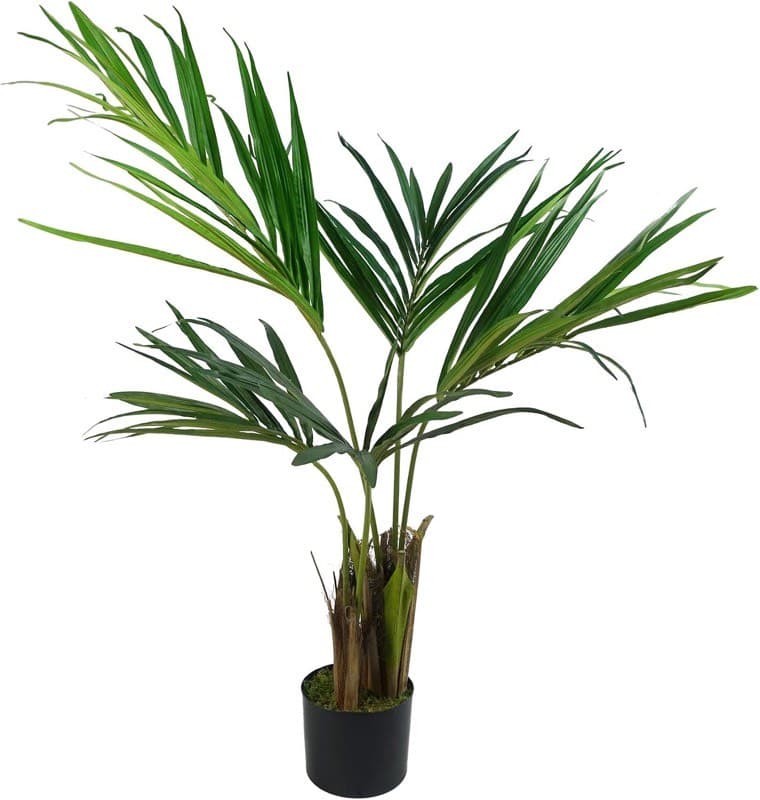
Leaf artificial kentia, 120 cm

Best overall

Leaf artificial kentia, 120 cm
4.8/10∼ £50

11 products checked · 48 hrs invested · +12,400 readers

3 of 3: Best kentia palms compared

Swipe for more

1-2 of 3
Best overall
Leaf artificial kentia, 120 cm
Howea forsteriana, about 80 cm
Artificial kentia, 70 cm
4.8/10
4.8/10
3.4/10
∼ £50
∼ £30
∼ £30
5.0(1)
–
–
View offer
View offer
View offer

Personal buying guide

Question 1 of 2

Do you want a plant you water, or decor you dust?

The best kentia palms in detail

Leaf artificial kentia, 120 cm

Rank 1

Leaf artificial kentia, 120 cm

∼£50

Our view

This Leaf listing is a silk artificial palm the bullet calls a kentia, arranged at 120 cm high by 90 cm by 90 cm, at about £50.07. The branches are wired, so you can open them towards that spread, and the plastic pot is weighted, about 18 cm across and 14 cm high. At 1 kg it is light for that height, and the listing does not claim the weighted pot will stop a child or a pet knocking it over. Customer Reviews is 5.0 out of 5 from 1 rating, dated 9 August 2024: the buyer said visitors were surprised it was artificial and was happy with the price and the quality. That review states no fault, and one rating is not a pattern you can lean on. It is not a living Howea forsteriana, and a larger decorative planter is suggested and not included.

Pros

  • Bullet names an artificial kentia and silk leaves
  • Height, spread, and pot size are stated
  • Branches are described as wired and shapeable

Cons

  • Only one review, so there is no pattern of praise or complaint
  • Not a living Howea forsteriana
  • No indoor or outdoor field and no watering field, as expected for a fake
  • A larger decorative planter is suggested and not included

Best for: A buyer who wants a 120 cm silk tree the bullet calls a kentia, with wired branches.

Less suitable: Anyone who wants a living plant or a review count above one.

Specifications

Model
Leaf artificial kentia, 120 cm
Brand
Leaf
Price
∼£50
Customer rating
5.0/5(1)
Living plant
No
Howea named
No
Height
120 cm
Spread
90 cm
Pot
18 × 14 cm
Material
Silk
Wired branches
Yes
Weight
1 kg
Built-in light
No

Common questions

Is this sold as a kentia, and what is it made of?

The bullet calls it an artificial kentia palm tree with silk leaves. The colour field says 120cm Kentia Palm. Material type is silk.

Can the branches be shaped, and how big is it?

The listing says the branches are wired and can be shaped. As arranged in the seller photos it is 120 cm high by 90 cm by 90 cm. The plastic pot is about 18 cm across and 14 cm high.

What does the review say?

The review line is 5.0 out of 5 from 1 rating. The only review says visitors are surprised it is artificial and that the buyer was happy with the price and the quality. It names no fault.

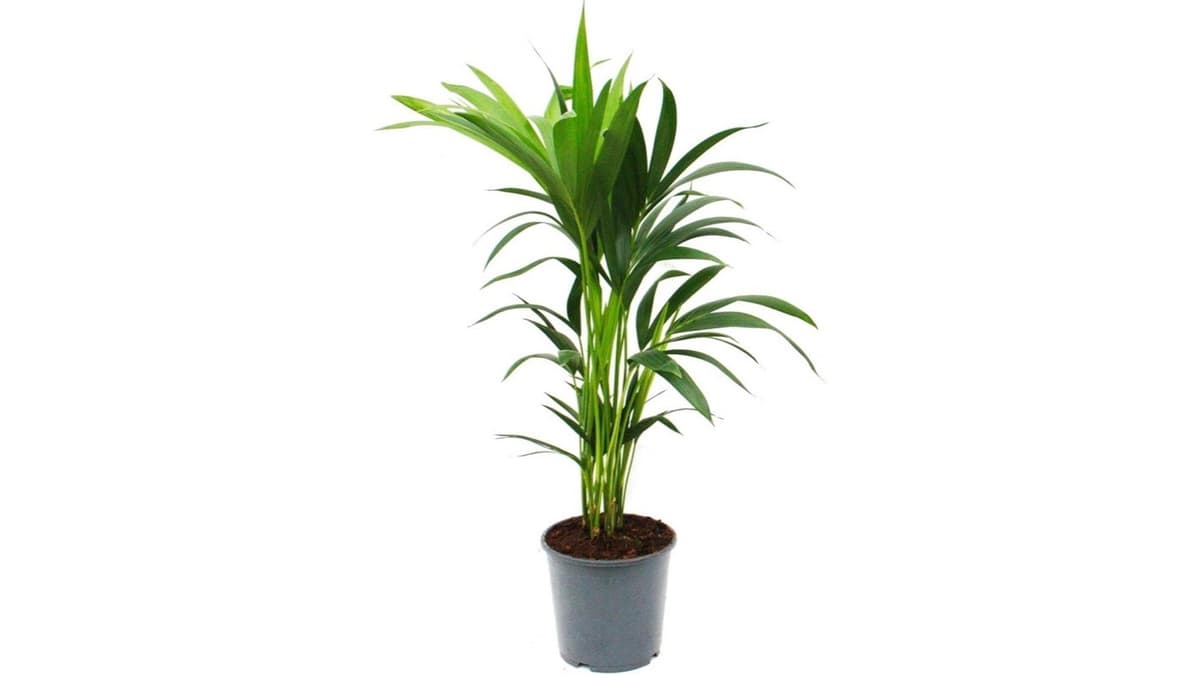
Howea forsteriana, about 80 cm

Rank 2

Howea forsteriana, about 80 cm

∼£30

Our view

This is a living Howea forsteriana in a 19 cm pot, listed at about 80 cm including the pot and about £29.99. At 1.8 kg it is a plant one person can carry through a flat doorway, though the listing does not say how many young stems share the pot. It is marked indoor, partial sun, and moderate watering, which points to a houseplant rather than a border tree, and it does not name a compost mix. There is no Customer Reviews line, so you cannot read how the last buyers found the leaves or the delivery. The English-name line still says Kentia Palme and the origin line says Lowd-Howe Islands, so the botanical name is the line to trust. The special-feature field says Organic and names no certification. The pet-friendly question is asked on the listing and left unanswered.

Pros

  • Botanical name on the listing is Howea forsteriana
  • A 19 cm pot and an approximate total height of about 80 cm are both stated
  • Listed at about £29.99 and 1.8 kg, so it is a carry-in size
  • Marked indoor, partial sun, and moderate watering

Cons

  • No Customer Reviews line and no review text
  • Pet-friendly and soil are asked and not answered
  • Origin is printed as Lowd-Howe Islands and the English name as Kentia Palme
  • Organic appears as a feature with no certification named

Best for: A buyer who wants a living indoor Howea about 80 cm and will check the plant on arrival.

Less suitable: Anyone who needs a star rating, a stated compost mix, or an artificial plant.

Specifications

Model
Howea forsteriana, about 80 cm
Brand
exotenherz
Price
∼£30
Living plant
Yes
Howea named
Yes
Height
80 cm
Pot
19 cm
Material
Natural
Light
Partial sun
Watering
Moderate
Weight
1.8 kg

Common questions

How tall is this plant, and what pot does the listing state?

The listing says a 19 cm pot and a total height of about 80 cm. It does not state a separate decorative cover.

What light and watering does the listing give?

The listing marks it indoor, partial sun, and moderate watering. It does not name a compost mix.

Does the listing say the plant is pet friendly?

The listing asks whether it is pet friendly and does not answer. Soil is asked and not answered in the same way.

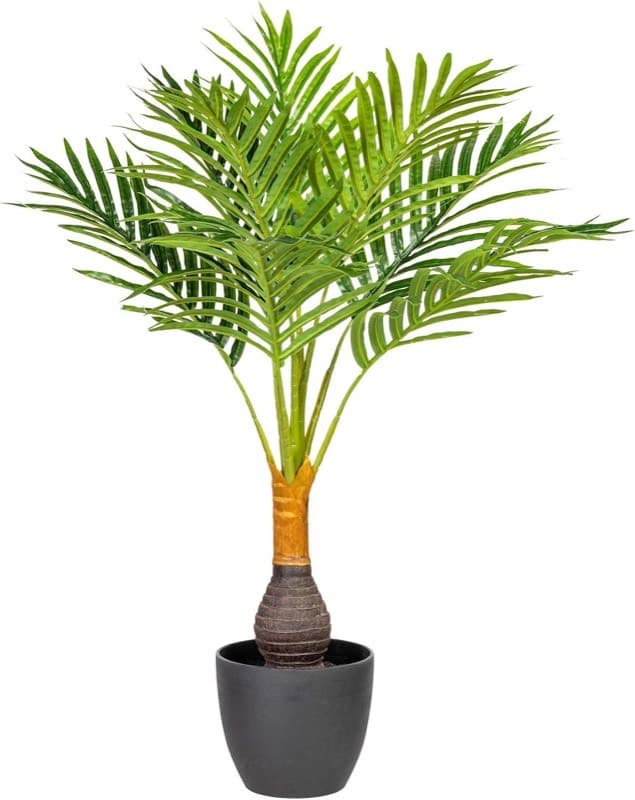
Artificial kentia, 70 cm

Rank 3

Artificial kentia, 70 cm

∼£30

Our view

This CREATIV green listing is a 70 cm artificial kentia in a black plastic pot at about £29.89, so it is a short decor piece rather than a plant you water. The material field says plastic and built-in light is no. The manufacturer field says DeMa Handel. There is no Customer Reviews line, so you have no buyer note on whether the leaves look sparse or the pot sits flat. Weight and pot diameter are missing, which matters if you need to know whether it will tip or fit a cover pot you already own. The title calls it a kentia, but Howea forsteriana is not on the listing, and this is not a living plant. There is no indoor or outdoor field either.

Pros

  • The title names an artificial kentia and a 70 cm height
  • Material is stated as plastic
  • Listed at about £29.89, in the same band as the 80 cm living plant
  • Built-in light is stated as no

Cons

  • No Customer Reviews line and no review text
  • No weight and no pot diameter
  • No indoor or outdoor field
  • Not a living Howea forsteriana

Best for: A buyer who wants a short artificial plant the title calls a kentia and can accept a thin spec sheet.

Less suitable: Anyone who wants a living Howea forsteriana, a stated spread, or a review line.

Specifications

Model
Artificial kentia, 70 cm
Brand
CREATIV green
Price
∼£30
Living plant
No
Howea named
No
Height
70 cm
Material
Plastic
Built-in light
No

Common questions

Is this a living kentia?

The title says it is an artificial kentia palm in a black plastic pot, 70 cm. The botanical name Howea forsteriana is not on the listing.

What is it made of, and does it have a light?

The material type field says plastic. Built-in light is no.

Is there a review score on the listing?

The listing has no Customer Reviews line and no review text. Weight and pot diameter are also absent.

How we compared

Three amazon.co.uk listings were scored on 16 October 2026 from the captured pages, not from a nursery trial. The working bands are stars up to 20, review volume up to 10, listing facts up to 40, practical fit up to 22 and price up to 10, then deductions. A living plant and a silk or plastic tree are not scored as the same job. The weights below are those bands with one point taken off listing and one off fit so they sum to 100. Deductions sit outside the weights. No review line scores 0 for stars and volume. One review is not a pattern.

1

Listing facts

39%

Botanical name or an explicit artificial kentia, a height, and a pot you can measure. A full silk spec scores in the mid-20s of the working band. A title with almost no measurements scores lower.

2

Practical fit

21%

The listing says whether the object is a living indoor plant or decor. Light or material, where stated, adds points. A living Howea and a fake are not the same job.

3

Amazon stars

20%

Amazon stars divided by 5, then times 20, when a Customer Reviews line exists. No review line scores 0. The star line on the product stays the UK listing figure.

4

Review volume

10%

One rating scores 4 on the working band. No review line scores 0. A single review on 9 August 2024 is not treated as a pattern.

5

Price

10%

Shelf price in the captured file, not a live check. About £30 scores 8 on the working 0–10 band. About £50 for the larger silk tree scores 4.

Independent review
Last updated: October 2026
8 sources checked

Kentia palm buying guide

Start with the botanical name, then with living or artificial, then with height and pot, then with the winter temperature you actually have. Price comes after those. The notes below follow that order for these three amazon.co.uk listings. None of the scores is a nursery trial.

What to check on a kentia listing

A kentia palm on a UK listing is Howea forsteriana, a single-stemmed Lord Howe Island palm sold as a houseplant. It is not a hardy garden tree. The Royal Horticultural Society plant record rates it H1A, which means a heated glasshouse, warmer than 15°C, all year. Indoor-palm advice from the same source says Howea tolerates fairly low light and wants a winter night nearer 16°C, and it allows a plunge outside from June to September, not a UK winter in the border.

Best for

  • A renter who wants one living indoor Howea and will test the compost before watering
  • A pet owner who will read Howea forsteriana and will not accept a sago from a kentia search
  • A dim office that needs silk or plastic and a duster, not a winter temperature

Not ideal for

  • A UK border or an unheated porch through winter
  • Anyone treating one 5.0 review, or a blank review line, as a winner
  • A buyer who reads Organic or air-purifying as a laboratory result

Mistakes to avoid

  1. 1

    Buying areca, parlour palm or sago from a kentia search

    Dypsis, Chamaedorea and Cycas are not Howea forsteriana. A sago is the one that is toxic to pets. Read the botanical name before the title.

  2. 2

    Leaving water in the cover pot, or watering in January as in July

    The compost wants drainage holes and no standing water. Let the top dry slightly, and use less water from autumn into winter. A much larger pot is a common mistake.

  3. 3

    Leaving it outside because a hardy palm survived nearby

    H1A means warmer than 15°C all year. A plunge outside is June to September only. A kentia is not a Chusan palm.

What to weigh up

Species, living or artificial, and size

High

The first line to read is the botanical name. Howea forsteriana is the kentia. An explicit artificial kentia is the other honest label. Dypsis lutescens, Chamaedorea elegans and Cycas revoluta fail a kentia search even when the title says palm. Living or artificial is the next split, and it comes before price. In this set about £29.99 is the living plant and about £29.89 is the 70 cm plastic tree. They are not substitutes.

Light, water, pets and a passport

High

A living kentia wants bright light that is not direct sun through glass. RHS advice puts a winter night nearer 16°C and rates the plant H1A, warmer than 15°C. BBC Gardeners' World prints 12°C. Both stay on the page because they disagree. A cold porch and a radiator are poor places. Compost, when stated, is a peat-free loam-based mix with bark or grit. Let the surface dry slightly, water less from autumn into winter, and feed only in the growing season.

Which option suits you?

Three typical situations, each with a recommendation from this comparison.

A living plant you will water

You want one indoor Howea forsteriana and you will check the plant on arrival. The exotenherz listing names the species, a 19 cm pot and about 80 cm, at about £29.99 and 1.8 kg. There is no Customer Reviews line, and the pet and soil lines are blank.

A short plastic stand-in

You want a 70 cm artificial plant the title calls a kentia, and you can accept a thin spec sheet. The CREATIV green listing is plastic, in a black plastic pot, at about £29.89. Weight, pot diameter and a review line are all missing.

A taller silk tree to dust

A dim room that will not keep a living palm is a decor job. The Leaf listing is silk, about 120 cm by 90 cm, with wired branches, at about £50.07. The only review is 5.0 from 1 rating on 9 August 2024.

Common questions about kentia palms

Is a kentia palm winter hardy in the UK?
No. The Royal Horticultural Society rates Howea forsteriana H1A: a heated glasshouse, warmer than 15°C, all year. Its indoor-palm advice allows a plunge outside from June to September, not a UK winter in the border. A kentia is not a Chusan palm, and it is not one of the hardy palm trees sold for a British garden. Leaving it outside because a hardy palm survived nearby is a common way to lose the plant.
How much does a kentia palm cost on amazon.co.uk?
As a rule of thumb for this captured set, not a market survey, about £30 buys the living plant at about £29.99 or the 70 cm plastic tree at about £29.89. About £50 buys the 120 cm silk tree at about £50.07. Larger living kentias, around 130 cm and 170 cm, appear on amazon.co.uk but have no price in this folder. These figures were captured on 15 October 2026. Check the listing again before you treat them as today's shelf price.
How do you tell a kentia from an areca or a sago?
A kentia is Howea forsteriana: one trunk and arching pinnate fronds. An areca is Dypsis lutescens, clumping, and it wants brighter light. A parlour palm is Chamaedorea elegans, smaller and also shade-tolerant, but it is not a kentia. A sago is Cycas revoluta, a cycad, and the RHS lists it as toxic to pets. If the title says kentia and the botanical name is one of those others, it is the wrong plant for this search.
Is a kentia palm safe for cats and dogs?
The ASPCA lists Howea forsteriana as non-toxic to cats and dogs. That sentence is not true of every palm, and it is false for a sago. The living listing in this set asks whether the plant is pet friendly and does not answer, so the botanical name is the line to trust, not a blank field. The two artificial trees are silk or plastic, not that species. Call a vet if a pet may have chewed a sago or an unknown palm.
What light and winter temperature does a living kentia need?
RHS indoor-palm advice says Howea tolerates fairly low light and wants a winter night nearer 16°C. Bright light is fine if it is not direct sun through glass, which scorches leaves. A cold porch and a radiator are both poor places. BBC Gardeners' World gives a 12°C minimum, which disagrees with the RHS 16°C line and with H1A, warmer than 15°C. This page quotes both and does not pick one as a laboratory result. Feed in the growing season only.
Should you buy a living kentia or an artificial one?
Decide that before the price. A living Howea needs light, winter warmth and watering that lets the top of the compost dry slightly, with less water from autumn into winter. A silk or plastic kentia does not grow and needs dusting rather than water. About £30 in this set buys either the 80 cm living plant or the 70 cm plastic tree. The 120 cm silk tree is the taller decor option, at about £50.07, with one review.
Do these listings show a UK plant passport?
GOV.UK says regulated plants sold at a distance in Great Britain still need a UK plant passport. Northern Ireland stays on the EU scheme. Artificial plants are outside that rule. These captured listings do not show a passport, and this page does not claim one was checked. Under the Consumer Rights Act 2015, a plant must match its description when the height is only approximate. Registration to issue passports is for sellers, through APHA in England and Wales.
When should you call a vet or a nursery?
Call a vet if a pet may have chewed a sago or a palm you cannot name. Animal PoisonLine warns that cycads, mainly sago, can cause severe liver damage if eaten. Ask a nursery if the crown collapses or the stem is soft. Brown tips from dry air or scorch are a care problem, not automatically a vet visit. Pests named by the RHS for this palm are glasshouse red spider mite, thrips and scale. This comparison did not inspect the three parcels.

Our verdict

There is no top pick and no best value in this set. The score method withholds both awards because a living plant and a fake are different jobs, and because two listings have no Customer Reviews line while the third has one review. The exotenherz Howea forsteriana is the living indoor plant, about 80 cm in a 19 cm pot at about £29.99. The CREATIV green tree is a 70 cm plastic kentia at about £29.89. The Leaf tree is silk, about 120 cm by 90 cm, at about £50.07. Prices are the figures captured on 15 October 2026, not a live shelf check, and none of these scores is a nursery trial.

Best overall
Leaf artificial kentia, 120 cm

Leaf artificial kentia, 120 cm

Highest score in this comparison, 4.8 out of 10, from 1 amazon.co.uk reviews.

View offer
Best value

No award. The plastic tree is 10p cheaper than the living plant and states far less. That is not a best-value case.

Editorial

Peter F. - Editor
Editor
DIY & toolsamazon.co.uk listingsPublic UK sources

Peter F. is the editor for DIY & tools at productscompared.co.uk. Comparisons in this category are checked against amazon.co.uk listings, review evidence and public UK sources.

Updated: October 2026
8 sources checked

Guides to kentia palms

Guides on what to look for, how to use a product, and common mistakes.

Related comparisons

Sources

Public UK sources from the research digest, last checked on 16 October 2026. Shelf prices and the single review line are the amazon.co.uk figures in the display file, captured on 15 October 2026. Hardiness and care lines are quoted from the RHS and BBC Gardeners' World, which disagree on the winter minimum.

  1. RHS: Howea forsteriana (retrieved 16 October 2026)
  2. RHS: Indoor palms (retrieved 16 October 2026)
  3. RHS: Hardiness ratings (retrieved 16 October 2026)
  4. BBC Gardeners' World: kentia palm (retrieved 16 October 2026)
  5. ASPCA: Kentia palm (retrieved 16 October 2026)
  6. RHS: Cycas revoluta (retrieved 16 October 2026)
  7. Animal PoisonLine: plants and poisons (retrieved 16 October 2026)
  8. GOV.UK: plant passports in Great Britain (retrieved 16 October 2026)

This page contains affiliate links to amazon.co.uk. If you buy through them, we may earn a commission at no extra cost to you. Prices, stars and review counts are from the UK listings captured on 15 October 2026. We did not run a nursery trial.