Olive tree or kentia palm indoors: match that room
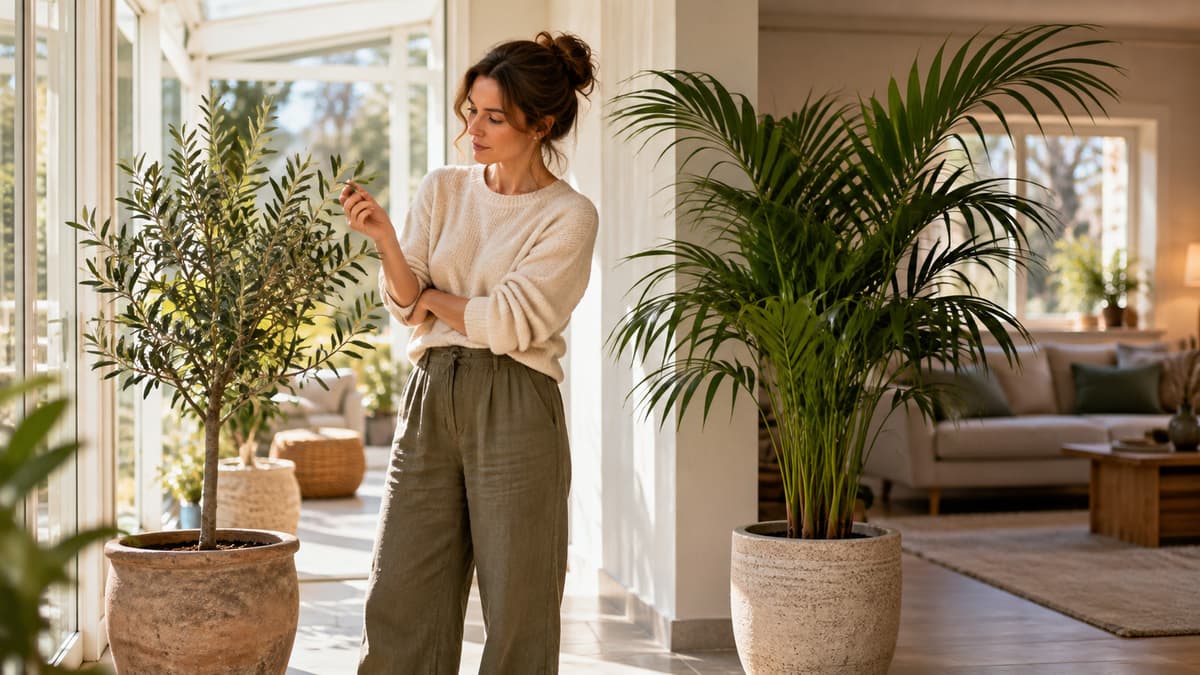
An olive indoors needs full sun and a frost-free winter plan. A kentia copes with dimmer light. Choose by the room you actually have, not the photograph.
On this page

The pot is in the hallway because that is where the photo looked balanced, and the leaves are already disappointing you. Olive tree or kentia palm indoors is the choice that hallway forces. An olive wants full sun and a winter you have planned. A kentia, Howea forsteriana, is the palm that tolerates a dimmer room, provided the room stays fit for a houseplant.
Peter F. checked Royal Horticultural Society growing notes and the amazon.co.uk listings staged for this hub. These plants were not grown in a lab for this page. A qualifying purchase through our links can earn a commission at no extra cost to you.
In short
Buy the olive if you can give it full sun and move it, or house it, somewhere frost-free. Buy the kentia if the room is heated and merely dim, and keep its pot out of standing water. Do not expect fruit from an indoor olive. A kentia is not a palm for the border.
The room each plant is actually for
Start with the window, not the leaf shape. An olive indoors in Britain is a sun plant in a container. The Royal Horticultural Society grows it in full sun, with sharp drainage, and treats the pot as something that can move. A south-facing conservatory, or a patio door that really is in sun for most of the day, is the room that matches. A living room where the bright patch lasts an hour is a room for a different plant.
A kentia accepts less light than that olive. Indoor-palm guidance puts Howea forsteriana among the palms that cope away from a fierce window. A bay that gets a soft day, a few metres back from the glass, is a fair kentia spot. A north wall with a net curtain and a television in front of it is you decorating.
A bright kitchen you can keep above freezing can hold an olive. A heated bedroom with one ordinary window is a kentia room. A bathroom with no window is neither.
Tolerating lower light is not the same as enjoying a south-facing pane in July, where sun through glass scorches. If your only bright spot is that hot glass, an olive uses it and a kentia may resent it. Measure the choice by where you can leave the pot on an ordinary Tuesday, not by where it looks right for a photograph.
Winter: frost-free glass versus a steady indoor palm
Winter is where the olive’s plan either exists or it does not. Olea europaea is rated H4. An olive may not survive below −10°C without protection. A plant in a pot is colder than the same plant in the ground, because the rootball sits above the soil. Frost-free means a place that does not freeze. A conservatory that looks warm in June and drops below zero on a January night has failed that test.
If the olive spends summer outside or in unheated glass, you need a frost-free holding place before the cold arrives, and a pot you can shift. A half-barrel you admired in May is a mistake in November if two people cannot lift it. Fleece on an exposed patio may blunt a light frost. It does not turn −10°C into safety.
A kentia does not get that outdoor winter at all. A steady heated room is the habitat. A summer spell outside is optional, then the plant comes back in. A kentia is not a garden palm. The palm that stays in a British border is another species, which is why hardy palm trees is a different comparison from a houseplant.
An unheated porch, a spare room you shut off to save on heating, and a hallway that shares a door with the street fail both plants. If you cannot name the frost-free spot today, you are not ready for the olive. If the only free corner is that porch, you are not ready for the kentia either.
Water, compost, and the mistakes
The olive’s compost line, under glass, is John Innes No. 3, a loam-based mix with the drainage kept sharp. The pot needs a hole. A decorative cover is allowed only if you lift the inner pot, water it, and tip the cover out. In summer, a pot in full sun can dry fast: water when the top has dried, then stop. In winter, in a cool frost-free place, that same weekly habit is too much.
A kentia fails in standing water too: do not leave it sitting in a saucer of water. It can take lower light than the olive. It cannot take a wet, airless rootball. Empty the saucer. If the cover pot has no drainage, take the plant out to water it at the sink.
Move an olive up a pot size when roots circle, into a container you have already proved you can lift. A kentia in a huge new pot holds more wet compost than the roots can use. Misting does not fix a dark room, and it does not replace drainage. If the leaves are dusty, wipe them so they can use what light there is. If the leaves are yellowing, check the saucer and the window before you buy a tonic.
Fruit, and why it may never appear
Fruit on an olive kept as a houseplant or conservatory plant in Britain is uncertain. The tree needs sun, warmth through a long season, and a winter that does not destroy the effort. If a listing shows olives on the branches, read that as a photograph. It is not a schedule.
Some cultivars are only partly self-fertile. Salonenque is the example named in that context, so a label matters and an unlabelled pot does not tell you which case you bought. A second tree can be relevant in a real fruiting setup. It does not create a south-facing glasshouse. Two olives in a dim room are two plants waiting for sun.
A kentia will not stand in for that crop. It is a foliage palm. If the aim is olives you can eat, you want a sunny, frost-free structure, a named cultivar, and patience measured in years. You do not have to refuse every olive that might one day crop. You do have to refuse any price that only makes sense if the crop is guaranteed.
Which to buy, with a condition
Choose the kentia when the room is heated, the light is ordinary rather than full sun, and you will keep the pot out of a filled saucer. The living plant in the kentia palm comparison is Howea forsteriana in a 19 cm pot, about 80 cm including that pot, at £29.99 and about 1.8 kg.
The file has no Customer Reviews line, so you cannot lean on a star rating. Check the plant on arrival: trust the botanical name, and treat a crushed frond as a delivery problem.
Choose the olive when you have full sun and a frost-free winter you can point to, plus a pot you can move. That is a living Olea europaea, in John Innes No. 3 under glass, with sharp drainage. It is not the set behind the olive tree comparison on this hub. Those listings are artificial trees. A silk olive solves a dim corner, needs no frost plan, and will never fruit.
A palm sold under a vague title does not inherit Howea care. Use the wider palm comparison when the label is not Howea forsteriana. A kentia left in the ground because a different palm survived next door dies in the first frost.
“This room is sunny and I have a frost-free place” is an olive. “This room is heated and only moderately bright, and I will empty the saucer” is a kentia. “I want the look and I will not water anything” is an artificial tree, on the olive comparison, not a third way of growing Olea. If none of those sentences is true, the right purchase is to wait.
Common questions
Can an olive stay in the house all year?
How much light does a kentia accept?
Will an indoor olive fruit?
Can I put a kentia outside for summer?
What compost does an olive in a pot want?
Which one survives a cool hallway?
Do I need two olives to fruit?
Which comparison should I open to buy one?

Peter F. is the editor for DIY & tools at productscompared.co.uk. Comparisons in this category are checked against amazon.co.uk listings, review evidence and public UK sources.
Related articles

A real plant or an artificial tree
A silk tree solves light and watering. It is a different product from a living olive or kentia.
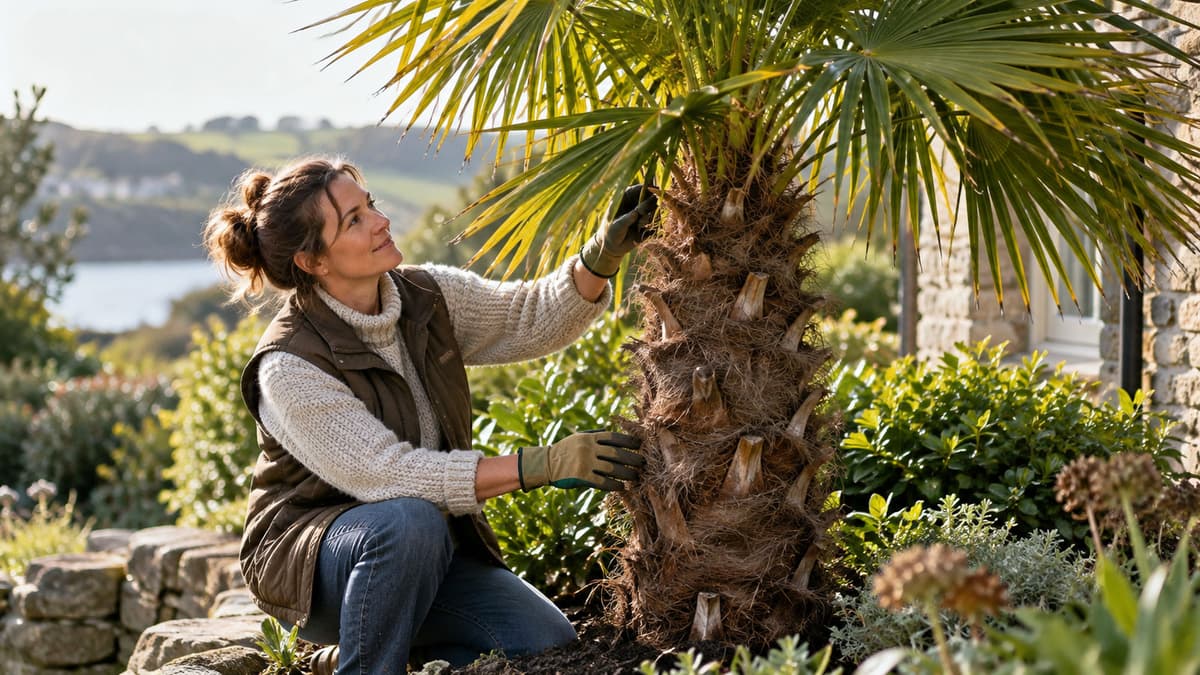
A palm that stays outside
A kentia is a houseplant. A palm for a British border is a different species and a different buy.

When a tree is in trouble
Dieback after winter and a plant that was wrong for the room are not the same next step.