Signs a fruit tree is dying: wait, cut, or report

Silvery leaves, shothole, and an empty crop are different problems. Check one branch, the soil, and any new garden plant before you cut wood or report it.
On this page

You walk out in July and the apricot that flowered in March has a full set of leaves, a few empty spurs, and one branch that looks pale beside the rest. Or the new plum has holes through the leaves and a bead of gum on the stem. Signs a fruit tree is dying are easy to over-read when the crop is missing, a leaf has turned silver, or a pot has stayed wet. Each picture asks for a different next step, and only some of them end with a saw.
This page is from Peter F. and was updated in October 2026. It follows Royal Horticultural Society notes on silver leaf, bacterial canker, apricot cropping, planting and watering, and indoor palms. There was no disease trial, and there is no spray recipe here. A qualifying purchase through our links can earn a commission at no extra cost to you.
In short
An apricot that flowered and set nothing can still be alive, because the Royal Horticultural Society treats a missing crop as frost or failed pollination. Silvery leaves need a cut across the wood, since silver leaf stains it and cold or drought often does not. Holes in older leaves are usually bacterial canker, while spots with a yellow halo on a plant you have just bought are the case to report, and a wilted tree in wet soil needs less water.
No fruit is not a dead tree
You had blossom. You have leaves. You have no apricots. The Royal Horticultural Society apricot guidance treats that empty year as frost on the flowers, or as pollination that never happened. A branch that carries leaves this summer was alive when those leaves formed, so a tree in full leaf, with empty spurs, is a living tree that missed a crop.
A late frost can brown the petals and still leave the tree to leaf out in May. A cover left on through flowering can keep insects away from the blossom, so the fruit fails on a night that was not especially cold. How to time a cover sits on protecting fruit blossom from frost.
Wait a full season before you replace a tree that is leafing and extending. One bare year is a crop failure. Apricot dieback is the other picture. Shoots start into growth and then collapse, or whole limbs stay bare while the rest of the crown is green. That pattern is what silver leaf and bacterial canker do to the wood.
Silver leaf on Prunus
Silver leaf is a fungal disease of the wood, caused by Chondrostereum purpureum. The Royal Horticultural Society lists plums, apples, apricots, and cherries among the trees it attacks. Spores enter through wounds, and pruning cuts are the usual door. Most infectious spores are active from September to May.
The leaf turns silvery in summer because a toxin in the sap splits the leaf tissues and leaves an air space. Soon after that silvering, the branch dies. Cut across a suspect branch and look for an irregular dark stain in the centre of the wood. Cold, drought, and other stress can put a silvery sheen on a leaf as well. The Royal Horticultural Society calls that false silver leaf, and it leaves the wood unstained.
If the cut face is clean and pale, look for drought or a cold spell before you take the branch off. If the stain is there, cut back 10–15 cm beyond it, disinfect the blade between branches, and take the wood away the same day, before bracket fungi release the next spores. Routine pruning belongs in summer. Wound paint is worth considering only where silver leaf keeps returning on a plum, an apricot, or a cherry. Timing sits in summer pruning for stone fruit.
Shothole and bacterial canker
Bacterial canker is a disease of Prunus stems and leaves, caused by Pseudomonas syringae pv. morsprunorum and P. syringae pv. syringae. Plums and cherries suffer most. Apricots and peaches are in the same group.
Sunken dead patches of bark form in mid-spring, often with a gummy ooze. If that dead bark runs right round a branch, the branch dies quickly. Gum on its own is common on Prunus. Without a sunken dead patch, the Royal Horticultural Society treats the gum as physical damage or stress.
From early summer, small brown spots appear on the leaves. They are often round, and they fall out, leaving holes. That is bacterial canker shothole. Many trees show those holes, and some shoot dieback, and never grow a damaging canker on the trunk. A wet year can thin the crown, and a drier season often looks better.
There is no fungicide the Royal Horticultural Society offers amateur gardeners for this disease. Prune in July or August, cut cankered wood back to healthy wood, and paint those particular wounds promptly. Burn the prunings or send them to landfill. The silver leaf page does not give paint as a routine, so treat the two cuts differently. If the canker is on the trunk, or dead bark has ringed a main limb, stop and get a professional.
A new plant you should report
A tree that has stood in the garden for years, with a few shothole leaves and sound bark, belongs with bacterial canker above. A plant that arrived this season can be a different bacterium. The Royal Horticultural Society flags Xanthomonas arboricola pv. pruni on apricot, peach, plum, and cherry laurel. It is not described as established in the UK. It has been intercepted on imported cherry laurel. The symptoms listed are shothole, spots on leaves and fruit that often carry a distinct yellow halo, stem cankers, and severe defoliation.
That yellow halo, on nursery stock or on a tree you have only just planted, is where you report the plant instead of composting the leaves. Contact the relevant plant health authority. The Royal Horticultural Society points to details on the UK Plant Health Information Portal. Hold the plant apart from other Prunus, and keep the spotted leaves out of the compost. Apricot leaves with holes on an established tree, with no yellow ring and no new import in the story, stay with bacterial canker.
Wet roots, olives, and palms
Wilting leaves send you to the hose. The Royal Horticultural Society is plain about the mix-up. Overwatering, especially with automatic irrigation on heavy soil, rots the roots, and the crown then looks like drought. Dig with a trowel beside the rootball and see whether the soil is starting to dry before you water again. In dry weather through the growing season the same guidance gives a typical 30–50 litres per square metre each week. That figure is for a tree that is actually dry.
Overwatering tree symptoms are wilt, poor establishment, and a sour, airless rootball. The surface can feel damp while the rootball is still dry. The first-summer routine is on watering a young tree.
A palm indoors follows a different list. Brown spots on the leaves point to overwatering or a sudden chill. Brown, dried tips point to underwatering or dry air. Wilting can mean the compost is too dry or waterlogged. Tender palms want winter nights around 10–13°C, and about 16°C for a kentia or a parlour palm. Silver leaf and shothole are the wrong names on an olive or a palm. Read the plant you bought on the olive tree comparison and the kentia palm comparison.
When to stop and ask
Work from one branch outward. Silver leaf and a girdling canker both kill the wood they occupy, and a single stained limb can be the whole job. If you can reach it from the ground, cut it 10–15 cm past the stain, clean the blade, and remove the wood the same day. Several dying limbs, a stain that runs into the trunk, or a canker on the main stem are where you put the saw down.
A dead limb over a path or a neighbour's fence needs a tree surgeon. A newly bought Prunus with a yellow halo goes to the plant health authority, so the leaves stay out of the compost. A bare crown, dead bark that rings the stem, and brown wood after the rest of the tree has leafed are the signs a fruit tree is dying.
Common questions
It flowered and set nothing. Is it dying?
What do silvery leaves mean?
What are shothole leaves?
The new import has spots. What now?
Why is it wilting in wet soil?
Is one dead branch the whole tree?
When do I call someone?
Is an olive or a palm the same diagnosis?

Peter F. is the editor for DIY & tools at productscompared.co.uk. Comparisons in this category are checked against amazon.co.uk listings, review evidence and public UK sources.
Related articles
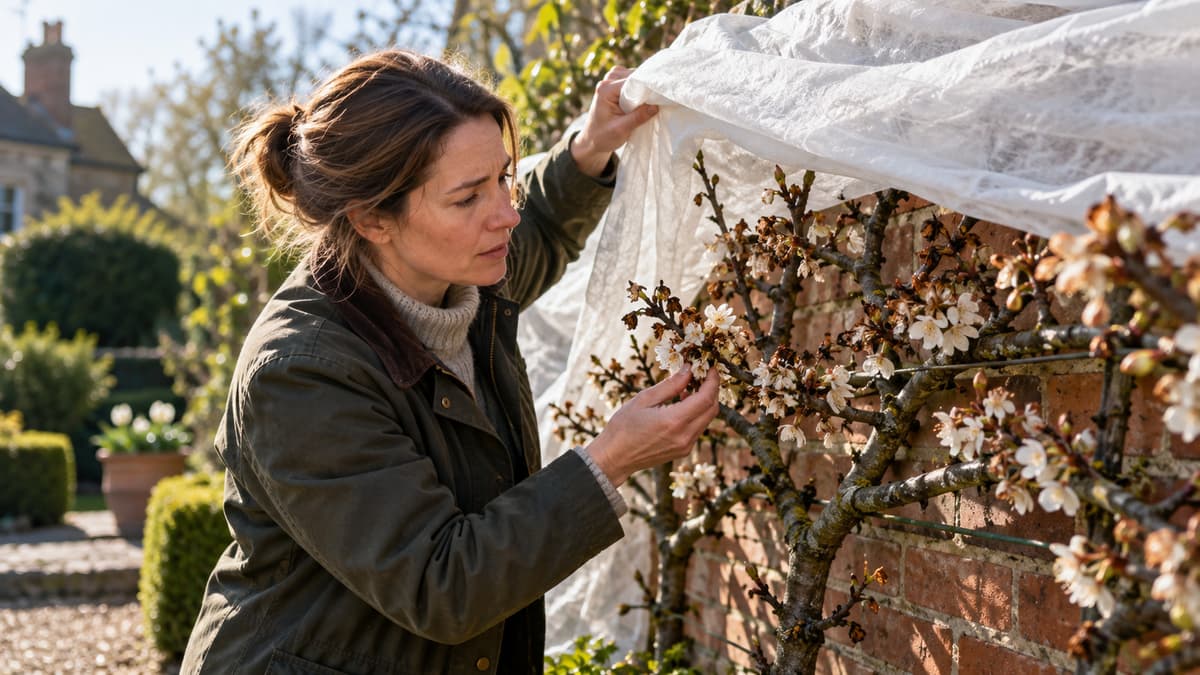
Frost on spring blossom
One cold night can take the blossom even when the tree is hardy. Sort the crop before you decide the tree has failed.

Summer pruning for stone fruit
Winter cuts that suit an apple raise the silver leaf risk on apricot, plum, and cherry. Time the pruning to summer.

Watering a young tree
A damp surface can hide a dry rootball, and a wet rootball can look like thirst. Check the soil before you water again.