When to prune an apricot tree UK: dry-day summer cuts

When to prune an apricot tree in the UK: spring or summer, on a dry day. The same window covers plums and cherries, because winter cuts raise silver leaf risk.
On this page

The secateurs are out because the apple was a straightforward January job, and the apricot on the fence looks like the same shape of tree. When to prune an apricot tree in the UK is a different calendar. The Royal Horticultural Society grow guide puts apricot pruning in spring or summer, on a dry day. Silver-leaf spores are about in autumn and winter, so a dormant cut on apricot, plum, or cherry opens the wood in that spore season.
This page follows the RHS pages on apricots, silver leaf, bacterial canker, and formative pruning, plus the tree-wax listings captured on amazon.co.uk. There is no laboratory trial behind it. A qualifying purchase through a link can earn us a commission at no extra cost to you.
In short
Prune apricots, plums, and cherries in spring or summer on a dry day, with at least two further dry days to follow: early spring for a new tree, after fruiting for an established one, and summer for any large corrective cut. A clean ordinary cut stays open. Paint is the narrower case, and the RHS silver-leaf page and the bacterial-canker page do not give the same instruction.
Why stone fruit is not an apple
Apples and pears are often pruned while they are dormant. The wood is bare, the shape is easy to see, and silver leaf is not their usual trouble. Apricot, plum, cherry, and the rest of Prunus share a wound disease whose spores the RHS places in autumn and winter. A fresh cut in that season is open wood while those spores are about. Summer pruning puts the wound into a period with fewer of them, when the tree can also close the surface more quickly.
A January session on the apple is the wrong afternoon for the plum at the end of the row. When to prune a plum or a cherry follows the apricot: a dry spell while the tree is in leaf. Light summer work on small shoots is the ordinary job. The RHS formative-pruning guidance flags a cut about as thick as your wrist on stone fruit. Treat that thickness as the point where you slow down. Larger corrective cuts belong in summer, on a dry day, and they remain a wound.
The apricot calendar
The RHS apricot page splits the year by the age of the tree. A new tree is pruned in early spring, while you are still choosing the framework. An established tree is pruned after fruiting, often late July into August once you can see which shoots carried the crop. ‘Tomcot’ is described as cropping mid to late July, so the date moves with the cultivar. Borrow a neighbour’s week only when their tree crops with yours.
Prune on a dry day, and only when the forecast stays dry for at least two more days. A cut opened in a shower, or the evening before a wet front, stays wet while the wood is exposed. Silver leaf and bacterial canker both use that wet wound, even in the right month. If the only free day is wet, wait for the next dry spell.
‘Garden Aprigold’ may need little pruning, and sometimes none. A patio apricot is still stone fruit, so winter stays closed, and the pot does not inherit the haircut you gave the fan. Take out a dead or rubbing shoot on a dry day when you can see a reason, and leave a balanced dwarf alone. Early spring forms a young tree while the leaders are thinner than your wrist, still on a dry day. Once that framework exists, yearly cuts move to after fruiting. A March reshape of an old tree, copied from the new-tree sentence, puts a large cut in the wrong week. Large corrective cuts wait for summer.
Silver leaf and canker, kept separate
Keep the two diseases apart. Both punish a winter cut on stone fruit, and each has its own next step.
Silver leaf shows as a silver sheen on the leaves after a fungus enters a fresh wound. The RHS puts the spores in autumn and winter, so silver leaf pruning means a modest cut in dry summer weather. If the silvering keeps returning on Prunus, and the same page also names laburnum, poplar, and rhododendron, it then names wound paints: Provanto Arbrex, Growing Success Prune and Seal, and Vitax Medo. Summer pruning still comes first.
Bacterial canker uses a different sentence. The RHS timing for cutting it out is July or August, back to healthy wood, and that wound is painted promptly. The notes used here include no amateur spray. The paint belongs to the canker cut. A healthy fan that only needs a few long shoots taken back after harvest stays with an open cut. A branch with sunken, gumming patches moves into the July or August removal, then paint on that wound alone.
If the damage is in the trunk, stop. Trunk cankers belong with a professional, as does any cut you cannot reach without an unsafe ladder. On a tree you have just bought, suspected Xanthomonas arboricola pv. pruni is a reporting matter. The RHS does not treat that bacterium as established in Britain.
Paint, sealant, and tree wax
Leave a clean ordinary cut open. RHS guidance on reducing a tree, and the Arboricultural Association’s pruning guidance, set wound paint aside as a routine finish, because a film can hold moisture against the wood. Leave the branch collar, and use bypass tools on small wood. On cuts that drip sap, the RHS bleeding page no longer recommends paint, and it names Arbrex among the products it sets aside. A blow-lamp step on a bleeding wound conflicts with that line, and the Arbrex safety data sheet records ethanol, so the gel is flammable.
The two disease pages stay separate. If silver leaf keeps returning, summer pruning comes first and a named paint is the later option. For bacterial canker, cut to healthy wood in July or August and paint that wound promptly. A healthy shortening after harvest is neither case, so the tin stays shut.
Where a seal is indicated, the buying page is the tree wax comparison. The top pick is UK-made Provanto Arbrex Seal and Heal, 300 g, ASIN B07BWZDDJX, captured at £7.80 with 4.5 from 1,172 ratings. UK reviews dwell on a sticky gel, a brush cap that wastes product, and a dry film that can crack. The listing claims a natural resin, use down to -10°C, and suitability for organic gardening, which is the seller’s claim. No MAPP number was in the file. An unauthorised plant-protection product is illegal to use, and the RHS fungicide note gives this resin seal no curative action. If you do seal, UK sellers reprint a thin coat on a dry day, edges included, then a second coat once the first has dried. A thick coat is a known miss.
A practical cut, and when to stop
Pick a dry morning when the next two days are dry as well. Start with dead, broken, or rubbing wood. In July or August, take a cankered patch back to clean wood and paint that wound. Then shorten the long shoots the fan or bush does not need, and stop while the tree still carries a full set of leaves. A heavy August strip, done because the crown looked busy, takes off wood you meant to crop.
Cut to a side shoot or back to the collar, and keep each cut modest. When a limb is approaching wrist thickness, ask whether a smaller side shoot would do the job this year. Several small cuts in one dry week sit better than one saw cut. A flush cut buried under paste removes the collar the tree uses to close the wound.
Wipe the blades before you move from a cankered branch to a healthy tree, so gumming bark stays off the next plum. These notes set no disinfectant recipe. A ladder you do not trust, a chainsaw, or a split trunk means booking someone who does that work. A heavy reduction on a protected tree, beyond ordinary practice, needs the local authority first. In England a garden fruit tree can still sit inside a Tree Preservation Order or a conservation-area notice.
Common questions
Why should I avoid winter pruning on an apricot?
What is silver leaf on a plum or apricot?
What is the dry-day rule for pruning stone fruit?
Do compact apricots such as Garden Aprigold need pruning?
Should I paint an ordinary pruning cut?
When do I cut out bacterial canker?
Can I prune a fan-trained apricot from a ladder?
Does tree wax belong on every wound?

Peter F. is the editor for DIY & tools at productscompared.co.uk. Comparisons in this category are checked against amazon.co.uk listings, review evidence and public UK sources.
Related articles
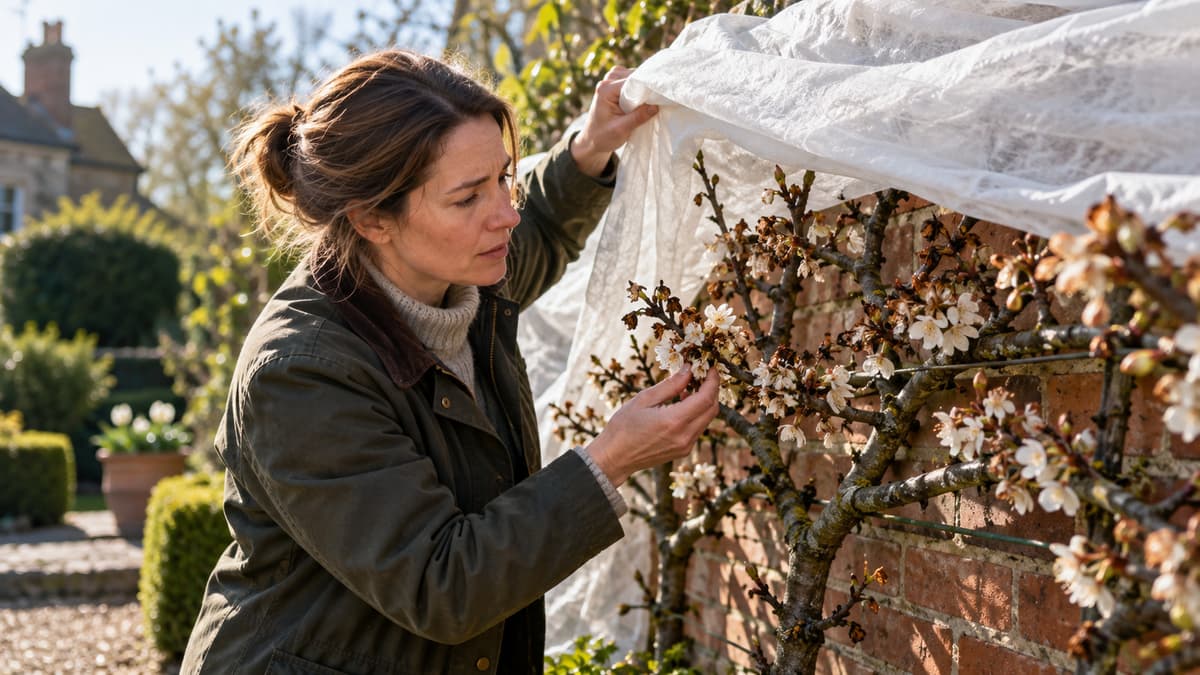
Frost on spring blossom
A hardy fruit tree can still lose the crop to one cold night, even when the wood itself comes through.

When a tree is in trouble
Dieback, silver leaves, or spots on a new tree: when to prune, when to stop, and when to report.

Tree rules in a British garden
A fruit-tree exemption is narrower than a free hand with the saw. Ordinary pruning and a heavy cut differ.