Protect fruit blossom from frost UK: save the crop
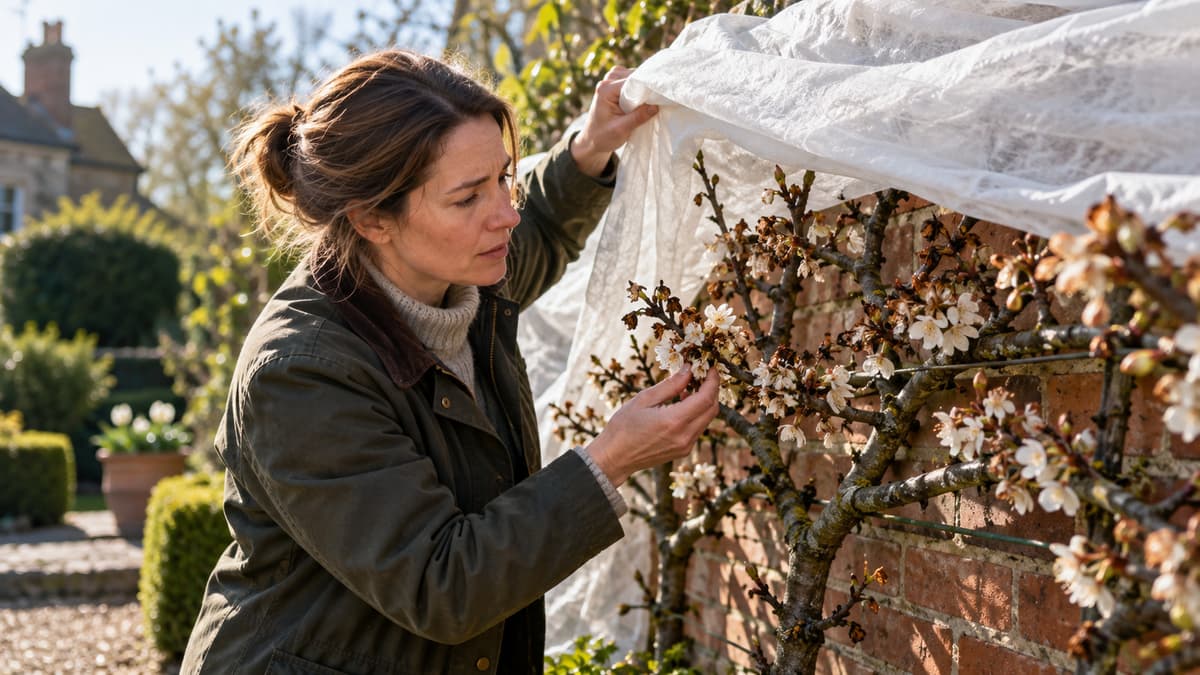
One cold night can wipe fruit blossom even when the tree is hardy. Site first, then fleece for about 2°C, and pollinate by hand while the cover is off.
On this page

You come out on a bright April morning and the apricot looks scorched. Yesterday the fan was white. Today the petals are brown, the stalks behind them are black, and the bark is the bark you had in January. Protect fruit blossom from frost UK is the work of that night, and of the fortnight after the flowers open. A tree sold as hardy can lose the crop to one cold night and still leaf out in May.
Peter F. followed Royal Horticultural Society notes on frost protection, apricots, peaches, and the ‘Tomcot’ profile, where H4 is the dormant plant. There was no frost trial. A qualifying purchase through our links can earn a commission at no extra cost to you.
In short
Put the tree where cold air can drain, then keep heavier fleece for nights that are only just freezing. That fleece is about 2°C of help, as a rule of thumb the RHS states, and it comes off so the flowers can be pollinated. Plan on about two weeks after flowering, and pollinate an apricot by hand around noon on a dry day. A hardy label covers the wood.
Dormant wood and open flowers
A British winter and a frost in blossom week hit different parts of the tree. H4 on ‘Tomcot’ describes the dormant plant: the wood, the shut buds, and a normal winter in the ground. Open flowers sit outside that rating. “Winter hardy” on a label is a claim about the tree asleep. This research found no temperature at which apricot blossom is certainly killed, so this page will not give one. The growing notes are clear about the order. The flowers go first. The tiny fruitlets just after them go in the same cold.
That is why the tree can look ruined in April and ordinary in June. Sound wood, with the damage on the blossom and the just-set fruit, means a frost, a missed pollination, or both. Next year wants a cover and a noon pass with a brush. A saw is for wood that has actually failed.
The same split applies to pears. A pear tree that is hardy as a plant can still lose a crop on a clear night while the flowers are open. An apricot is simply the earlier flower in many British gardens. One sheet of fleece will not cover both fans if they flower together.
A later name meets the coldest nights less often. It can still meet a May frost where cold air sits. A nursery line that calls the flowers as tough as the trunk is advertising. The rating was written for dormant wood. A 19 cm pot changes the winter, because the roots are above ground, and it leaves the blossom exposed. The amazon.co.uk Early Orange noted for this hub, at £34.99 with the review count not captured, is that starter. It is not a starred pick.
The top pick on the hardy ornamental trees comparison is a Carbeth bay, Laurus nobilis, in a 10 cm pot at about £11.99, with 4.6 from 24 ratings. That plant is a clipped evergreen, not a cover for blossom.
Site first, then fleece
Cold air sinks and then sits. A hollow, the bottom of a slope, or a solid fence that stops the air leaving becomes a frost pocket. Blossom fails there on a night the top of the garden escapes. If you still have a choice, put the early-flowering tree higher, or on a warm wall, and keep the hollow for something that flowers later. Walk the garden on a still morning before you plant. White grass is a map of where the cold sat.
A south, south-west, or west wall is the usual home for an apricot trained as a fan. You get that shelter every night, and it is still incomplete. A wall that was warm at dusk can stand under a clear sky before dawn. If the forecast is touching freezing and the blossom is open, you cover. The RHS allows a free-standing peach only where frost is unlikely, and a free-standing apricot needs the same caution. A bush in a lawn that frosts in April fails more often than a fan on the warm wall, or a tree you can move.
Fleece comes after the site. Heavier horticultural fleece is about 2°C of protection, the RHS rule of thumb, not a laboratory result from this site. Two degrees is a thin margin. A harder frost goes through the cloth. Use it on nights near freezing while flowers or young fruitlets are out. The sheet keeps insects off, so you pollinate by hand. Buy the heavier grade, large enough for the fan, and peg it so it cannot flap or blow off. Once the frost has lifted, the cover comes off.
The fortnight after flowering
The risky window stays open after the petals fall. RHS frost guidance is to keep protection in mind for about two weeks after flowering, because the young fruitlets are still soft. Folding the fleece on the first warm afternoon, and calling the job finished, is how the next clear night takes fruit you can already see as pinheads. Petals on the path mean the next stage has started. That stage is still tender.
Inside that fortnight, the cover is a daily decision. Once the night’s frost has lifted, take the fleece off so the flowers can dry and be pollinated. When the next night is forecast to frost, and the fruitlets are still small, put it back. A mild week under the sheet blocks insects and holds damp on the flowers. A frost warning with the cover in the shed spends the only 2°C you bought. Both come from treating the fleece as something you store, rather than something you use at dusk.
Hand pollination while the cover is off
Apricots flower while few insects are flying. RHS apricot guidance is to pollinate by hand around noon for that reason. Do it on a dry day, with the fleece off and the flowers dry. Move pollen from open flowers onto the centre of other open flowers. A small soft brush is the usual tool. A clean, dry finger is enough. Around the middle of the day the pollen is loose. A wet morning clumps it, and you bruise petals for a session that did not take.
A self-fertile apricot still needs the pass if the bees have not arrived. You need open flowers and a few minutes. Go over the fan, then again a day or two later as the next buds open. One lunchtime misses the flowers that open later in the week. If the only dry noon is a work day, that noon is the one that counts. After dark you are working at the wrong hour.
A cold garden and a hardy label
A cold garden can keep an early-flowering fruit tree alive for years and still never crop it in the open. If April frosts are a fixture, use a fan on the warmest wall and the fleece habit above, or grow the tree in a pot you can move under cover on the bad nights. A pear in a pot is the same idea for a slightly later flower. You are buying the chance to change the night. An early tree in a hollow, with no cover and no way to move it, gives you leaves and a blossom problem.
H4 stays with the wood, on ‘Tomcot’ and on any apricot sold as winter hardy. Read a pear label the same way. Use the apricot comparison to check for a named cultivar on a named rootstock. Use this page for the nights the flowers are open. A hardy rating says the wood can suit a normal British winter. The site, the fleece, and the noon pollination are what stand between you and fruit.
Common questions
Are fruit trees killed by a British winter?
Why did it flower and set nothing?
Does fleece save the crop?
When do I take the cover off?
How do I hand-pollinate an apricot?
Is a south wall enough?
Should a cold garden bother with early blossom?
Does a hardy label cover the flowers?

Peter F. is the editor for DIY & tools at productscompared.co.uk. Comparisons in this category are checked against amazon.co.uk listings, review evidence and public UK sources.
Related articles

What a UK fruit tree costs
A cheap bare-root whip and a larger potted tree are different purchases. Price the tree you can finish.

Planting a bare-root tree
Roots dry out, or the stem is buried, before a winter-bought fruit tree has even started.

Summer pruning for stone fruit
Winter cuts that suit an apple can invite silver leaf on an apricot. Time the cut to the season.