How to plant a bare root tree UK: soil line and soak

Plant a bare-root tree in the UK while it is dormant. Soak dry roots for up to two hours, set the nursery soil line level, and stake before you backfill.
On this page

The sack is on the path, the roots are a pale bundle with no compost on them, and the bed is either frozen or full of last night's rain. How to plant a bare root tree in the UK is decided in that hour. Bare roots dry in a warm room, and a stem set too deep starts with wet bark at the base. This sequence is for a dormant fruit tree or a young ornamental that arrives with the roots exposed. A tree in a pot is a different parcel.
This page is from Peter F. The dormant window for apricots follows Royal Horticultural Society guidance on buying and planting. The bay price and star line are from the amazon.co.uk listing in our hardy ornamental comparison. We did not run a laboratory trial. A qualifying purchase through our links can earn a commission at no extra cost to you.
In short
Plant while the tree is dormant, into soil you can work, with the nursery mark level with the surface, and soak moist roots for about 30 minutes or dry roots for up to two hours. If you cannot plant today, heel the roots in, then stake before you finish the real hole. Leave a new apricot for a spring or summer prune.
What bare root means and when it arrives
A bare-root tree is a dormant plant sent with the roots free of soil. You can see every root, and nothing holds moisture around them once the sack is open. The fine roots fail first in a heated room.
When to plant bare root trees is that leafless stretch. For apricots, the Royal Horticultural Society gives November to March, and treats autumn as the better end, which is also when bare-root pears are dispatched. A plant in full leaf in June was sold in a container, and it uses the container depth rule. You still need soil that crumbles, so frozen ground or a water-filled hole means you heel the tree in and wait. Wet clay that shines on the spade glazes the sides.
Fruit and ornamentals share this sequence when the roots are bare. A young apricot or pear is a fruit tree, while hardy ornamental trees holds the garden trees. Its top pick is a Carbeth bay, Laurus nobilis, in a 10 cm pot at £11.99, with 4.6 out of 5 from 24 ratings, and it arrives in compost, so use the container depth rule. A whip and a larger pot are priced apart in what a UK fruit tree costs. Pause if you cannot lift the tree, if you hit a drain or a cable, or if the site never drains.
Soak, hole, and the soil line
Unwrap the tree somewhere cool and look at the roots. Sound roots are firm, with fine roots still attached. Black, slimy roots, or a sour smell, mean the bundle has already failed. Cut a torn tip back to sound tissue and leave the rest, which on an apricot is the only cut for today. Shaping waits for the growing season.
Soak the bare root tree next. Moist roots need about 30 minutes in clean water, and papery roots need up to two hours before they come out. Cover the roots, keep the stem above the water, and treat an overnight soak as past this timing, because it turns the bucket into a stagnant hold. Plant when the soak ends, or heel the tree in if the hole is unfinished. Wet roots left on the path while you find a stake undo the bucket.
Make the hole wide enough for the roots to lie as they already grow. The nursery soil mark, a colour change on the stem, finishes level with the surrounding ground, and on a grafted fruit tree the union, the swelling above the roots, stays above that surface. Once the union disappears, the stem is buried and the bark at the base stays wet. Keep the base firm, because a pocket of loose compost sinks after rain and takes the soil line with it. Work your own soil between the roots, check the mark from the side before you fill, and treat that mark as the planting depth, including on a short whip.
Stake, tread, and mulch
Stake a new tree before you backfill. Drive the stake while the roots are visible, clear of the spread, then fill. A stake through finished soil can split a root. The stake stops the root system rocking while new roots take, because a rocking tree loosens its own hole and spends the first summer loose.
A rule of thumb is a short stake and one tie on the lower third of the stem, so the head can still move. A pole tied at the tip holds the crown still and leaves the base weak. Leave room in the tie for the stem to thicken, and check it in summer and winter so it stays off the bark. Remove the stake once the tree no longer rocks when you push the stem.
Tread as you fill so the roots meet soil. If the ground smears and shines, it is too wet: cover the roots in a trench and return when it crumbles. Frozen clods leave air pockets, so wait for a thaw. Water once at the end to settle the soil. The first summer, including a dry zone under damp soil, is set out in watering a young tree.
Mulch in a ring a few centimetres deep, as a rule of thumb, and keep it off the bark. A mound against the stem hides the soil line. Keep grass and the strimmer back from the trunk.
If the weather stops you
You can store a bare-root tree for a short spell if the roots stay cool and damp. A day or two in a shed, wrapping moist, out of sun and off a radiator, covers a pause while you finish the hole. A warm porch is where fine roots dry. Once they are crisp, the two-hour soak is a weak rescue. That soak is for roots that have dried a little, and it ends with the roots back in soil the same day.
Heel in a bare root tree when the delay runs toward a week of frost or flood. Dig a trench, lay the stems at an angle so the wind cannot lever them upright, cover the roots, tread lightly, water if the soil is dry, and label every whip. The trench is a hold. The real planting still uses the nursery soil line, and the stake still goes in before the final fill. A tree left in that trench until July has missed the dormant move it was bought for.
A bucket on the patio for a fortnight sits past the soak this page allows. If you cannot trench and cannot plant, delay the order. On an apricot the season is November to March. When you lift a heeled-in tree, brush soil off the stem until the nursery mark shows, and soak again only if the roots have dried.
The stone-fruit exception
An apricot and a pear can share the hole, while their pruning months diverge. People tip a new apple while it is dormant, then use that cut on every tree in the order. An apricot is stone fruit, so its cuts fall in spring or summer. You can plant in the November to March window, with autumn the better end on Royal Horticultural Society apricot guidance, and leave the shaping until growth starts. Planting week is for roots and the soil line.
Summer pruning for stone fruit is the later cut. Halving a whip to match the stake takes wood you paid for, and on an apricot that cut lands in the wrong season.
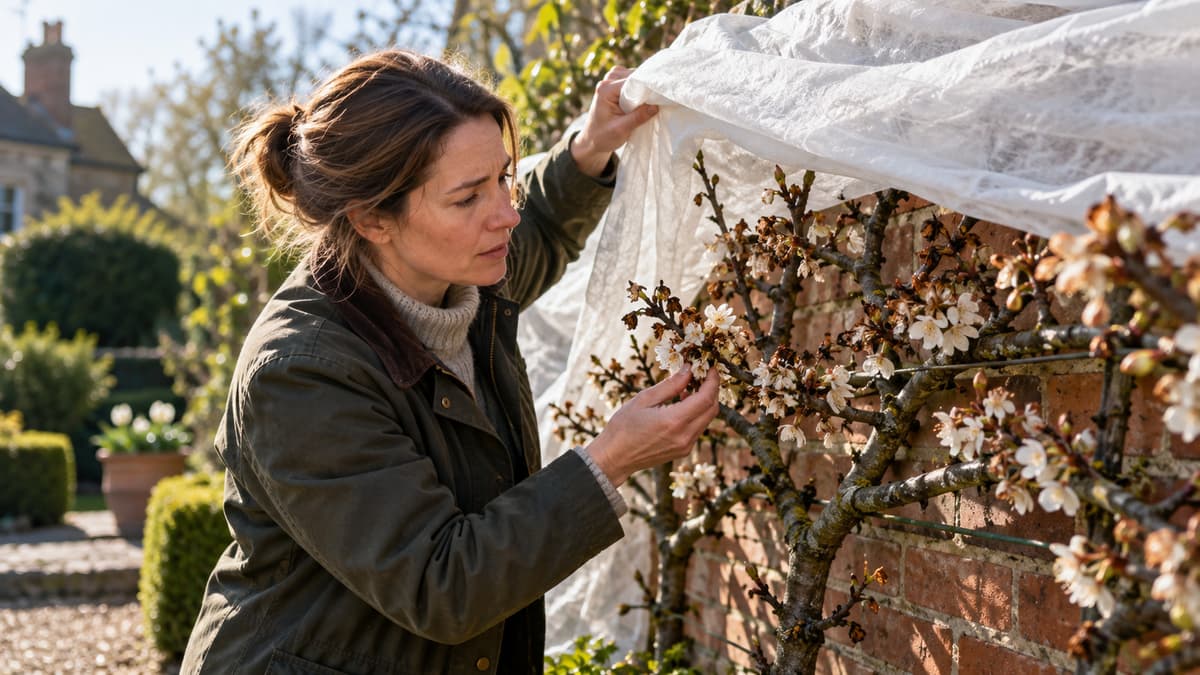
A careful planting can still lose blossom to one cold night. That sits in frost on spring blossom, and it leaves today's job as the soil line, the stake, and roots that stay damp. If several trees go in on the same afternoon, label the apricot and write the date on the label, so next spring you know which one went in bare-root and which arrived in a pot.
Common questions
Which months are bare-root months in the UK?
How long should I soak a bare-root tree?
Can I store a bare-root tree for a week?
How deep do I plant a fruit tree?
Should I stake a new tree before I backfill?
Can I plant a potted tree the same way?
When do I prune a new apricot?
How do I water a bare-root tree after planting?

Peter F. is the editor for DIY & tools at productscompared.co.uk. Comparisons in this category are checked against amazon.co.uk listings, review evidence and public UK sources.