Artificial tree or real plant UK: choose by the light

An artificial tree or a real plant in a UK room depends on daylight. A kentia copes with fairly low light, an olive needs full sun, and silk does not grow.
On this page
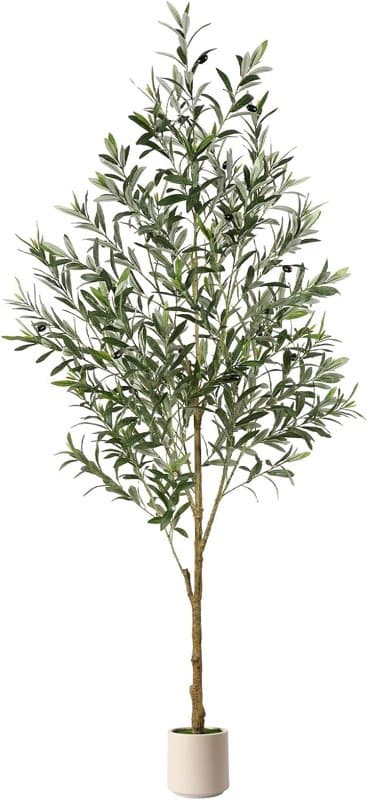
You have a rented lounge, one useful window, and a corner that still looks empty after the sofa went in. Artificial tree or real plant UK is the choice that window forces. A living plant has to live on the daylight that actually reaches the floor. A silk or plastic tree only has to hold a shape. The Royal Horticultural Society's houseplant guidance says not to place a living plant only for decoration, which is what a dark corner asks it to do.
Peter F. used the RHS pages on indoor palms, olives, houseplants, and the Olea europaea record. There is no laboratory trial behind this article, and it does not score a named silk tree. Prices in GBP, star lines, and review counts live on the comparison pages and come from amazon.co.uk listings. A qualifying purchase through our links can earn a commission at no extra cost to you.
In short
Choose a kentia when you want a living plant and the room is only fairly bright. Choose an olive when you have full sun and can grow it under glass in John Innes No. 3 with sharp sand. Choose an artificial tree when the corner is décor: no water, no crop, and no plant passport. The three are different products, and the wrong light is what finishes the living ones.
The job: a living plant or a shape in the corner
Start with the job, before the species. A living plant needs daylight, water, a compost that matches how it grows, and room for leaves that brown and drop. A shape in the corner is furniture that looks like a tree. It arrives at a fixed height, it does not root, and the work is assembly, a base, and dusting. Both can fill the same square of floor. They fail for different reasons.
The usual mistake in a flat is to buy the living plant for the look in the photograph, then stand it where that photograph was never taken. A Mediterranean olive in a hallway, with a lamp borrowed from the sideboard, stalls, and the listing collects the blame. If the corner only has to look planted in December, the artificial tree can do that without a window.
A silk canopy will not thicken, flower, or set fruit. If you wanted growth, a kentia or an olive in the right light is the purchase. Renters often prefer the silk tree because it leaves in the van. That is a reason about moving house, not about health. Write one brief before you open a listing: living plant, fairly low light; living plant, full sun, under glass; or shape only, any light.
At midday, with the lights off, can you read a paperback in that corner? If you can, a tolerant living plant is worth a proper look. If you cannot, the corner is décor, and the RHS warning about buying a living plant only for decoration applies.
Light decides the living options
Light is the gate for anything with roots. The RHS indoor-palm advice and the RHS olive advice do not describe the same room. One plant is noted for tolerating fairly low light. The other is grown in full sun, and a dim corner fails that site. Fairly low still means daylight from a window. A lamp you switch on at dusk does not stand in for glass.
A kentia when the light is only fair
The tolerant living plant in this pair is the kentia. The RHS indoor-palm page says a kentia tolerates fairly low light. It does not say the palm will thrive in a windowless hall, a shut bathroom, or a gap behind a bookcase. If you have to turn a light on at noon to see the leaves, buy the shape, or move the kentia to the window you do have.
The kentia palm comparison is the page for a living indoor palm. The same search also returns silk and plastic plants using the common name, so read what the listing says the plant is before you treat every result as something you will water. This article does not give a day-count for watering. The failure to avoid in a dull room is extra water: a pot that stays wet because the plant is not using it.
An olive only in full light
An olive is the plant for the sunny room. The RHS olive guidance puts it in full sun. The species record for Olea europaea describes it under glass, in full light, in John Innes No. 3 with sharp sand. A peat-heavy compost in a sealed cover is a different pot. A north-facing window in a British flat is the dull side for much of the year, and a short holiday there while you paint does not change the permanent site.
A bright conservatory is closer to the conditions that record names. You still owe John Innes No. 3 with sharp sand, and a pot that can shed water. This article does not promise a crop of olives on a windowsill. Open the olive tree comparison when the light is genuinely there. Feeding a struggling olive more often will not turn a dim hallway into the site the RHS describes.
What an artificial tree is for
An artificial tree is for the corner that cannot keep a plant. It does not take water, it does not crop, and it does not need a plant passport. Those absences are why a dark lounge or a rental you will leave can still hold a tree-shaped object in January. It does not improve the light for a real plant beside it, and it does not fill out over a season. Squashed branches are assembly, not growth.
Read the height in the title and the height in the specification, because those two lines can disagree. A tall canopy on a small insert pot tips when someone walks past with a coat. Plan a wider, heavier planter if the included pot is only a sleeve, before you judge the tree as unstable. The scoring of individual silk olives sits on the artificial tree comparison.
Silk and plastic leaves hold household dust, and you wipe or vacuum them. This article has no source that says an artificial tree collects less dust, or that it is kinder for allergies. If the listing does not state an ultraviolet test you can read, leave the tree inside. Olive or palm on a silk trunk is a look, not a weather rating.
The misfit titles to ignore
A silk lemon is not an apricot. One artificial lemon, ASIN B0DJ396BB4, was taken out of a living-tree set because it is décor. If that product is reviewed at all, it belongs with artificial trees. An apricot comparison is for a living fruit tree you plant and prune, not a plastic stem in a thumbnail.
An olive photographed against a white wall is still a full-sun plant at your north window. A kentia that looks tropical is not a reason to leave it outside through a British winter. The indoor-palm line is about fairly low light indoors, not a hardiness rating, and this article will not invent one.
Real touch, air purifying, and suitable for every room are not the tests on the RHS pages. Do not buy a living plant only to fill a corner. If the corner is the whole brief, stay with artificial trees. If you want a plant, name the light first and the species second. A voucher code does not repair a north-facing olive.
Which page to buy from
Open the kentia palm page for fairly low light indoors, and check the height and the doorway. Open the olive tree page for full sun under glass and John Innes No. 3 with sharp sand. Leave that page if the only site is a dim lounge.
Open the artificial tree page for a shape, including a dark room or a fake fruit tree you will not harvest. The top pick there is a tall silk olive for an indoor corner. A small included pot and a missing ultraviolet test rule out a casual move to the patio. A young tree already in the ground is a different watering job, and a silk tree still will not fruit.
Common questions
Will a real tree survive a dark lounge?
Which living plant is the tolerant one?
Can an olive holiday by a north window?
What does an artificial tree not do?
Is a fake fruit tree an apricot?
Do artificial trees mean less dust or fewer allergies?
Which comparison should I open?
Can I move a kentia outside?

Peter F. is the editor for DIY & tools at productscompared.co.uk. Comparisons in this category are checked against amazon.co.uk listings, review evidence and public UK sources.
Related articles
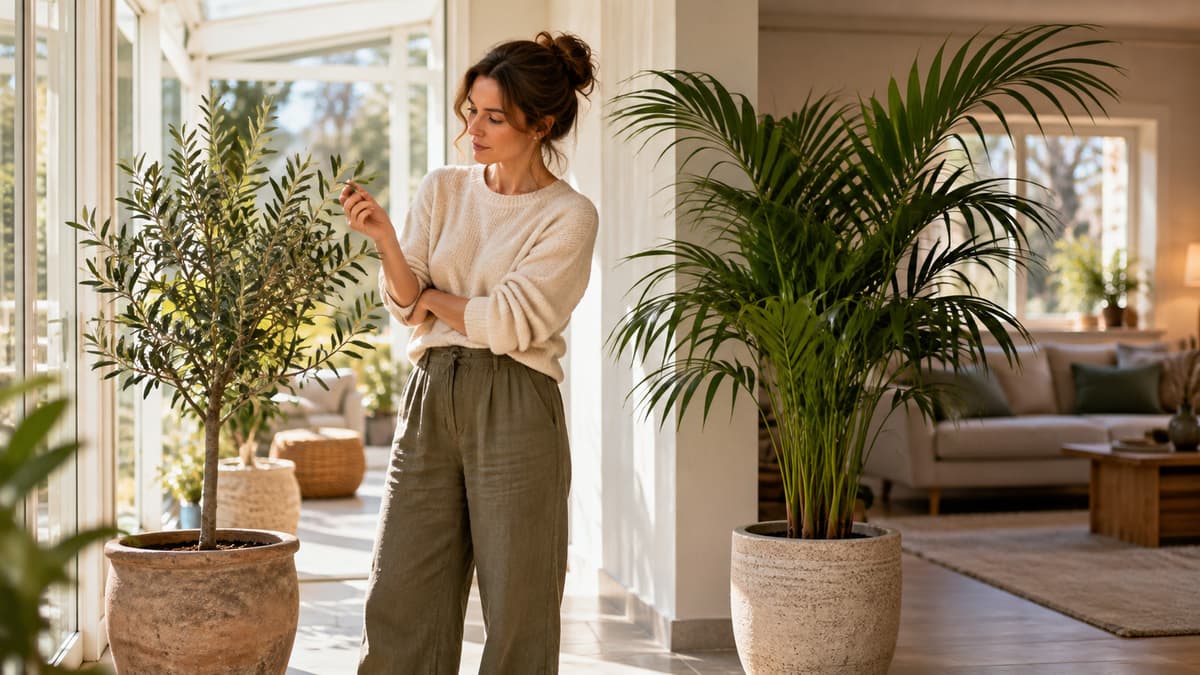
Olive tree or kentia palm indoors
An olive wants sun and a winter plan. A kentia is the living plant that tolerates a dimmer room.

How often to water a newly planted tree
Damp soil on the surface can hide a dry rootball, and too much water rots roots in the first summer.
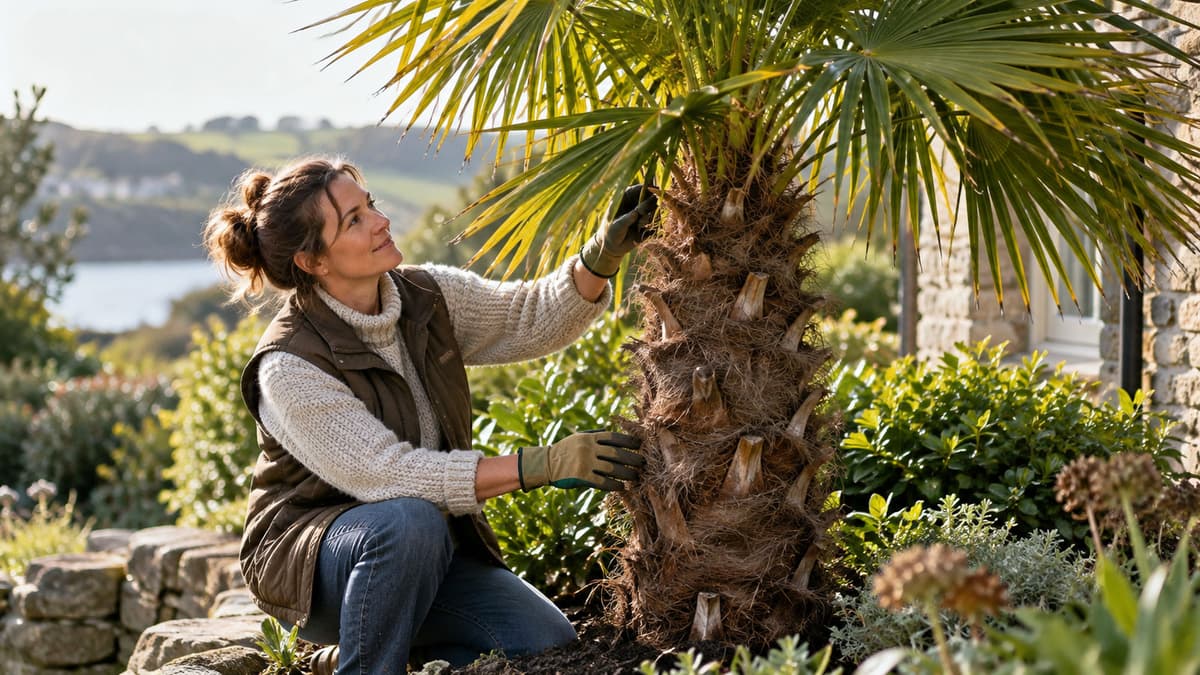
Hardy palm trees that can stay outside
Most palms are indoor plants. A few, led by Trachycarpus, can stay out if the site is kind.