Hardy palm trees UK: which ones stay outside in winter
Hardy palm trees in the UK start with a sheltered Chusan. See the H5 band, wind damage, a 5 litre pot, and which palms should stay indoors all winter.
On this page

You have seen a palm beside a pub in Cornwall, or in a London courtyard that misses the worst of the wind, and you want that plant in your own border. The pot in the houseplant aisle is usually a different species.
Hardy palm trees UK gardeners can leave in the ground are a short list, and the Royal Horticultural Society treats the Chusan palm, Trachycarpus fortunei, as the one grown widely outdoors here. It still needs shelter. A kentia does not take the outdoor job at all.
In short
The palm to leave outside across much of the UK is Trachycarpus fortunei, the Chusan. The RHS says it withstands about −15°C when sheltered, and rates it H5, about −15°C to −10°C. Cold wind can still shred the leaves.
A kentia stays indoors. A Canary Island date palm, at about −8°C, and a Washingtonia, at about −5°C, are milder bets. Grow a young plant under cover until it is established in at least a 5 litre pot, then plant it where water drains and the wind is broken.
Indoor palms and outdoor palms
The mix-up starts with the word palm. A kentia, a parlour palm and a Chusan can share a fan of leaves, and they do not share a winter. The RHS indoor-palm guidance treats kentia as a houseplant. If the label is aimed at a living room or a low-light corner, that plant is not the one you mean to leave outside. Putting it in the border in October does not make it hardy.
Hardy palm trees in a UK garden start with species the RHS discusses as outdoor palms. Trachycarpus fortunei is the one it describes as widely grown in this country. “Mediterranean” on a marketplace listing is a style word, not a hardiness rating.
The indoor palm in this set is the Kentia palm comparison. The outdoor set is the hardy palm trees comparison. The captured amazon.co.uk file holds one listing: a potted Trachycarpus fortunei, 55 cm including the pot, at £44, from Middlewood Nursery.
There is no Customer Reviews line. A qualifying purchase through our link can earn us a commission at no extra cost to you. We did not grow this plant through a winter, and we are not awarding it a tested ranking.
The Chusan and the palms beside it
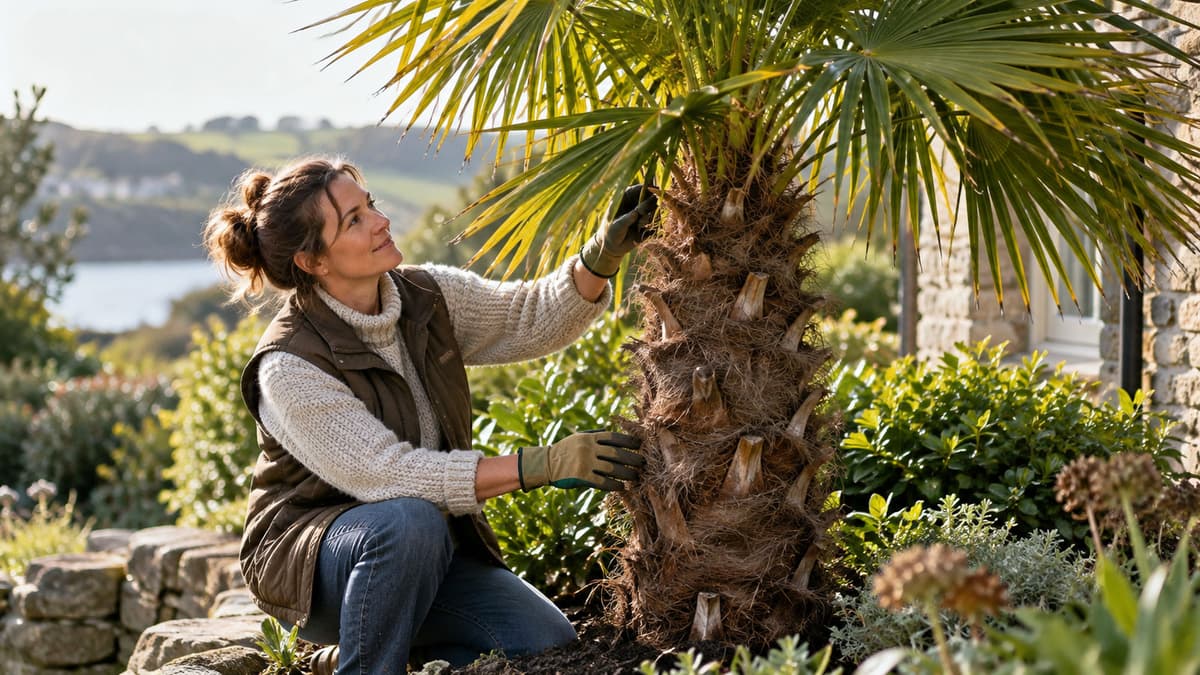
Trachycarpus fortunei is the Chusan palm, sometimes sold as a Chinese wind palm. The RHS hardy-palm page says it withstands about −15°C if it is sheltered, and the plant page rates it H5, about −15°C to −10°C. The temperature is conditional on shelter. An established plant in a kind spot is the case the rating describes.
H5 is not a promise that every postcode in Scotland, Wales, Northern Ireland and England is equal. A sheltered town garden and a frost pocket can give the crown two different winters.
Phoenix canariensis, the Canary Island date palm, is about −8°C on that page. A mild coastal garden may keep one that a colder inland plot loses. If the label says Phoenix and the price looks like a bargain Chusan, you have bought a different risk.
Washingtonia sits at about −5°C, and the RHS calls it a poor wind plant. The needle palm is treated as very hardy, and it wants hot summers. Cold hardiness without that summer heat is a poor bargain in much of Britain.
The Trachycarpus listing prints USDA zone 6 and a height of up to 3 metres. Both are seller fields. The rating to plan with is the RHS H5 note, plus shelter, plus the plant in your hand. A 55 cm plant, pot included, is something you grow on. It is not a finished tree on the day it arrives.
Wind, drainage and the first winters
The RHS says Chusan leaves may be damaged by wind in cold, exposed sites, and it advises shelter from cold wind. The crown can live and still look wrecked. Shelter is a wall, a fence, or the lee of the house.
Walk the spot in January, not on a still day in May. A south-facing wall that is also a wind tunnel fails the test. The listing specifies partial shade and well-drained soil: light without a gale. A dark, dripping north wall that never dries is not a kindness either.
If heavy clay stays full for a day after rain, planting level with the lawn is how you lose the plant in a wet March. Raise the crown slightly and refuse any spot you already know floods.
The first two or three winters are stricter than the mature rating. Fleece over a young crown during a named cold spell can take the edge off, then it has to come off so the crown does not sit wet. It does not turn a Washingtonia into a Chusan, and it does not fix a bed that holds water.
A new outdoor palm is still a young tree. Keep the rootball moist in the first summer, including when the surface looks damp and the centre is dry. In winter, stop watering compost that is already wet. Standing water rots the crown and the roots. There is no single weekly dose for every soil.
A pot first, then the ground
The RHS says hardy palms for the ground should be established in at least a 5 litre pot before planting out, and brought under cover until then. Under cover means a frost-free greenhouse or a porch, not a sheet forgotten on the patio.
Our captured listing is 55 cm including the pot. Pot volume and trunk length are absent, so you cannot confirm 5 litres from the title. Weight is 10 kg. Number of items is printed as 10 while the unit count is 1, so open the box and count the plants. The planting period says autumn. Treat that as seller text. November is a poor moment to put an unestablished palm into frozen ground.
- Keep the young palm under cover, and check that the pot is at least 5 litres before you call it established.
- Choose a spot with shelter from cold wind and soil that sheds water within a day of heavy rain.
- Plant once the plant is established and the soil is workable, with the crown slightly proud of any wet hollow.
- Water the rootball through the first summer, and ease off once winter wet is already doing the job.
- Use a temporary cover only for a cold spell on a young crown, then remove it so the crown can dry.
A 55 cm plant at £44 is a start, and the price will move on amazon.co.uk. You are buying years of slow trunk, not an instant tree.
Once the palm is in the ground it can become a tree in planning terms. A palm is not outside those rules because it is a palm. Our piece on tree rules in a British garden follows that limit. Check the address before you cut, including in a conservation area.
What should stay under cover
Leave the kentia indoors. The RHS files it with indoor palms. A few warm weeks outside, then back in, is a summer airing. Leaving it in the soil is how you lose it. If the plant you like is a kentia, use the kentia palm comparison and choose for light and room size.
Leave Phoenix canariensis unless your garden already keeps tender plants through cold years, or you can move the pot. About −8°C can be enough on a mild coast and not enough inland.
Leave Washingtonia for a still, mild courtyard. About −5°C plus a poor record in wind is two limits at once. Leave Trachycarpus under cover until it has passed the 5 litre stage. The needle palm can stay outside on hardiness and still disappoint if your summers stay cool. Check the species on the label, the litres of the pot, and the site in winter.
Common questions
Which palm can stay outside in most of the UK?
What does H5 mean for a Chusan palm?
Will wind ruin the leaves of an outdoor palm?
Can I plant a kentia in the border?
Is the Canary Island date palm as hardy as a Chusan?
Should I start a hardy palm in a pot?
How do I water a new outdoor palm?

Peter F. is the editor for DIY & tools at productscompared.co.uk. Comparisons in this category are checked against amazon.co.uk listings, review evidence and public UK sources.
Related articles

Watering a young tree
A damp surface can hide a dry rootball, and a wet crown rots roots in the first year.
Olive tree or kentia palm
An olive wants sun and a winter plan. A kentia belongs in a dimmer room indoors.

Tree rules in a British garden
Once a palm in the ground counts as a tree, a preservation order can still apply.