Compressor for a staple gun: what will it cost?
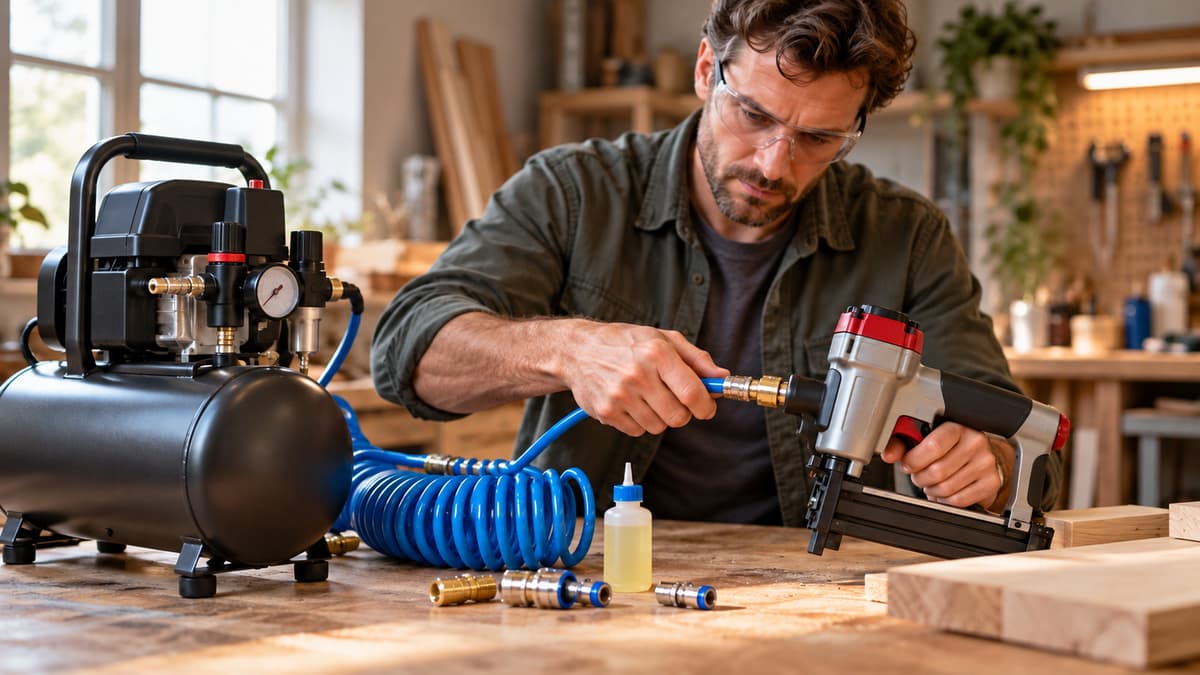
Price the compressor, hose and fittings behind an air stapler, and learn when a compact 6-litre unit is enough or a larger receiver earns its keep.
On this page
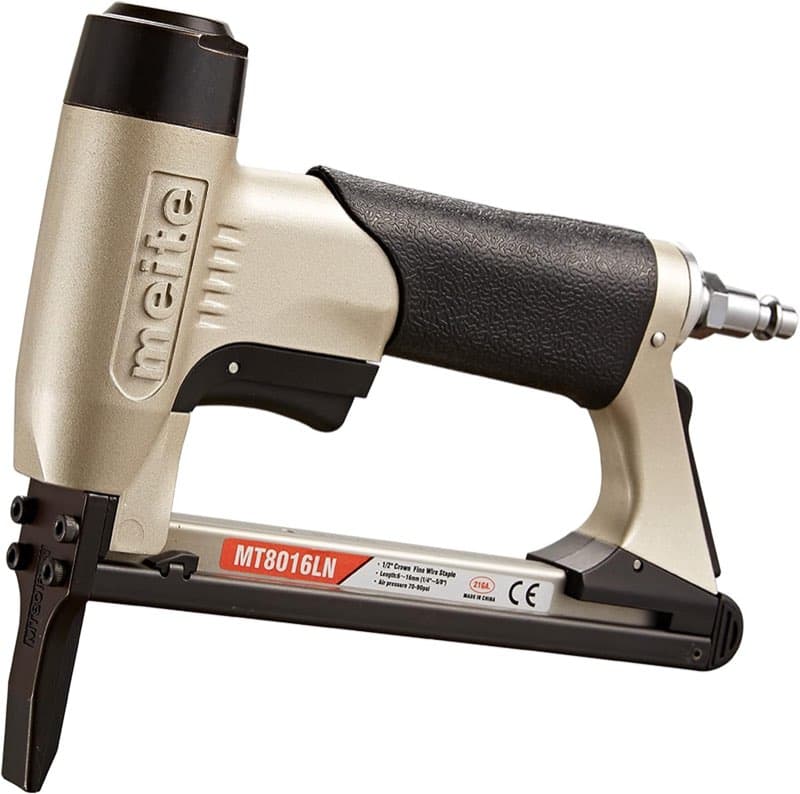
A compressor for a staple gun can turn a £34.62–£71.98 air stapler into a much larger purchase. The gun is only the working end: unless you already own a suitable air supply, you also need a receiver and pump, a pressure regulator, an airline, compatible couplings and usually air-tool oil. Price those parts together before deciding that pneumatic is the inexpensive option.
In short
For one upholstery stapler used in bursts, a compact 6-litre compressor is often the sensible starting point, but it is supplier guidance rather than a rule. Match the stapler's required pressure and delivered airflow first; choose a larger 24- or 25-litre receiver when longer sessions, fewer motor starts or future air tools justify the extra cost, size and noise.
The gun price is not the project price
The air staplers in our October 2026 comparison were listed on amazon.co.uk at £34.62 to £71.98. That range compares guns, but it is not a working-system price: the listings make clear that a compressor is not included. A shopper who sees a £40 gun and budgets £40 can discover that the supporting equipment costs more than the tool.
If you own a compatible compressor and hose, count only the gun, connector and consumables. If you are starting from nothing, compare a compressor, hose, couplings, oil and stapler with a complete upholstery kit, or quiet kits if noise matters. Heico listed a 9-litre silent kit with a long-nose stapler at £726.60: one package, not a minimum budget, but a reminder to compare what is in the box. Start with our air stapler comparison, then list what the gun does not include.
What one stapler needs
A basic working setup has five parts: the stapler, compressor, regulator, airline and compatible quick-release connections. Many compressors combine the receiver, pump and regulator in one unit, while some kits add the hose, tool oil and plugs. Read the contents list literally; a photograph showing a coiled hose does not prove that the hose comes in the box.
The compressor must produce the pressure specified by the stapler maker and enough delivered airflow to keep up with your firing pattern. The regulator then reduces receiver pressure to the tool's setting. The hose and couplings need suitable pressure ratings and enough internal diameter to avoid starving the tool, although a single fine-wire stapler is far less demanding than a spray gun or impact wrench. You will also need staples in the correct series and leg length, plus eye and hearing protection. Our air stapler buying guide covers the gun-side choice; even the right stapler will behave poorly if pressure drops, the connector leaks or condensate is carried down the airline.
Is a 6-litre compressor enough?
A 6-litre compressor is commonly paired with one upholstery stapler because stapling is intermittent. Each shot uses a small pulse of compressed air, then the receiver has time to recover while you position fabric or move around the frame. For repairs, dining-chair seats and other stop-start tasks, that can make a compact unit easier to store and carry than a 24- or 25-litre model.
Six litres is not a guarantee: volume is storage, not pump speed or duty cycle. Expect the motor to restart more often during long sessions, especially with a noisy unit. Check the tool manual, compare delivered airflow at the relevant pressure and read duty-cycle guidance rather than trusting displacement figures alone.
Check airflow before tank size
Airflow is the rate at which the compressor can replenish the air you use. UK compressor guidance commonly expresses it in cubic feet per minute or litres per minute, and the useful figure is delivered or free air delivery at a stated pressure. Receiver litres describe storage, so two 6-litre machines can perform differently when attached to the same stapler.
Compare figures at the pressure your tool requires, with margin for hose restrictions or minor leaks. Marginal supply can still fire staples but depth may wander as you speed up. Respect duty cycle and thermal protection on compact pumps.
The practical test is whether the system maintains the gun maker's working pressure during your normal firing rhythm without exceeding the compressor's duty cycle. If you are choosing between air and a self-contained tool, our pneumatic versus electric stapler guide explains when avoiding the compressor is worth accepting a different tool balance and firing character.
Budget for fittings, oil and noise
Hoses and couplings are small line items compared with a premium compressor, but they are common sources of delay. Quick-release plugs can use different profiles, and threads can differ even when two fittings look compatible. Check the outlet, hose ends and tool inlet before ordering; buying one matched fitting system is usually cleaner than collecting adaptors. Listen for leakage after connecting and pressurising the system, following the manufacturer's safe checking method. Do not use your hand to search for a high-pressure leak, and do not force mismatched fittings.
Follow the tool manual for air-tool oil and drain receiver condensate on schedule. Noise may matter as much as price: a loud motor under a kitchen table can stop you using the kit, while silent models cost more but still leave impact noise from the stapler. Kits reduce mismatched fittings only if the hose, gun, oil and UK plug are actually included.
When to buy a larger compressor
A 24- or 25-litre compressor becomes attractive when your work changes from occasional upholstery to repeated production runs. The larger receiver gives more stored air between pump cycles, which can make pressure delivery feel steadier and reduce how often the motor starts. It also leaves more flexibility for another modest air tool, provided the pump's delivered airflow actually meets that tool's demand.
Receiver litres do not fix a slow pump. A 25-litre unit weighs more, needs more space and stores more energy, so choose it when you can name sustained firing, less cycling or a second tool. For a few staples every few months, compare total air cost with a hand stapler, an electric model or hire.
Pressure-system safety
A compressor receiver is a pressure vessel, even when it is sold for hobby use. Keep guards and safety devices intact, drain it according to the manual, inspect the hose and fittings, and isolate and depressurise the system before maintenance. Never exceed the marked pressure or modify the receiver.
Workplace users may need a written scheme of examination under the Pressure Systems Safety Regulations. HSE INDG178 says a portable receiver below 250 bar litres is normally outside that requirement; bar litres are volume times maximum pressure in bar (a 6-litre tank at 8 bar is 48). Use your own vessel markings, keep draining and maintenance records, and seek competent advice if the installation is unclear.
Common questions
Is the staple gun price the full project price?
Is a 6-litre compressor enough for a staple gun?
When should I choose a 24- or 25-litre compressor?
Why does my airline coupling not fit?
Are silent compressor kits worth the extra cost?
Does a small hobby compressor need a written scheme of examination?
What if I already own a compressor?

Peter F. is the editor for DIY & tools at productscompared.co.uk. Comparisons in this category are checked against amazon.co.uk listings, review evidence and public UK sources.
Related articles

Type 71 or Type 80 staples
Check which fine-wire staple series fits your gun before buying boxes of fasteners.

Why a pneumatic stapler keeps jamming
Trace bent staples and misfires to the fastener, air supply, lubrication or magazine.

Pneumatic or electric stapler
Choose between an air system and a self-contained electric tool for your workload.