Independent comparisons. We may earn from shop links. More info

Air stapler vs electric stapler: which should you buy?

Updated: October 2026

You have one footstool to recover on Sunday and no compressor in the shed. In that situation, the air stapler versus electric stapler decision is not about which mechanism is universally stronger: it is about the complete kit and how often you will use it. Buy air when you already own a suitable compressor or expect repeated work into real timber. Buy electric or cordless for one light job when a tank, hose and coupling would become expensive clutter. Our [air stapler comparison](/hub/staplers-and-nail-guns/air-stapler) prices the pneumatic guns; this guide explains when their low sticker price is misleading.

You have one footstool to recover on Sunday and no compressor in the shed.

Our top picks

On this page

What each tool needs before it fires

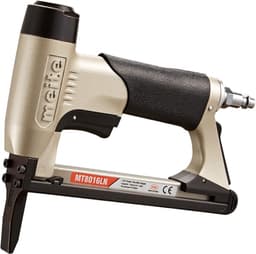
An air stapler is a lightweight handpiece powered by a separate compressor. It needs regulated clean air, a hose and couplings that mate at both ends. Many guns in this comparison state 60–100 PSI, but pressure alone is not enough: the compressor must deliver suitable airflow, and the gun still needs the correct staple series. UK suppliers commonly suggest a small 6- or 9-litre compressor for one upholstery tool, though tank size is guidance rather than a legal minimum. A corded electric stapler needs a nearby socket; a cordless stapler needs a charged battery, and its battery platform may affect the true cost. Both package the power source more neatly than a pneumatic system. This page does not rank electric ASINs; use the electric stapler comparison or cordless stapler comparison for those models. A powered gun does not make Type 90 appropriate for delicate upholstery.

When air is the better purchase

Air is the better choice when you already own a regulated compressor and will staple repeatedly. The handpiece can remain relatively light because the motor and tank sit on the floor, which helps during a run of dining chairs. Pneumatic cycling also suits production-style work where you need many consistent shots. If you know the staple and already own the air supply, a £39.99 WORKPRO fine-wire gun can be an economical addition. Air is less persuasive when the compressor is being bought solely for one small project. Gun prices in this set start around £35, but the tank, regulator, hose, coupling and oil are part of the working cost. A quiet trade kit can be hundreds of pounds, far beyond the bare-gun figure. Read the air stapler buying guide before assuming the cheapest pneumatic listing is the cheapest usable option.

When electric or cordless is the better purchase

Choose electric or cordless when the task is occasional, light and spread around the home. For a single footstool in a flat, carrying one tool to the work is simpler than finding space for a compressor and trailing an airline. A corded tool avoids battery management if a socket is close; cordless gives better movement when a cable would cross the fabric or stairs. The compromise may be a heavier handpiece, lower sustained firing pace or less authority in dense timber, depending on the model. Electric is also the honest choice if you are unlikely to maintain pneumatic equipment. If the project later becomes repeated furniture work, you can reconsider air instead of buying a compressor for work that may never happen.

Compare power with the material, not the label

“Air is stronger” is too broad to make a purchase. Driving performance depends on the gun, pressure, airflow, staple, leg length and timber. Electric tools also range from light hobby tackers to more capable corded or cordless machines. Define the real test: for example, seating a 10 mm Type 71 staple through fabric into a dining-chair rail, or driving a 30 mm Type 90 staple into treated timber. Then check models built for that fastener. For upholstery, crown and wire matter as much as drive. Type 71 and Type 80 are preferred over Type 90 on fabric. An electric machine that accepts the correct fine wire can be a better one-chair tool than a pneumatic brad nailer with impressive power. More pressure or a larger battery cannot correct the wrong series.

What this comparison does not decide

This page does not name an electric winner. Buy air for an existing compressor or repeated demanding work, and electric or cordless for a light one-off job without a tank. Pneumatic power does not make a staple suitable for structural joints.

Common questions

Is an air stapler always stronger than an electric stapler?
No. Performance depends on the individual tool, fastener, material and power supply. Pneumatic tools often suit repeated work and dense timber, but a capable electric model can handle light upholstery. Compare the exact staple and material rather than choosing by drive type alone.
Can I upholster one stool with an electric tacker?
Often, yes, if it accepts the correct fine-wire staple and can seat it in the stool’s timber. Test the fabric and frame on an offcut. For one project without a compressor, electric can be cheaper and simpler as a complete system.
I already own a compressor. Should I still buy electric?
Air is usually the more compelling option if your compressor provides the required regulated airflow and you expect repeated work. Electric can still be preferable where the hose is awkward, the compressor is too noisy for the location or you need a truly portable setup.
Are cordless tackers the same as air staplers?
No. Cordless tackers carry a battery and their own drive mechanism; air staplers rely on a separate compressor. They may accept different staple series and lengths. Check fastener compatibility, battery inclusion, weight and firing capacity for the specific model.
What about compressor noise in a flat?
A compressor cycling in a small room can be intrusive even when the stapler itself is compact. Check the declared sound information, limit the session and consider neighbours. For one light indoor job, corded or cordless may avoid the tank noise and storage burden.
Will a manual gun do a motorbike seat?
It may work for a few fixings into a receptive base, but hand force and access can make consistent seating difficult. Use the staple series specified for the seat and test an inconspicuous area. For repeated seat work, powered fine-wire tools are generally more practical.

Related pages

Sources

Public UK sources and amazon.co.uk listings used for this comparison. Listings checked on 15 October 2026.

  1. HSE: Nail guns in woodworking (retrieved 15 October 2026)
  2. HSE: PUWER overview (retrieved 15 October 2026)
  3. Control of Noise at Work Regulations 2005, regulation 4 (retrieved 15 October 2026)
  4. HSE INDG178: Written schemes of examination (retrieved 15 October 2026)
  5. HSE: Pressure Systems Safety Regulations (retrieved 15 October 2026)
  6. Clarke CSG1C instruction manual (retrieved 15 October 2026)
  7. Tacwise: 71 upholstery staple tacker (retrieved 15 October 2026)
  8. Advanced Fasteners: What staples do I need? (retrieved 15 October 2026)