Pneumatic or electric stapler: which should you choose?

Compare pneumatic, corded electric and cordless staplers for upholstery and repeat work, including power, noise, cost and compressor needs. Not a lab test.
On this page
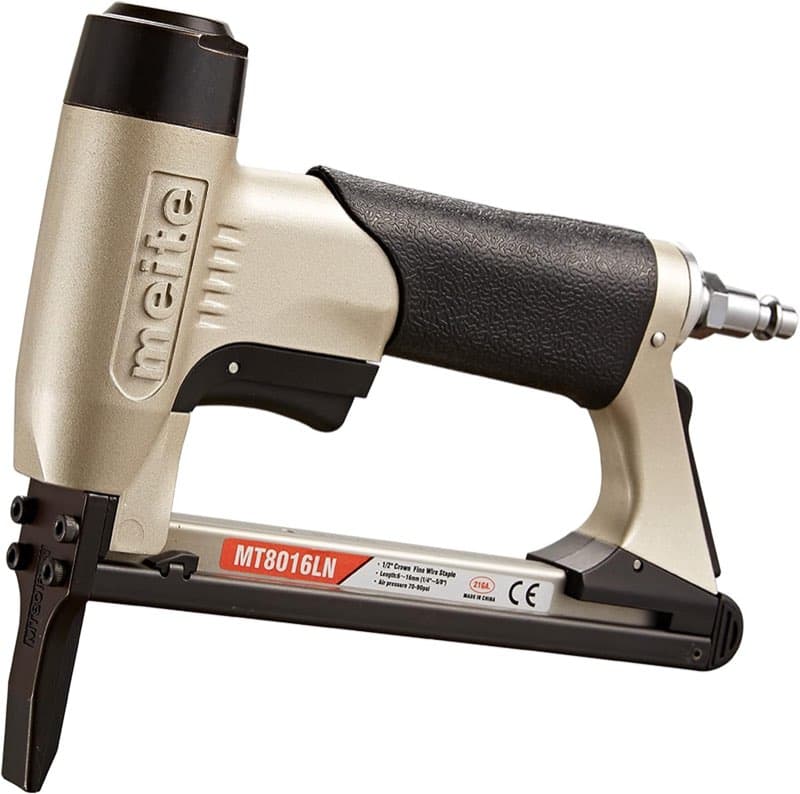
Halfway through re-covering a chair is a poor time to discover that your stapler cannot sink a fixing into the frame. Choosing a pneumatic or electric stapler is therefore less about which technology sounds more powerful and more about the timber, number of fixings and place where you will work. Air power normally earns its keep through repetition, corded electric tools reduce the equipment you need, and cordless models exchange some weight and charging time for freedom from both cable and hose.
Peter F., editor for DIY & tools at productscompared.co.uk, mapped this guide from public UK safety information, specialist guidance and UK-market listings. These tools are not presented as the result of a laboratory test. Availability, bundles and prices can change, so check the current amazon.co.uk listing and the manufacturer manual before buying.
In short
Choose a pneumatic stapler for frequent or demanding work, especially if you already own a compatible compressor. Choose a corded electric model for occasional jobs near a socket, or a cordless staple gun when access and mobility matter more than minimum tool weight. For one light repair in soft material, a manual gun may still be the sensible answer.
Three power sources, three different compromises
A pneumatic stapler uses compressed air delivered through a hose. The handpiece can be relatively light because its energy source is not carried in the tool, which helps when you are placing a long run of staples around a sofa or working overhead. The compromise is the rest of the system: a suitable compressor, fittings and hose must be bought, stored and set up, and the hose has to follow you around the job.
A corded electric stapler contains its own drive mechanism and plugs into UK mains power. It removes the compressor from the equation and can be ready once you have loaded the correct staples and found a suitable socket. The cable restricts movement, an extension lead may introduce another trip hazard, and the tool can feel bulkier than a compact air handpiece. For upholstery at a bench or repairs in a garage, those limits may be modest.
A cordless stapler stores energy in a rechargeable battery. It is the easiest powered option to carry between rooms, into a shed or around a large workpiece, but the battery adds weight and eventually needs charging. Tool-only prices can also be misleading if you do not already own the matching battery and charger. Whatever the power source, first confirm the manufacturer's permitted staple type, crown, gauge and length. Power cannot make an incompatible fastener safe or useful.
Choose pneumatic when the work repeats
Pneumatic equipment makes most sense when stapling is a repeated process rather than a single household task. If you are fixing fabric, webbing or thin sheet material all day, a lighter handpiece and rapid cycling can reduce the interruption between placements. Trade guidance generally treats air tools as the stronger option for demanding upholstery, while the Health and Safety Executive notes that electric tools are lighter-duty and less powerful than pneumatic tools in its discussion of woodworking nail guns. That does not mean every air stapler will drive every staple: the tool's specification and the substrate still set the limit.
Owning a compressor changes the calculation substantially. Check that it can provide the pressure and air delivery stated by the stapler manufacturer, not merely that the connectors can be made to fit. A small compressor may run a stapler successfully yet cycle often during a quick sequence, which adds noise and waiting. You will also need an appropriate airline, sound fittings and whatever moisture control the manuals require.
The practical downside appears before the first staple. You must move or position the compressor, route the hose so it will not catch the fabric, and drain or maintain the equipment as directed. In a shared flat, the compressor motor may be less welcome than the fastening itself. Air is therefore not automatically the professional answer; it is the efficient answer when enough repeated work pays back the setup. For a closer look at tools and system requirements, start with the air stapler comparison. If your shortlist has already narrowed to those two mechanisms, the air stapler versus electric guide covers the direct trade-offs.
Choose electric for accessible, occasional jobs
A corded electric stapler is often the straightforward middle ground for DIY upholstery, backing boards and other light fastening near a socket. There is no tank to fill and no battery to charge, so the tool can sit on a shelf between projects and still be ready when the next repair appears. You pay for that convenience with a mains lead and a drive system carried in your hand, but for a chair at a workbench this may matter less than buying and storing a compressor.
Do not assume that mains power guarantees a flush staple. Dense or treated timber, a long fastener, several layers of material and a poor angle can all expose the limit of an electric mechanism. Test on an offcut or hidden part of the frame using the intended fabric stack, then inspect whether the staple sits correctly without cutting through the covering. If it repeatedly stands proud, stay within the manufacturer's allowed fastener range or choose a more suitable tool. Leaning harder on the nose is not a substitute for capacity.
Access is the other constraint. Plan where the cable will run before you stretch fabric, particularly when turning a chair or moving around a large panel. Use a properly rated extension lead only where necessary and keep connections away from the immediate work area. The electric stapler comparison lets you compare models after deciding that a socket-based tool suits the job. A manual tacker remains worth considering for one cushion, a temporary craft project or a few staples into soft timber. It costs less and has almost nothing to set up, but dozens of squeezes can lead to fatigue and uneven pressure. A manual tool is a good small-job choice, not a test you must endure before buying powered equipment.
Choose cordless when mobility matters
A cordless staple gun is useful when the workpiece cannot conveniently come to a bench. You can move around furniture, work in a garden building without trailing a mains cable, or take the tool to several small jobs without bringing a compressor. It is still an electric stapler, but the battery changes the balance, purchase cost and working rhythm enough to treat it as a separate choice.
For one chair, a compatible cordless model may be entirely adequate. The meaningful question is whether the model accepts the staple you need and can seat it in the actual frame material. Make a short test run on an unseen area, check that the fabric is held without damage, and watch for performance changing as the battery runs down. Keep hands clear of the nose and disconnect the battery before clearing a jam, following the tool manual.
Battery weight becomes more noticeable during a long run or when you hold the tool at an awkward angle. Runtime claims vary with fastener length, material and operating conditions, so a quoted number of shots is not a guarantee for your project. If you already use a manufacturer's battery platform, a bare tool may be economical; if not, include a battery and charger when comparing the real cost. See the cordless stapler comparison. Cordless solves fast setup and unrestricted movement. When output and minimum handpiece weight matter most, air retains an advantage; when you need a short spell of fastening in several locations, avoiding the airline may save more time than faster cycling would.
Make the choice around the whole system
Start with the hardest representative task, not the easiest one. Write down the frame or sheet material, total number of staples, permitted staple specification and where the work will happen. A single cushion on softwood, six dining chairs in hardwood and repeated workshop production all involve fabric and staples, but they do not place the same demand on a tool.
Next, price the complete working setup. A pneumatic handpiece needs a compatible compressor if you do not have one, plus airline and fittings. A cordless bare tool needs a battery and charger unless your existing platform is compatible. A corded model may need a suitable extension arrangement, although that is not a reason to work with tangled leads. Compare those totals in GBP at the time you buy, because listings and bundles on amazon.co.uk can change.
Then account for the workspace. A compressor takes floor or storage space and cycles audibly; a cord can catch as you rotate furniture; a battery makes the tool heavier. There is no responsible universal claim that one type is quietest, because the particular tools, compressor, room and workpiece all affect the sound reaching other people. In a flat, work at reasonable hours, place the item on a stable surface that limits transmitted impact, and tell neighbours before a lengthy session.
Finally, check controls rather than power alone. Look for a clear safety contact, an accessible but protected trigger, straightforward jam-clearing instructions and depth adjustment where the job requires it. Read the manual before loading the tool, keep your free hand away from the fixing line and isolate the power source before maintenance. Never point a stapler at yourself or another person, even when you believe it is empty.
Gas nailers are a different tool
Gas nailers are not pneumatic staplers. A gas tool typically combines a fuel cell with battery-assisted ignition to drive nails without an airline, whereas a pneumatic tool receives compressed air from a separate compressor. The Health and Safety Executive discusses air, gas and electric spring-operated nail guns in the context of woodworking safety, but listing those mechanisms together does not make their fasteners or intended jobs interchangeable.
This distinction matters when shopping because a cordless nailer can describe a gas site tool as well as a battery-driven electric design. Paslode-style gas nailers are commonly associated with mobile construction nailing, not ordinary fabric upholstery. Check whether the tool fires nails, brads or staples, then check the exact dimensions it accepts. If the task is attaching fabric to a chair frame, a powerful framing nailer is the wrong category. Treat every powered fastening tool as capable of causing a serious puncture injury. Follow the manufacturer's instructions, use the specified fasteners and safety equipment, and do not defeat a contact mechanism to gain speed.
Where to compare staplers
Once you know the right power source, compare within that category rather than mixing unlike headline specifications. For air tools, look at operating requirements, fastener range, magazine capacity, handpiece weight and what is included. For corded tools, consider cable reach, staple compatibility, adjustment and handling. For cordless models, compare those points alongside battery compatibility, supplied capacity and the weight of the ready-to-use tool.
Our separate guides cover air staplers, electric staplers and cordless staplers. Choose for the work you actually repeat. Air is compelling when output and a light handpiece justify the support equipment. Corded electric is convenient for intermittent work in reach of mains power, while cordless earns its extra weight when moving freely is the priority. If a manual gun can complete one soft-material repair comfortably, buying no motor at all may be the best-value decision. A qualifying purchase through our links can earn a commission at no extra cost to you.
Common questions
Is a pneumatic stapler always the professional choice?
Can a cordless stapler cover a chair?
Is a manual staple gun enough for one cushion?
Which type of stapler is quieter in a flat?
Does owning a compressor change the choice?
Are gas nailers the same as air staplers?
Where can I compare each kind of stapler?

Peter F. is the editor for DIY & tools at productscompared.co.uk. Comparisons in this category are checked against amazon.co.uk listings, review evidence and public UK sources.
Related articles
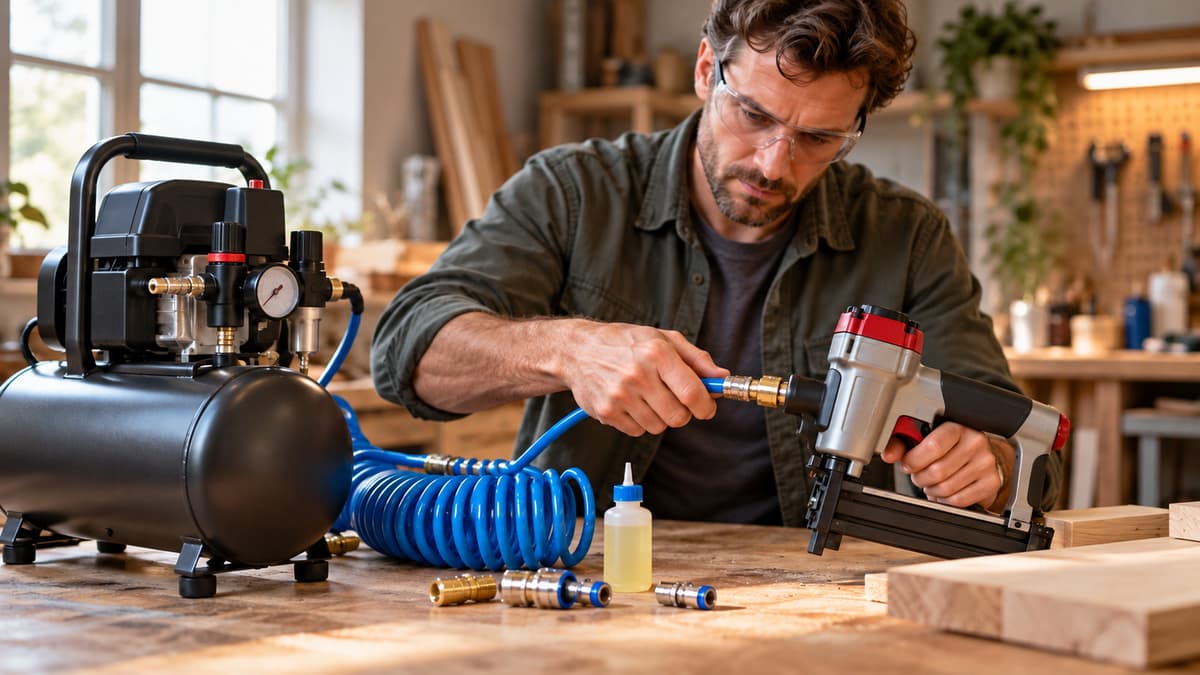
Compressor for a staple gun: what will it cost?
Price the tank, hose and fittings behind a pneumatic stapler before you assume air is the cheap option.

Type 71 or Type 80 staples: choose the right series
Check which fine-wire staple series fits your gun before buying boxes of fasteners.

Pneumatic stapler keeps jamming: find the cause
Trace bent staples and misfires to the fastener, air supply, lubrication or magazine.