Independent comparisons. We may earn from shop links. More info

TIG welder buying guide

Updated: 18 October 2026

A TIG welder can look ready for the garage while process and input current stay buried. This TIG welder buying guide puts those checks before headline amperage, star ratings, or a torch in the photograph. Start with the metal you will weld, then whether the supply can support the machine at the output you need. The [TIG welding machine comparison](/hub/soldering-and-welding/tig-welding-machine) holds four amazon.co.uk listings. Prices are GBP from the 16 October 2026 snapshot. We did not run a weld trial. A qualifying purchase through our links can earn a commission at no extra cost to you.

A TIG welder can look ready for the garage while process and input current stay buried. This TIG welder buying guide puts those checks before headline amperage, star ratings, or a torch in the photograph.

Our top picks

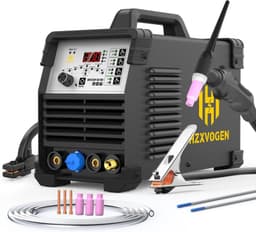
H HZXVOGEN H HZXVOGEN HVT250P

Best overall

H HZXVOGEN H HZXVOGEN HVT250P
9.8/10about £254.99
HITBOX HITBOX HBT250P

Rank 2

HITBOX HITBOX HBT250P
8.6/10about £339.99
On this page

Choose the metal before the amperage

For mild steel and stainless steel, DC TIG is normally the process you need. Aluminium is the dividing line: its oxide needs the cleaning action of AC, so a DC-only bargain does not become an aluminium machine through a different torch. If aluminium may appear even occasionally, compare genuine AC/DC machines. That fork is on AC DC TIG vs DC TIG. The H HZXVOGEN HVT250P and the HITBOX HBT250P claim AC/DC and name HF start. Both SSimder rows are DC. B08QVQ9FKH says it is not applicable to aluminium. B0FVWWVWB1 names lift TIG, states 10–140 A in the bullets, and carries TIG-200 in the model string. The older title says 140 A while its table prints 200 A. A 200 A title does not bridge the process gap, and a documented lower output is more useful than a larger number with no matching input.

Check input current and duty cycle together

The right process on the wrong plug is still the wrong buy. UK mains are nominally 230 V, but a printed voltage does not say whether the machine belongs on a BS 1363 13 A socket. Look for rated input current, the required circuit, and the plug the manufacturer specifies. None of the four extracts states input current in the specification table, so a fitted plug cannot settle it. Stop, return, and electrician decisions are on the TIG welder 13 amp plug page. Duty cycle is welding time in a ten-minute period at a stated current. Forty percent at 200 A means four minutes on and six minutes cooling, not 40% of the amperage. None of these extracts states a thermal duty cycle. The HITBOX 10–90% figure is AC balance. A machine that states 13 A and 35% at 160 A gives you two facts to plan with. If the manual asks for more than 13 A, a qualified electrician assesses a dedicated circuit. Changing the fuse is not that assessment.
H HZXVOGEN H HZXVOGEN HVT250P

Testsieger

H HZXVOGEN H HZXVOGEN HVT250P
9.8/10about £254.99

Price the missing parts, not just the inverter

A torch in the box is not a ready-to-weld kit. You still need argon, a compatible regulator and flowmeter, a sound hose, tungsten, filler, PPE, and fume control. Cylinder and regulator are not named in these four rows. The H HZXVOGEN names an argon hose. The HITBOX included-components field prints 1. Each SSimder listing names a torch, electrode holder, earth clamp, and manual. Reviews on the HITBOX and SSimder discuss fittings that did not seal. Fix that with compatible parts, not tape. The sequence from regulator to first bead is in how to set up a TIG welder. A foot pedal varies current while you weld. It is not essential for every bench job. The H HZXVOGEN supports one and sells it separately. The HITBOX excludes it. Confirm the connector before you budget for it. The DC extracts are £104.49 and £119.99. The AC/DC machines are £254.99 and £339.99. Those are inverter prices, not a complete workshop total.

Read the listings as evidence, not winners

The H HZXVOGEN lists pulse and square wave at £254.99, with input current and duty cycle absent. Its 4.9 comes from 13 reviews, and the texts in the extract are labelled United States. That is a feature candidate to investigate, not an award. The HITBOX states 0.5–200 Hz and weighs 8.6 kg. Its 4.3 from 62 reviews is more UK feedback, and that feedback includes a bridged 13 A fuse, about 27 A, and gas-hose leaks. Reject a unit whose fuse has been altered. Wording about fuse changes from 2024 does not clear every unit in circulation. Both SSimder ASINs share 3.8 from 167 reviews. Shared feedback describes a 50 A fuse in a 13 A plug and refers to 22.7 A, while the table prints 3 kW. Do not choose between those figures by arithmetic. The order is metal, verified supply, arc start, complete kit, stated duty cycle, and only then rating. If a seller cannot provide input current, leaving the table is a sensible decision.

Common questions

Do I need AC/DC if I only weld steel and stainless?
No. DC TIG is the normal process for mild steel and stainless steel, so AC can be unused cost if those are your only metals. Buy AC/DC if aluminium is a realistic future job, because a DC-only inverter cannot be converted to AC by changing the torch.
What does a duty cycle percentage mean?
It is the allowed welding time in a ten-minute period at a specified current and under stated test conditions. A 40% duty cycle at 200 A means four minutes welding and six minutes cooling. A percentage without an amperage is not enough to compare machines.
Is a torch in the box a complete TIG kit?
Usually not. You may still need an argon cylinder, a compatible regulator and flowmeter, tungsten, filler rod, consumables, PPE, and fume control. Check the itemised package list and the connection standards instead of relying on a product photograph.
Is a 200 A TIG welder automatically better than a 140 A model?
No. Process, minimum current, a verified input requirement, and duty cycle can matter more than maximum output. A disputed 200 A claim with no duty figure is less useful than a documented lower rating that suits your metal and the supply you actually have.
Should I trust a 4.9 rating from 13 reviews?
Treat it as limited evidence, especially when the available texts are not UK-labelled. A high average can describe satisfaction among a small group. It does not prove UK plug suitability, duty cycle, or safe construction. Read geography, count, and recurring faults alongside the average.
When is a foot pedal worth buying?
A pedal is useful when you need to reduce heat as the work warms, or to vary current through a changing joint. It is less important for repetitive bench work at one setting. Confirm the exact compatible pedal before you order. Connector shape alone does not establish compatibility.

Related pages

Sources

HSE and British Standards pages, the R-Tech 13 A example, and the amazon.co.uk listings for these four ASINs. Listing snapshot 16 October 2026.

  1. HSE, mild steel welding fume (retrieved 16 October 2026)
  2. HSE WL3, welding fume control (retrieved 16 October 2026)
  3. HSE, asphyxiation hazards in welding (retrieved 16 October 2026)
  4. HSE, other welding risks (retrieved 16 October 2026)
  5. HSE, welding controls (retrieved 16 October 2026)
  6. BS EN IEC 60974-1, welding power sources (retrieved 16 October 2026)
  7. BS EN 60974-6:2016, limited duty equipment (retrieved 16 October 2026)
  8. R-Tech TIG 160 A, 13 A example (retrieved 16 October 2026)