Independent comparisons. We may earn from shop links. More info

Flux core welder for car bodywork

Updated: October 2026

The hole is in the sill, the MOT is booked, and a gasless welder is already in the garage because nobody wanted a cylinder. A flux core welder for car bodywork can tack thicker, rusty patches. It is a poor way to rebuild a paper-thin wing, and it does not turn a cover plate into a legal repair. What an MOT tester accepts, and what 0.8 mm steel does under a flux-core arc, are different questions. You need both answers before you strike. The machines themselves are on the [flux core wire welder comparison](/hub/soldering-and-welding/flux-core-wire-welder). This page stays on the car. It uses amazon.co.uk reviews and GOV.UK’s MOT manual as they stood for this set on 16 October 2026. We did not weld a sill, and a review that mentions a sill is not an MOT pass. A qualifying purchase can earn a commission at no extra cost to you.

The hole is in the sill, the MOT is booked, and a gasless welder is already in the garage because nobody wanted a cylinder. A flux core welder for car bodywork can tack thicker, rusty patches.

Our top picks

HITBOX HITBOX HBM200

Best overall

HITBOX HITBOX HBM200
9.1/10about £99.99
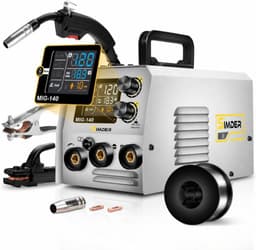
SSimder SSimder MIG-140

Best value

SSimder SSimder MIG-140
8.9/10about £79.99
HITBOX HITBOX HBM1200

Alternative

HITBOX HITBOX HBM1200
8.1/10about £149.99
On this page

What an MOT repair has to be

GOV.UK’s MOT inspection manual, appendix A, is the rule for structural integrity and corrosion on private cars and light vans. A repair in a prescribed area has to reach sound metal. You cut back until the steel you are joining is solid, not until the hole looks smaller. A patch that bridges rotten metal fails the idea of the test even if the bead looks tidy from the pavement. Plug welds are acceptable where the original joint was a spot weld, and only when the old flange has been removed so you are not welding a new skin onto a rotten lip. Other patches need a continuous seam. Filler, underseal used as structure, and brazing do not count as that repair. The manual does not name flux-cored wire. It describes a joint that ties good metal to good metal in the right form. A gasless bead that meets that description can be the right shape of repair. A gasless bead laid around the edge of a patch, over rust, is the wrong shape. None of the five listings is an MOT approval. The SSimder MIG-140’s 18–20 gauge note is an exhaust-style example. The PLASMARGON’s 0.8–4 mm is a catalogue span. Seat-belt anchorages, suspension mounts and the heavily loaded parts of a sill are the moment to stop being the person who owns a cheap inverter. A bodyshop that welds this every week is the practical route when the section carries load and your scrap beads are still inconsistent.

Where flux core struggles

Body sheet in the 0.7–0.8 mm range is where gasless wire blows holes. The arc is hot, the wire is carrying flux, and a thin panel has nowhere to put the heat. Mig-welding.co.uk’s notes on thin metal talk about short pulses once you are under about 1 mm. A forum thread on flux core on 0.75 mm says the same thing in workshop language: practise on thicker scrap first, consider copper backing to pull heat out of the sheet, keep the stick-out short, and use a proper auto-darkening helmet so you can see the puddle start. Another thread on stitching with gasless describes tacks, a wire brush, welding back into the tack, and steel that is bright on both sides. The posters call gas vastly easier. That is forum practice from people who already weld. It is not a procedure for these kits, and it is not a bead sequence you should copy onto a structural sill. The failure you will actually see is a hole that grows as you try to fill it. More wire makes a larger hole. Stop, let the panel cool, and decide whether this thickness belongs on flux core at all. Grind or brush back to bright steel on both faces if you can reach them. A copper bar or a copper spoon behind a very thin patch is a forum habit for sinking heat, not a manufacturer setting on the HBM200 or the MIG-140. An exhaust bracket is a different job from a sill. Brackets are often thicker, and a short weld that holds a hanger is the sort of repair UK reviewers actually describe. A sill that has holed through in the loaded area is the job appendix A is written for. HSE’s welding-controls guidance still expects you to assess fume for occasional work such as an exhaust bracket. Local exhaust if you are inside. Respiratory protection if you are not.
HITBOX HITBOX HBM200

Testsieger

HITBOX HITBOX HBM200
9.1/10about £99.99

What owners of these kits report

UK reviews are the only car evidence in this set, and they are anecdotes. On the SSimder MIG-140, at £79.99 with 4.4 from 270 ratings, reviewers mention sills, floors and exhaust brackets. That tells you people have pointed this 140 A gasless inverter at car-shaped steel. It does not tell you the sill passed, the thickness they welded, or whether they cut back to sound metal. The listing itself does not state a duty cycle or a plug. The 18–20 gauge example is the seller’s light-gauge illustration, closer to an exhaust than to a rebuilt sill. HITBOX HBM1200 reviews mention car rust. The machine states a MIG range of 0.8–5 mm, which on paper covers body sheet at the thin end and thicker patches at the other. The same reviews complain that the included wire snaps and that the manual does not explain feeding. A machine that states 0.8 mm and then fights you on the included spool is an awkward first teacher for thin steel. The price in the file used here is £149.99. It is not a bodywork specialist because the range includes 0.8 mm. The HITBOX HBM200 is the conditional gasless pick in the wider comparison because it states an effective 140 A and has 573 ratings. Nothing in that case says it is the car machine. It does not state a thickness, and car reviewers are not the evidence we have for it. The PLASMARGON at £69.99 states 0.8–4 mm and has the feed complaints. Pointing the cheapest set at a sill, with a doubtful wire feed, is how you learn burn-through and a bird’s nest on the same Saturday. Wind and thicker mild steel favour flux core. Clean indoor sheet favours gas, which is the condition on flux core vs gas MIG.

When to use gas or a bodyshop

Use gas MIG, on a machine that actually claims it, when the panel is around 0.7–0.8 mm, clean, and indoors. You can see the puddle, you are not chipping slag out of a cosmetic seam, and the heat is easier to keep in short pulses. In this set only the SSimder MIG-250 at £279.99 claims gas MIG, and it does so with six ratings, no named flux-cored spool, and a seller note that it does not weld aluminium. It is not automatically the bodywork tool. A purpose-made gas set with a stated 13 A input, which Sealey discusses for thin car metal, may be a calmer buy than a plasma combo. That set is outside our five. Use a bodyshop when the repair is structural and you cannot match appendix A yourself. That includes a sill you have not cut back to sound metal, a patch that would need a continuous seam you have never practised, and anything around a seat belt or a suspension pickup. It also includes the case where your scrap on 1 mm still blows through. If you do stay with flux core, stay inside the limits the reviews and the forums actually support. Thicker brackets and patches you have cleaned. Short welds, then a pause, because none of the cheap listings gives you a duty cycle you can plan a long seam around. The HBM200’s printed line, “60%-140A” at 40 °C, is the only duty-cycle wording in the set, and we do not tidy it into a guaranteed sill procedure. Polarity and a bird’s nest are handled on how to use a gasless MIG welder. A neat weld does not automatically pass. The tester is looking at whether the structure is continuous, tied to sound metal, and of a form the manual allows.

Common questions

Can a gasless welder do car sills?
It can weld mild steel that you have cut back to sound metal, if your preparation matches appendix A and the sheet is thick enough not to blow through. UK reviewers of the SSimder MIG-140 mention sills. That is not an MOT pass, and it is not a thickness rating. Thin, rusty sheet with a patch laid over the rot is the case these machines do not rescue. If you cannot meet the structural rule, a bodyshop should weld it.
What does an MOT tester look for on a welded sill?
Appendix A expects the repair to reach sound metal. Plug welds stand in for original spot welds only when the old flange is gone. Other patches need a continuous seam. Filler and brazing do not count. The manual does not mention flux-cored wire, so the process is not a free pass and not an automatic fail. The joint and the metal around it are what the tester is judging.
Why does flux core blow holes in body panels?
The arc is hot for about 0.7–0.8 mm sheet, and flux-cored wire does not forgive a slow pass. Forum practice on mig-welding.co.uk is to practise on thicker scrap, tack, keep the steel bright, and sometimes use copper to sink the heat. Filling a hole with more wire makes a bigger hole. Gas MIG is the usual choice once the panel is that thin and you want to see the puddle.
Is an exhaust bracket a different job from a sill?
Yes. A bracket or a hanger is often thicker, shorter, and outside the loaded sill section reviewers and the MOT manual are talking about. The SSimder listing’s 18–20 gauge example sits nearer that exhaust work. A holed sill in a prescribed area has to meet appendix A. Doing one well does not qualify the other.
Which kept listing do UK reviewers mention for car work?
The SSimder MIG-140 reviews mention sills, floors and exhaust brackets. HBM1200 reviews mention car rust. Both are anecdotes. Neither listing states an MOT claim, and the MIG-140 does not state a duty cycle. The HBM200’s stronger review count is for the gasless category in general, not a recorded sill repair.
Should you use gas instead for a visible panel?
Yes, if the panel is thin, clean and indoors, and you can run a real gas MIG set. Flux core leaves slag and is harder to see, which is the wrong combination on a wing you care about. Only the MIG-250 in this set claims gas MIG, with six ratings. A dedicated gas machine with a stated supply may suit the panel better than forcing a gasless inverter to do it.
Does a neat weld automatically pass?
No. A smooth bead over rotten metal, a cover plate that never reached sound steel, or filler used as structure can look finished and still fail appendix A. The tester is checking the repair form and the metal it joins. Appearance under fresh paint is not the test. If you are unsure the section is sound, stop and let a bodyshop assess it before the retest.

Related pages

Sources

Public UK sources and the amazon.co.uk listings in this set, last checked on 17 October 2026.

  1. HSE, mild steel welding fume (retrieved 17 October 2026)
  2. HSE, welding controls (retrieved 17 October 2026)
  3. HSE WL3, welding fume (retrieved 17 October 2026)
  4. BS EN ISO 16321-2:2021, eye and face protection for welding (retrieved 17 October 2026)
  5. Basic Welding, what duty cycle means (retrieved 17 October 2026)
  6. Sealey MIG140i instructions (retrieved 17 October 2026)
  7. TWI, flux-cored arc welding FAQ (retrieved 17 October 2026)
  8. GOV.UK MOT inspection manual, appendix A (retrieved 17 October 2026)