Independent comparisons. We may earn from shop links. More info

How to use impact sockets: fit, undo, then set torque

Updated: 23 October 2026

You have clicked a black socket onto the anvil and you are about to hit a wheel nut that has not moved since the last tyre shop. How to use impact sockets is mostly fit, direction and knowing when to put the gun down. Peter F., the DIY & tools editor, wrote this on 20 October 2026 from the amazon.co.uk sets in the [impact sockets comparison](/hub/sockets-and-extension-leads/impact-sockets) and from Health and Safety Executive notes on work equipment and flying debris. We did not film a lab test. A qualifying purchase can earn a commission at no extra cost to you.

You have clicked a black socket onto the anvil and you are about to hit a wheel nut that has not moved since the last tyre shop. How to use impact sockets is mostly fit, direction and knowing when to put the gun down.

Our top picks

Ginour Ginour 17-piece 10–32 mm

Best overall

Ginour Ginour 17-piece 10–32 mm
9.3/10about £32.99
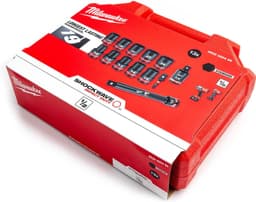
Milwaukee Milwaukee 4932480456

Alternative

Milwaukee Milwaukee 4932480456
9.1/10about £32.95
WORKPRO WORKPRO 4-piece flip set

Best value

WORKPRO WORKPRO 4-piece flip set
8.4/10about £12.99
On this page

Fit the square and the retention

The socket and the anvil have to be the same square, usually 1/2 inch on a car gun. Push the socket on until it stops. A pin-and-ring anvil needs a hole, with the ring holding the pin. A detent needs a click. If it wobbles, it is not seated. We are not claiming any set here was certified to ISO 1174-2. Ginour’s bullets describe a pin hole. WORKPRO describes a detent. KIRXST and Aurlloct reviewers describe sockets that fall off. Do not hold the socket with your fingers, and do not stack a 1/4 inch driver and an adapter on a wheel nut. Drive shopping is in the impact socket set buying guide.

Undo the fastener

Set the gun to undo, usually anticlockwise on a right-hand thread, and seat the socket on the flats. A 19 mm socket on a 21 mm nut will round it in one burst. A thick socket that never enters the recess cannot grip. Sizes and sleeves are on impact sockets for wheel nuts. Use short bursts, then pause. A nut that does not move may be cross-threaded, seized or the wrong size. More trigger time is how the KATSU notes end in a split 17 mm. A 3 inch bar is normal reach. A longer bar needs support so it does not whip. Wear eye protection. At work, PUWER requires the employer to control ejection.
Ginour Ginour 17-piece 10–32 mm

Testsieger

Ginour Ginour 17-piece 10–32 mm
9.3/10about £32.99

Finish with a torque wrench

An impact wrench loosens and runs a nut down. It is a poor final word. Seat the nut by hand, use short bursts until it is snug, then stop. The last movement is a torque wrench at the handbook figure, in the maker’s sequence. If you do not have the figure, look it up or leave the tighten to a tyre shop. We will not print one newton-metre for every car. A crack or a bright tear after the first nut means that socket is retired. The £9.99 reviews include failures on a third wheel nut.

Inspect and retire

Retire a crack, a drive square opened into a bell, or a wall that spreads over a nut it used to fit. That spread is how reviewers describe the cheaper KATSU set. One failed size means that size is done. If two sizes fail the same afternoon, the set is done. A case that dumps the sockets, noted on KATSU 420446, is a problem if you grab 17 mm in the dark and it is 19 mm. Replace a split pin ring before the pin leaves the anvil.

When to stop and call someone

Stop if the stud spins, if the locking key is missing, or if the socket cracks while the nut is still tight. A spun stud is a hub job. At work, HSE pages on PUWER and on vibration in motor-vehicle repair are the employer’s map. The Consumer Rights Act 2015 is the backdrop if a socket sold as impact-rated fails on first ordinary use. That is a route back to the seller, not legal advice, and not a reason to keep using the piece. How a chrome wall fails on the gun is on impact sockets vs chrome sockets.

Common questions

Can I use extensions with impact sockets?
Yes, one extension of the length you need, kept in line with the nut. A 3 inch bar is the usual reach on the wheel kits here. A long bar needs support so it does not whip. Do not stack several adapters and bars on a wheel nut. Each joint is a place for the socket to tilt and round the flats.
Should I tighten wheel nuts with the impact wrench only?
No. Use the gun to undo, and at most to run a hand-started nut down until it is snug. Finish with a torque wrench at the vehicle maker’s figure, in the maker’s sequence. There is no single newton-metre that fits every UK car. If you do not know the figure, look it up or let a tyre shop finish the wheel.
When must I replace a socket?
Replace it when you see a crack, a drive end that has opened up, a wall that has spread over the nut, or a split like the ones reviewers describe on the budget sets. Do not finish the remaining wheel nuts with that piece. Coating wear alone is cosmetic if the wall is still true and the size still fits without slop.
Do I need eye protection in a home garage?
Yes. Chips, a broken socket wall and a nut leaving the stud are projectiles. HSE guidance treats ejection as a risk employers must control. At home your eyes still need the glasses. Gloves do not replace a socket that stays on the anvil.
What if the nut spins or cross-threads?
Stop the gun. A spinning stud means the thread in the hub has let go, and more impact will not cut a new thread cleanly. Wind a cross-threaded nut off by hand if you can, and do not run it back on with the gun. If the wheel is unsafe to move, call a tyre shop or a garage rather than adding a longer bar.

Related pages

Sources

Sources taken from the research digest. Shelf prices, stars and review counts are the amazon.co.uk figures in the stored listings. This page did not run a lab test, and none of these listings is claimed to have been tested to ISO 1711-2.

  1. Chrome Trader — chrome versus impact sockets (retrieved 22.10.2026)
  2. ISO 1174-2:1996 — assembly tools, driving squares for power socket tools (retrieved 22.10.2026)
  3. ISO 2725-2:2017 — impact socket dimensions and marking (retrieved 22.10.2026)
  4. ISO 1711-2:2019 — impact socket hardness and torsion (retrieved 22.10.2026)
  5. HSE — PUWER overview (retrieved 22.10.2026)
  6. HSE — vibration in motor vehicle repair (retrieved 22.10.2026)
  7. HSE — using the right type of PPE (retrieved 22.10.2026)
  8. Consumer Rights Act 2015 (retrieved 22.10.2026)