Cable reel unwound: read the coiled rating first
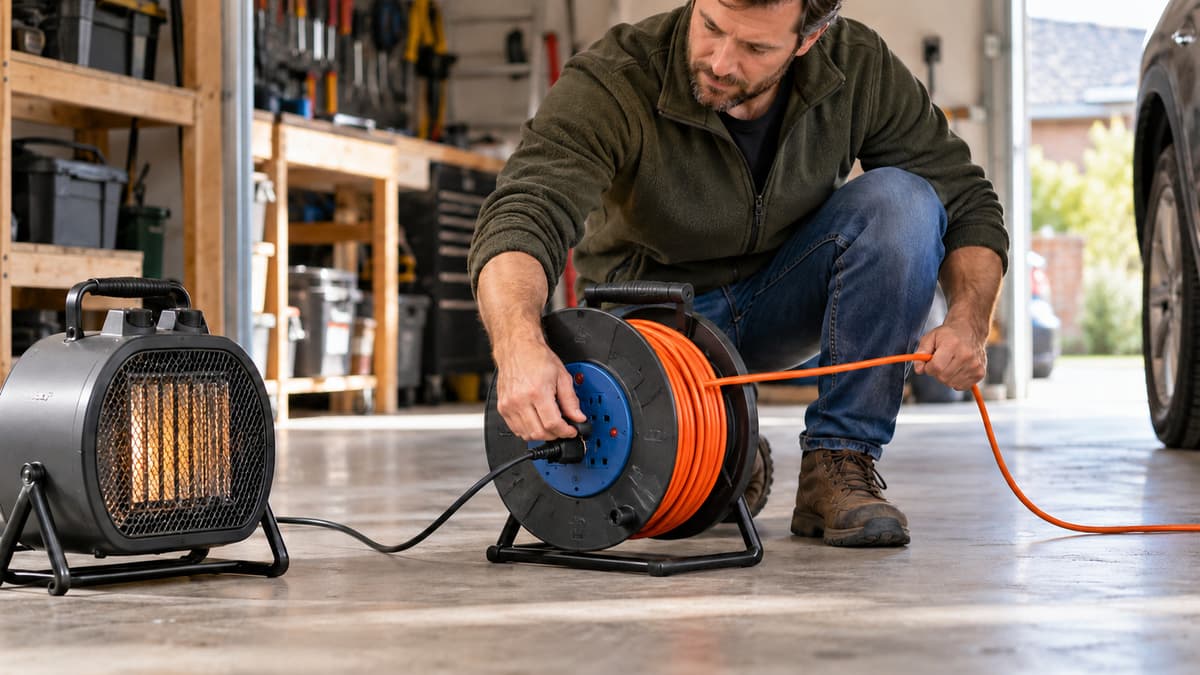
A cable reel unwound can carry its full marked rating. Left coiled, the same drum may be only a few amps, so pull all the cable off before a high load.
On this page
The drum says 13 A, twenty metres are still on it, and the heater is about to go in the socket on the hub. Cable reel unwound is the condition Electrical Safety First expects before that load. Wound cable holds its heat. The full rating belongs to the cable in open air. A few loops left because the corner is far enough are still a coil.
This page is by Peter F., editor for DIY & tools at productscompared.co.uk. The heat warning comes from Electrical Safety First on overloading and garden use, and from the outdoor checklist published with RoSPA. This hub does not list cable reels. We did not measure a drum temperature. A qualifying purchase through our links can earn a commission at no extra cost to you.
In short
Unwind a cable reel fully before you put a high load on it. The wound rating can be only a few amps even when the unwound figure is 13 A. A thermal cut-out is a backstop, not a reason to leave the cable coiled. A short straight lead is a different product and does not follow reel rules.
Why a coiled reel gets hot
Cable warms when it carries current. In open air that heat leaves the sheath. On a drum the turns sit against each other, the heat stays in the bundle, and the temperature climbs while the load looks ordinary. Electrical Safety First says a coiled reel can overheat and catch fire. That does not depend on the reel being outside, or on feeling the warmth in the first minute.
A heater, a fan heater, a kettle at a stall, or a power tool that runs for more than a moment is the load that cooks a coil. Phone chargers are smaller, and they are still the wrong habit, because the next person plugs the heater in without pulling the cable off. Uncoil before use. Electrical Safety First does not list appliances that may stay on a wound reel.
Leave the unwound cable where it can shed heat. Do not recoil the spare under a rug, through a doorway, or in a tight ball behind the drum. A tidy ball is a coil with the drum taken out of the picture. Run the cable in loose, open runs. Unplug first, then coil for storage. Use coiled is how a reel overheats.
Damage makes the same heat worse. A crushed sheath, a melt mark, or a plug that no longer sits square in a UK 13 amp socket is a reason to stop before you discuss ratings. Electrical Safety First wants a proper BS 1363 plug and no taped joints. If the reel's plug is cracked, retire it. This page will not tell you how to fit a new plug.
The marked rating, wound and unwound
Many extension leads are rated 13 A. Some reels are 10 A or less even when unwound. You cannot read 13 A on the wall socket and assume the drum matches it. Fully unwind the reel to use the full rating, because the wound rating can be as low as a few amps. Two numbers, two conditions. The number that applies is the one for the condition you actually have.
Look at the label before the first job. You want a wound figure and an unwound figure, or a clear instruction that the cable must be fully unwound for the stated current. If the label shows only 13 A beside a picture of a still-wrapped drum, treat that picture as marketing. If you cannot find any amp figure, do not invent one from the cable thickness or the number of sockets.
The extension lead rating that binds is the one for the present state of the reel, and every socket on that hub shares it. Four outlets are not four supplies. A tool plus a heater on a fully unwound 10 A reel can be over the line with sockets left empty. Read the plates. Stay inside the lower of the reel's applicable rating and the wall socket.
Do not plug the reel into another lead to gain a socket near the door. That is a daisy-chain. Electrical Safety First allows one extension device per wall socket, and a reel is that device. A second strip on the reel puts the whole load through the first plug. Unwinding does not cancel it. Why that plug overheats is in do not daisy-chain extension leads.
A thermal cut-out is not permission
Electrical Safety First recommends a thermal cut-out on a reel. It is a switch that opens when the drum gets too hot. It is not a promise that a coiled reel will sit at 13 A until the cut-out thinks otherwise. By the time it opens, the cable has already been hot. Repeated trips mean change how you use the reel, or scrap it. Do not reset it with the cable still wrapped.
Not every reel has one. If the label is silent, assume there is no cut-out until you can see a stated device. Do not take heavy duty on the carton as a cut-out. Unwind the cable whether or not you find one. A cut-out on a coiled reel is the backup for a mistake. The mistake is still the coil.
Outdoors, uncoil and then apply the garden rules as well: weather-resistant cable, plugs out of puddles, and an RCD if the socket is not already protected. Those points are in outdoor extension leads and RCDs. An RCD does not watch drum temperature. You can trip nothing and still cook a coiled reel, or uncoil perfectly and still use an indoor reel in the rain.
If a cut-out has opened, unplug at the wall, let the reel cool, unwind it fully, and remove load before you try again. If it opens with the cable already off the drum and a modest load connected, stop. A damaged cable, a failing socket, or a load over the unwound rating can do that. Do not bypass the cut-out. This page will not describe that.
A short lead is not a reel
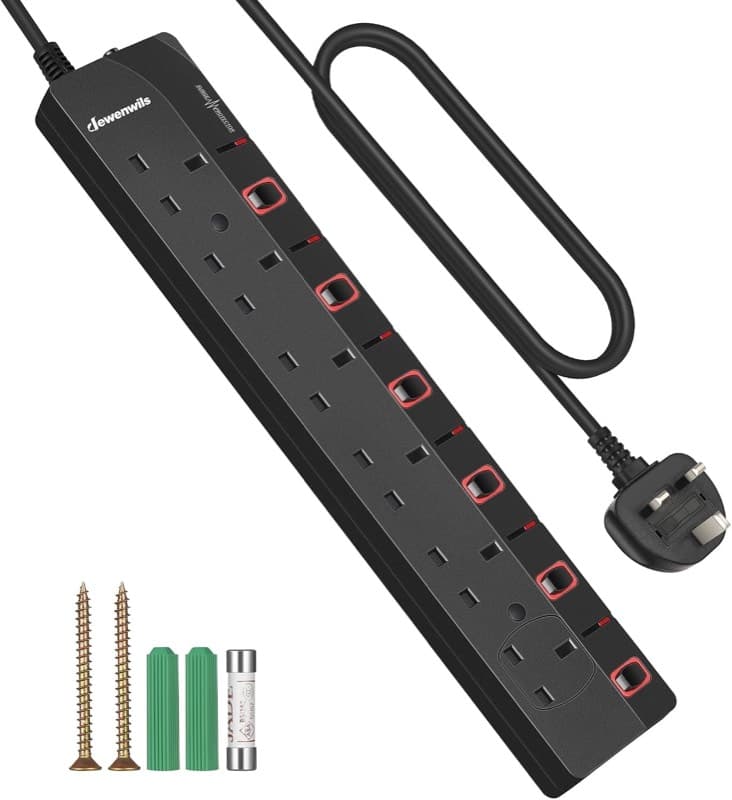
DEWENWILS B091DRYXDQ in our wall-mounted extension lead comparison is a straight 6-way, stated as 3 m, with a 13 A plug, at about £16.99. Across 2,224 amazon.co.uk ratings it sits at 4.6. The safety bullet prints 270 joules, while the surge attribute says 13 Amps, so those lines clash. The listing says four switches on a 6-way strip, and reviewers describe a switch on each socket. It is an indoor strip, not a drum, so it has one rating rather than a wound figure and an unwound figure.
The other rows are the same kind of object: a stated length of 2 m or 3 m, a UK plug, and one current claim. Coiling the spare into a tight bundle under a cushion builds a small heat trap. Leave the slack loose. Choosing length so you do not have a heap of spare cable is part of choosing a UK extension lead.
A reel still earns its place when the job moves. The cost is the uncoil step every time, the lower rating while any cable remains on the drum, and the ban on joining it to another lead. Skip the reel when the socket and the tool stay three metres apart. Do not expect an indoor 3 m strip to behave like outdoor drum cable.
Before the load goes on, the checks are ordinary and they stop if one fails.
- Confirm the plug is a UK three-pin plug, intact, with no tape.
- Pull the cable fully off the drum so no turns remain on the hub.
- Lay the cable in the open, not under a rug or through a shut door.
- Read the unwound rating and the plates of what you are about to plug in.
- Outside, confirm the lead is weather-resistant and that an RCD covers the socket.
A straight 13 A lead such as the DEWENWILS skips emptying a drum, because there is no drum. It does not skip the rating, the plug, or the one-device rule. A reel that will not unwind, because the cable is melted into a lump, has already failed. Do not load it to free the turns. A cut-out and an RCD do not stand in for cable still on the drum. We did not load a reel in a lab.
Common questions
Why must a cable reel be fully unwound?
What is the rating when the cable is still coiled?
Do all reels have a thermal cut-out?
Can I use a reel indoors at full load while coiled?
Is a short extension lead different?
What damage should I look for first?
Does an RCD let me leave the cable coiled?

Peter F. is the editor for DIY & tools at productscompared.co.uk. Comparisons in this category are checked against amazon.co.uk listings, review evidence and public UK sources.
Related articles
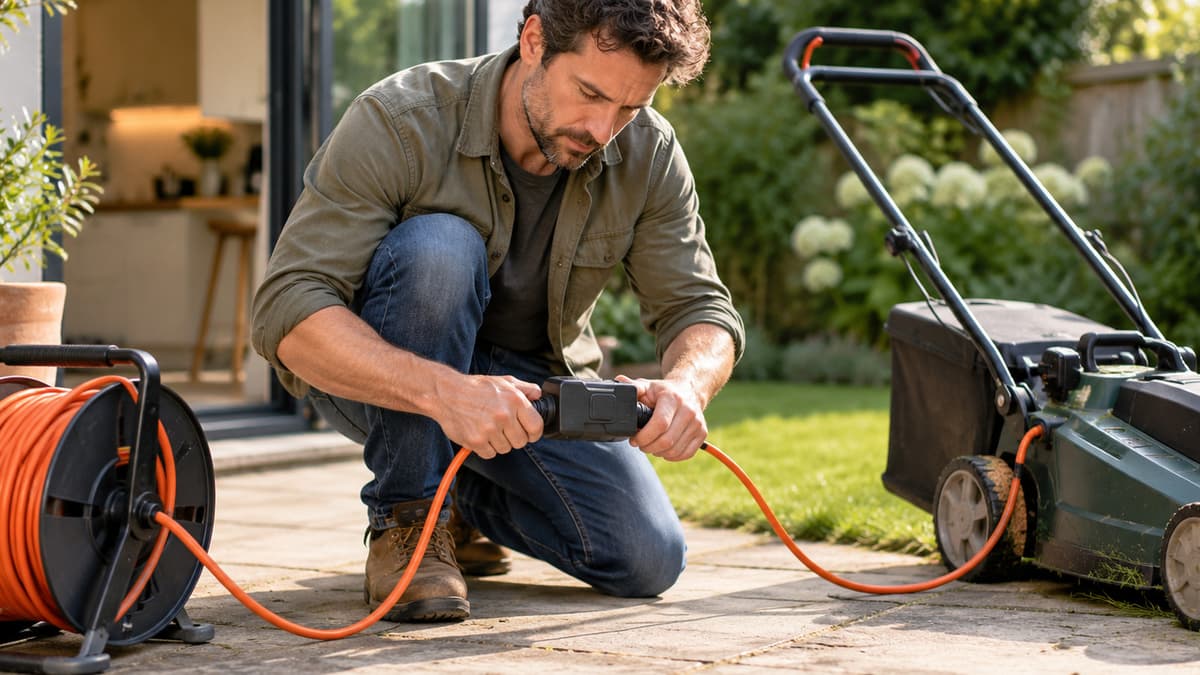
Outdoor extension lead RCD: rain and reels
Unwind the reel and use a weather-resistant lead outside. An RCD does not make a coiled drum safe to load.

Daisy chain extension lead: stop at one
One extension device per wall socket. Joining a reel to another lead heats the plug that is already in the wall.
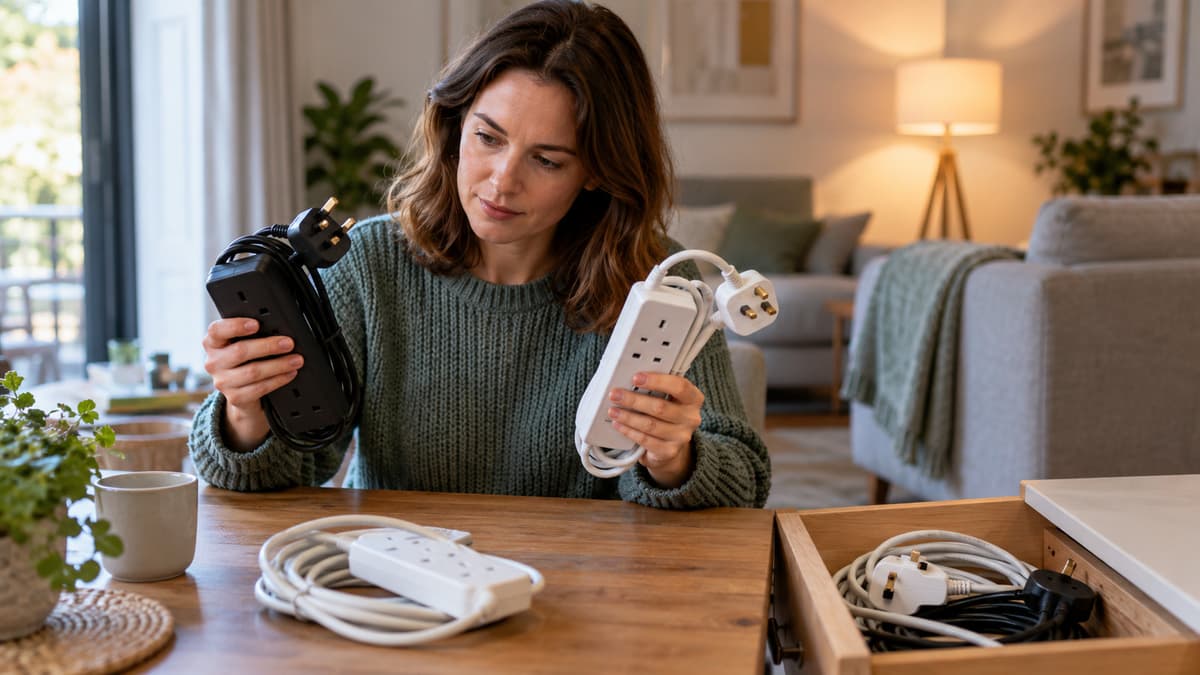
UK extension lead: plug, amps and length
A short lead that reaches is a different object from a drum. Match the BS 1363 plug and the marked amps first.