Daisy chain extension lead: stop at one socket

A daisy chain extension lead puts every load through one wall plug. Use a single lead inside its amp rating, or add sockets instead of a second strip.
On this page
The lamp is on the first strip and the second plug is hovering over a spare socket on that strip. That is a daisy chain extension lead, and Electrical Safety First tells you not to make it. One extension device per wall socket. The second lead adds neither length nor capacity. Everything on either lead still passes through the single plug in the wall.
The rule comes from Electrical Safety First on extension leads, overloading and garden use. Product figures are amazon.co.uk listings in the wall-mounted extension lead comparison. We did not heat a plug in a lab. A qualifying purchase through our links can earn a commission at no extra cost to you.
In short
Do not plug one extension lead into another. The wall plug and its fuse carry the whole load, and a second lead does not create a second 13 A allowance. Use one lead that reaches, stay inside the rating printed on it, and fit more sockets if the chain is how the room works every day.
What daisy-chaining means
Daisy-chaining means a lead, a reel or a block adaptor fed from another lead, reel or block, instead of from the wall. The wall sees one plug. You see several sockets. Electrical Safety First states the limit in plain language: one extension device per socket, and do not plug extension leads together. The same sentence is in their garden advice, so a dry patio is not an exception.
Distance is the usual reason: the television lead stops a metre short, so a second lead comes out of the drawer. Or the four-way is full and another hangs off the end. The extra outlets are not extra supply. They are more plugs on the same flex and the same fuse. Buy one lead that reaches. That check is in choosing a UK extension lead. A partly wound reel is a different heat problem, covered in unwind a cable reel before use.
A USB plug in the end of a lead is the same mistake when a second adaptor or strip follows it. The charger is a small load. The stack is still two devices in one wall socket. The USB plug adapter comparison is for a charger in one socket on its own, not for a tower of adaptors.
Why the wall plug overheats
The plug in the wall is the narrow point. Its pins, its fuse and the socket contact carry every amp from both leads. Electrical Safety First warns that a load above the lead rating, or one lead plugged into another, can overheat that plug. Many leads are rated 13 A. Some reels are 10 A or less. A UK 13 amp socket does not add those figures. Keep the lowest extension lead rating in the setup. A daisy chain does not give you two of them.
A kettle plate is often in the kilowatt range, and a heater is the same class of load. Two of those at one plug ask one 13 A fuse to act like a ring circuit. Plates differ, so this page will not print a guessed total. Read them. If the total is over the first lead, unplug something. If a second lead is how you got there, unplug that lead too.
Heat can show before a fuse opens. A fuse protects the flex against a fault current. A poor contact, a plug crowded out of square, or a load near the rating for an hour can warm the pins without a short. Brown marks or a smell of hot plastic are stop signals. Unplug. Do not tape the plug. A discoloured socket needs an electrician, not a longer lead.
An RCD does not police this. It opens on earth leakage, so an overloaded daisy chain can still cook a plug on a protected circuit. Garden use does not relax the rule. Electrical Safety First still wants one lead outdoors, plus weather-resistant cable and RCD protection. Those extras are not a permit to join two indoor leads across a wet patio.
What to do instead
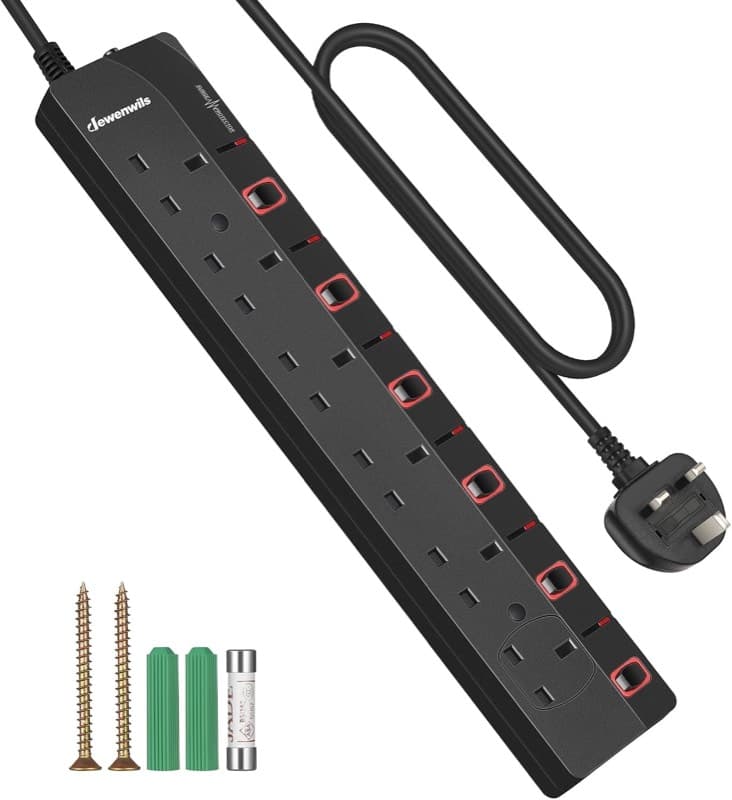
Use one lead from the wall to the kit. DEWENWILS B091DRYXDQ in that comparison is one indoor 6-way, stated as 3 m, with individual switches and two rear screw mounts, at about £16.99 and 4.6 from 2,224 reviews. The attribute line says 13 A: one device in one socket, not six 13 A supplies. A bullet mentions 270 J while a surge field says 13 A, so do not buy it as a surge protector. Filling all six faces without adding the plates is how that one rating gets exceeded.
Move the appliance before you lengthen the lead. A heater by the socket beats a chain along the skirting, and a television on the far wall every night needs a socket there. If you rely on leads, Electrical Safety First points you to more sockets fitted by a registered electrician. In England, GOV.UK lists extra sockets on an existing circuit, outside a bath or shower, as work that often does not need notifying. A new circuit does. Approved Document P is England guidance, not a UK-wide DIY pass and not a guide to opening a consumer unit. The split is in when a new socket needs an electrician.
A surface box can replace a trailing chain in a garage once someone competent connects it. Buying the box does not put it on the circuit. A smart plug in the only free outlet is already one device. Do not hang a strip off a Wi-Fi adaptor.
Temporary use has a limit. An afternoon of decorating is not a chain behind the sideboard since last winter. Dust on the plugs, a cable under a rug and a heater added in October are how that lead becomes the wiring. If you cannot remember when you joined the two leads, unplug the join today, even if nothing smells hot.
A block adaptor is not a second lead
A block adaptor turns one socket into two or three. Electrical Safety First lists it with leads and reels. One block in the wall, inside the rating, is not a daisy chain. A lead plugged into the block is. A block plugged into a lead is the same stack from the other end. The pins do not care that the block has almost no cable. They care about the current, and about whether the plug sits square.
USB blocks crowd the face the same way when a second plug will not seat. A plug that leans, or that you hold in with a book, is a poor contact, and poor contact heats. Use one device that fits. Look for BS 1363 on a plug that stays in a UK socket. A foreign two-pin lead through a travel adaptor, then into an extension, is two wrong fixes at once.
If the block is warm with only a router and a lamp, stop using it. A small load does not explain a hot adaptor. The contact is failing, or the adaptor was never sound. Use one lead that states a UK plug and a current, or have the socket checked. Do not add a third cube because the second one flickered.
The practical sequence is short, and it stops if a step fails:
- Unplug the second lead or block so one extension device remains in the wall.
- Add the amp or watt figures on what is still connected.
- Compare that total with the rating on the lead and on the socket.
- If the lead is short, damaged or unrated, replace it with one lead that reaches. Do not join the old lead to a new one.
- If you need those outlets every day somewhere else, plan sockets.
DEWENWILS B091DRYXDQ can be that one lead when 3 m and six indoor outlets match the job and the load stays inside 13 A. It cannot be lead number two. A live price can move.
Common questions
Can I plug an extension lead into another extension lead?
Is a block adaptor safer than a second lead?
What does a 13 A limit apply to?
Are warm plugs a warning?
Does an RCD stop an overload fire?
When is the answer more sockets?
Can I daisy-chain if every appliance is a phone charger?

Peter F. is the editor for DIY & tools at productscompared.co.uk. Comparisons in this category are checked against amazon.co.uk listings, review evidence and public UK sources.
Related articles
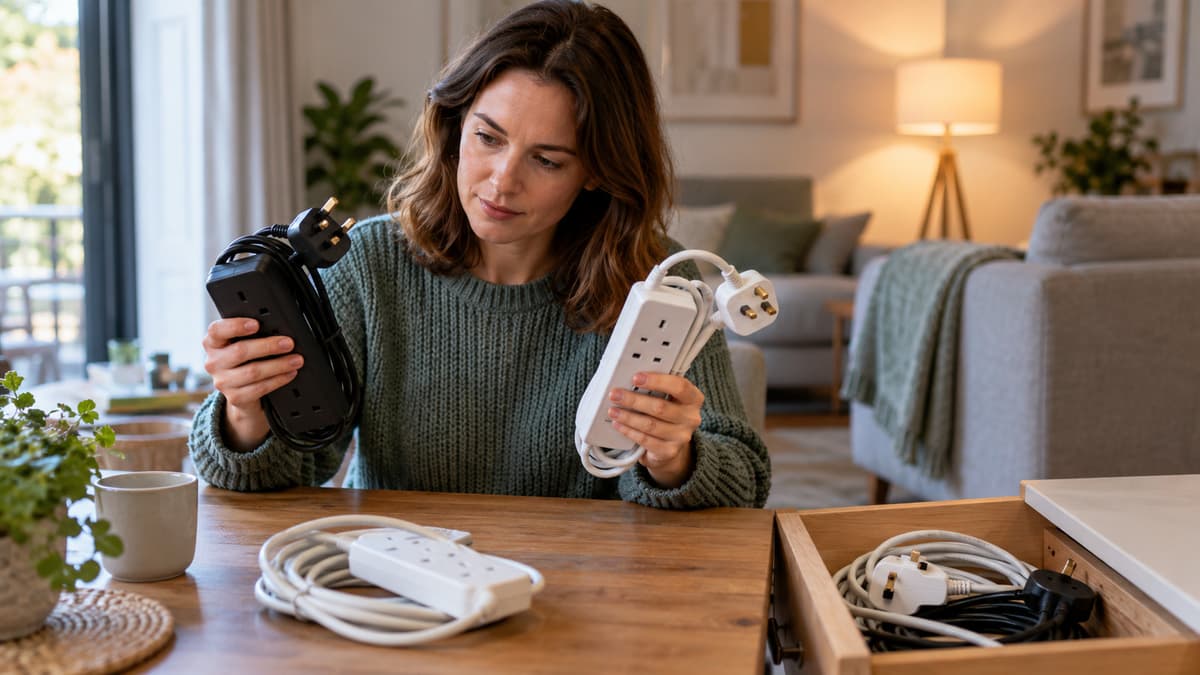
UK extension lead: plug, amps and length
A fused BS 1363 plug, a marked amp rating and a cable that reaches in one run. A second lead is not extra length.
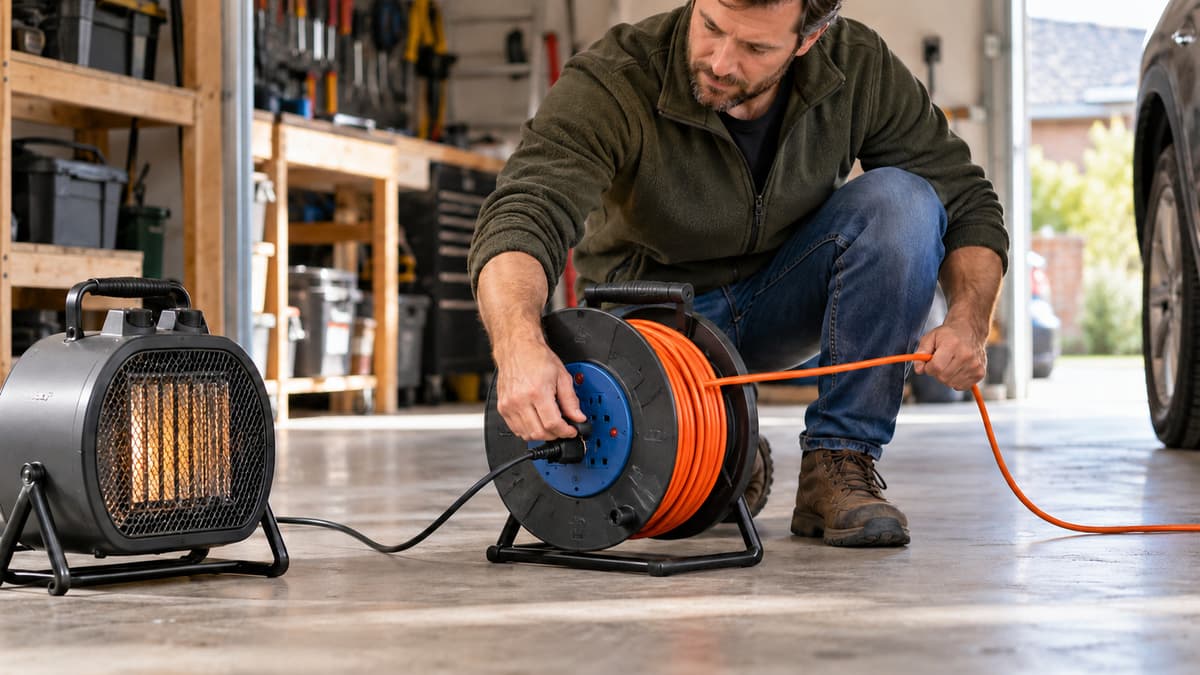
Cable reel unwound: read both ratings
A coiled reel cannot shed heat. Fully unwind it before a high load, and read the wound rating if one is printed.

Part P new socket: when to call an electrician
In England a new circuit is notifiable. Extra sockets on an existing circuit are a different case, and still not a second lead.