UK extension lead: plug, amps and the right length
Match a UK extension lead to a BS 1363 plug, a marked amp rating and the length of the run, and switch to sockets if the lead would stay put every day.
On this page
The spare socket is behind the sofa, the lamp is two metres short, and the lead in the drawer has a plug you do not recognise. A UK extension lead is the right temporary fix only when the plug is a fused UK three-pin plug, the current rating is printed on the product, and the cable reaches in one run. Outlet count does not decide it. UK mains are 230 V.
Figures here are amazon.co.uk listings in the wall-mounted extension lead comparison. Safety points follow Electrical Safety First and the GOV.UK note on replacements. We did not test leads in a lab. A qualifying purchase through our links can earn a commission at no extra cost to you.
In short
Choose a UK extension lead with a BS 1363 plug, a marked amp rating you can stay inside, and a length that reaches in one cable. Many leads are 13 A, and some reels are 10 A or less, so read the product rather than the wall socket. If the lead would stay there every day, buy more sockets, not a longer daisy-chain.
A UK plug and a marked current rating
Start with the plug. Electrical Safety First tells householders to use a fused UK three-pin plug and to look for BS 1363. That mark is the British Standard for the plug that fits a UK 13 amp socket. The fuse protects the flex. It is not a licence to exceed the rating printed on the lead. No mark, a shaved pin, or tape over a cracked cover means you put the lead back.
Read the current before you count sockets. Many extension leads are rated 13 A. Some cable reels are 10 A or less. A UK 13 amp socket does not upgrade a lower-rated reel. The limit is the lowest figure in the setup. If the carton only says heavy duty and never prints amps, you do not have a rating. Do not guess from the thickness of the cable.
A travel adaptor does not turn a two-pin lead into a BS 1363 plug. An appliance that stays in the UK needs a proper UK plug, or a conversion meant to stay. The longer distinction is in travel adaptors are not UK plugs. This page does not describe how to open a plug or swap a fuse.
Length, cable and what you will plug in
Measure the run before you buy the longest drum. A lead that is a metre short gets pulled, trapped in a door, or joined to a second lead. Do not plug one extension lead into another. Both loads then share the first fuse and the first pins, and the extra length sits as heat in the wall plug. Buy a length with a little slack, and do not hide that slack under a rug.
Add the amp or watt figures on the appliance plates and stay inside the extension lead rating on the lead. A kettle is a high load. A phone charger is not. Lamps, a radio and a router can share a lead that would be wrong for two heaters. If a plate is missing, do not assume the appliance is small because the case is small.
Put one plug in each outlet. A 4-way lead is four sockets sharing one rating, not a stack of block adaptors. Chargers across the faces can be fine. Two heaters can be over the line with sockets still empty. Reject cuts, a crushed flex, and tape used as a repair. Outdoor cable, reels and RCD plugs are in outdoor extension leads and RCDs. A dry lawn does not make an indoor 3 m lead garden-rated.
When a lead is the wrong fix
A lead reaches a socket you already have. It is the wrong fix when it becomes the furniture: the television, the console and a heater on the same lead every evening. More sockets, fitted by a registered electrician, are the building job. The surface-mounted socket comparison is the type people look at on a solid wall or in a garage. Buying the box does not connect it.
In England, extra sockets on an existing circuit, outside a bath or shower, are often work that does not need notifying. A new circuit does. Approved Document P is the England guidance. Scotland, Wales and Northern Ireland are not that document. Skipping a notification is not the same as being competent. When to stop is in when a new socket needs an electrician.
A kettle and a toaster want sockets above the worktop, not a strip in the splash from the sink. Those limits are in wall-mounted extension leads for kitchens. A surge strip and a battery UPS are different products if a router must stay on in a power cut. Leads for a UPS are in the UPS extension lead comparison.
- Do not daisy-chain one lead into another
- Do not run an indoor lead outside
- Do not route a lead under a rug across a doorway
- Do not cover a sparking, hot, or loose wall socket with an adaptor
How to read a listing without a lab
We compared amazon.co.uk listings, not a test bench. Stars are the average of people who bought that listing. They do not show conductor size or whether the fuse suits the flex. Use the bullets for UK plug type, stated length, stated current, and whether BS 1363 is named.
PIBEEX B09G2QH53B is a white 2-way Type G lead, stated as 3 m, with a 13 A fuse and BS 1363/A in the listing bullet. The captured price is £13.99, with 4.6 from 1,777 reviews. There is no joule figure, and USB is only an attribute, so do not buy it as a charger. Two outlets suit a lamp and a charger more than a kettle plus a heater. If a later bullet contradicts the fuse or the plug, pause.
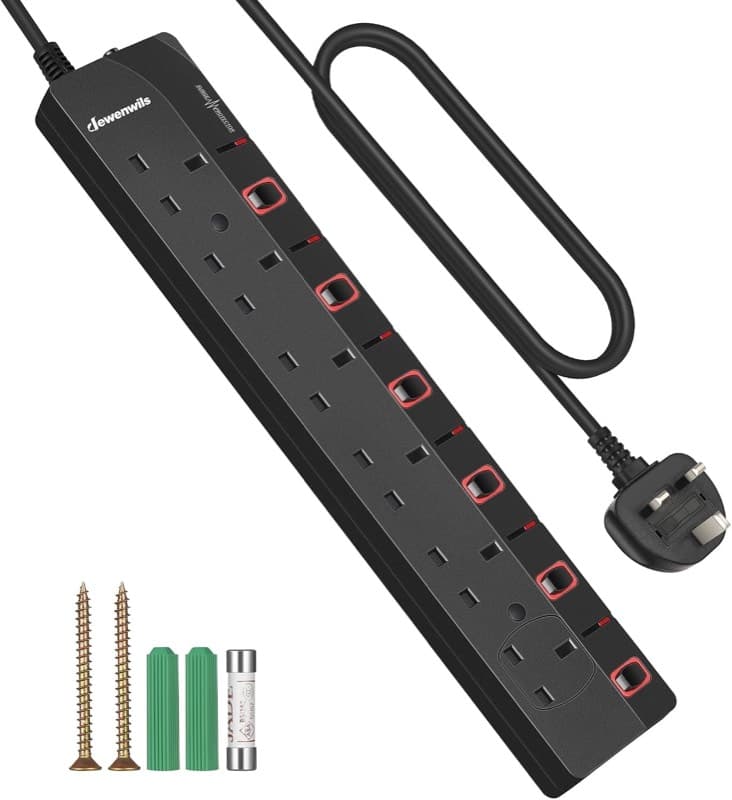
The top pick in that comparison is DEWENWILS B091DRYXDQ, a black 6-way lead, stated 3 m, at £16.99, with 4.6 from 2,224 reviews. A bullet mentions 270 J. A surge field on the same listing says 13 A, which is a current, not an energy. This page will not call it a surge protector because those lines clash. Six sockets make overloading easier if you treat every outlet as spare capacity.
Buy from a reputable retailer. Check who is selling, whether the photos show a UK three-pin plug, and whether the title says UK while the specification describes another pin pattern. No current rating means the listing is incomplete. Cable reels are a separate heat problem in unwind cable reels before use.
A warm plug is a stop
A warm pin, a brown mark, or a smell of hot plastic means you unplug and leave the lead unplugged. Overloading, or plugging one lead into another, is how the wall plug overheats. Do not move it to the next socket to see if that one feels cooler. A discoloured face is a job for an electrician.
An RCD does not excuse an overloaded lead. It trips on leakage to earth. It does not check the flex against its rating. For a mower, read the outdoor page before you open the back door. Replace a lead that is nicked, unrated, or already joined to a second strip. Do not buy a new lead only because the room has too few sockets.
One UK plug to BS 1363, one marked current you will not exceed, one length that reaches. PIBEEX B09G2QH53B is the short 2-way that states those three. A daily run, a garden, or a power cut is a different product.
Common questions
What amp rating should a UK extension lead have?
Does the plug need to say BS 1363?
Can I use a two-pin lead with a travel adaptor every day?
How do I know if I am over the rating?
Should I buy online from an unknown seller?
When should I add a wall socket instead?
Is a 2-way lead safer than a 6-way lead?
Does this page test extension leads in a lab?

Peter F. is the editor for DIY & tools at productscompared.co.uk. Comparisons in this category are checked against amazon.co.uk listings, review evidence and public UK sources.
Related articles

Daisy chain extension lead: stop at one
One extension device per wall socket. A second lead in the first overloads the plug that is already in the wall.
Outdoor extension lead RCD: indoors stays indoors
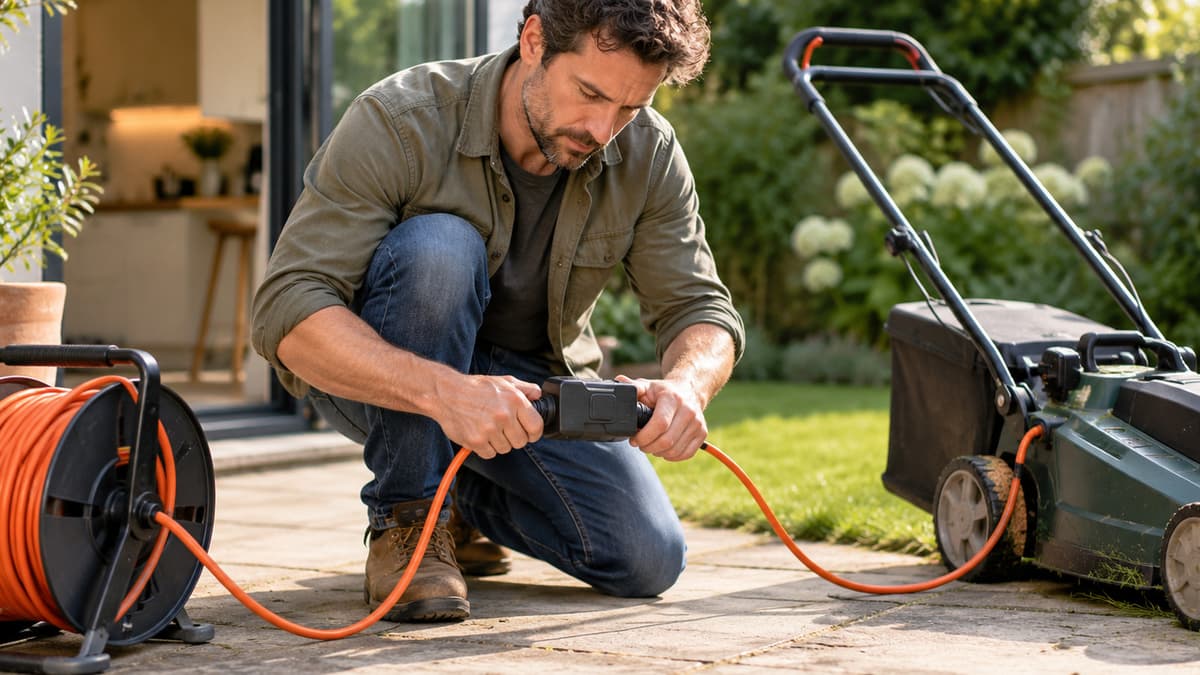
A household lead on the lawn is the wrong cable. Outdoor kit wants a weather-resistant lead and RCD protection.

Part P new socket: when to call an electrician
In England a new circuit is notifiable. An extra socket on an existing circuit is still electrical work.