Outdoor extension lead RCD: rain, reels and rating
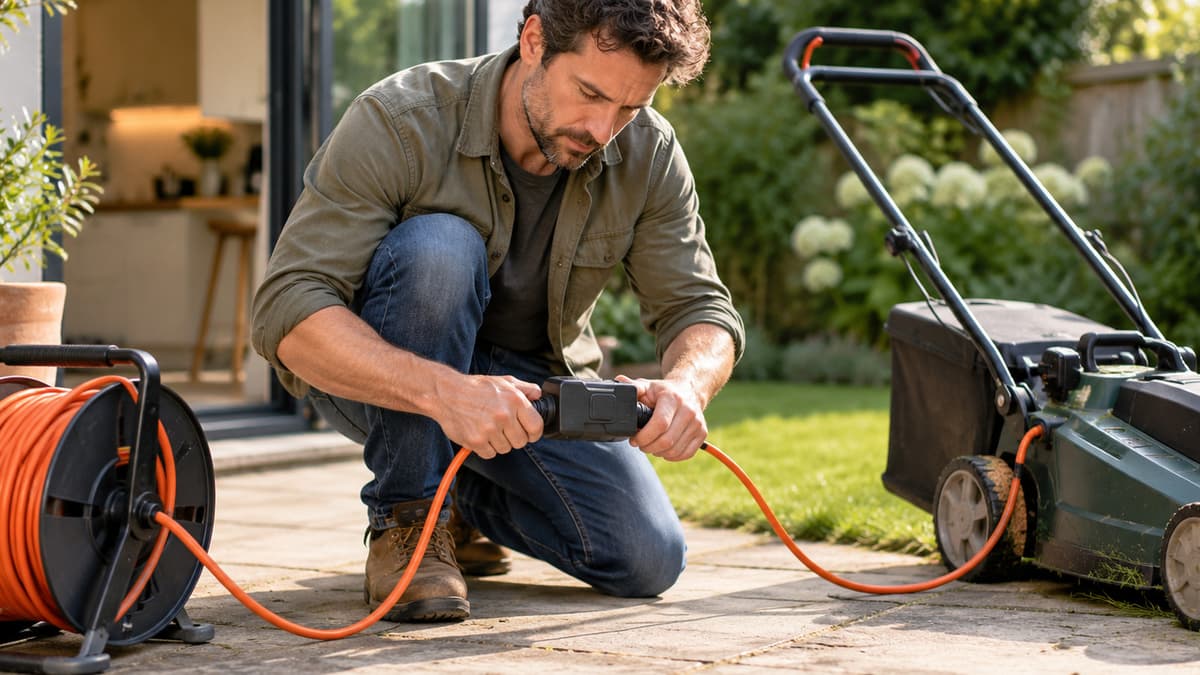
An outdoor extension lead needs RCD protection and a weather-resistant cable. An indoor strip on the lawn is the wrong lead, even if the grass looks dry.
On this page
The mower is on the patio, the nearest socket is in the kitchen, and the black four-way from the television is the only lead you can find. An outdoor extension lead RCD is the pairing Electrical Safety First expects before that mower starts: a lead that is meant to be outside, and RCD protection if the fusebox does not already provide it. Dry grass for ten minutes does not change the cable.
This page is from Peter F., editor for DIY & tools at productscompared.co.uk. The rules follow Electrical Safety First and the outdoor checklist published with RoSPA. Fixed wiring points to Approved Document P for England. Figures are amazon.co.uk listings. We did not test leads in the rain. A qualifying purchase through our links can earn a commission at no extra cost to you.
In short
Use a weather-resistant lead outside, with an RCD if that socket is not already protected, and uncoil a reel before you load it. An indoor extension lead stays indoors. One lead only, plugs out of puddles, and a fixed outdoor socket is an electrician's job rather than a cable through the window.
Indoor leads stay indoors
Electrical Safety First tells you to use outdoor-rated, weather-resistant leads and moulded connectors in the garden, and not a household extension lead. Water, a cable dragged across paving, and a plug that ends up in a puddle are normal garden conditions. A lead sold for a living room has no business in them.
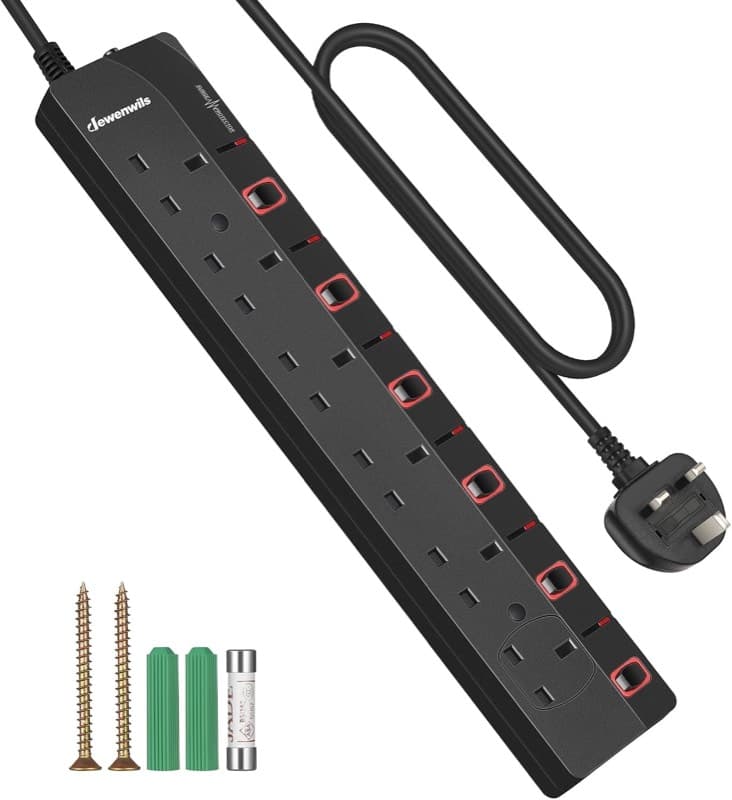
The wall-mounted extension lead comparison is a set of indoor strips. The top pick is the DEWENWILS 6-way, stated as 3 m with a 13 A plug, at about £16.99, with 4.6 from 2,224 amazon.co.uk ratings. The listing does not state an IP rating or outdoor use. ANVODE B0FC24NY8J is the same class: a black 4-way, stated as 2 m, with five switches, four USB ports and a captured price of £18.99. That listing states 3,250 W and no IP rating. Treat the silence as keep it inside.
A 13 A fuse and a BS 1363-style plug are what you want in a UK socket. They do not describe the sheath, the connector seals, or whether the socket faces are safe in rain. USB ports are a further reason to leave the strip in a dry room.
Passing the indoor lead through a window feels temporary. The cable holds the window open, rain runs onto the sill, and closing the window crushes the sheath. One cut of the lawn needs an outdoor lead. Every weekend needs a socket on the outside wall, which is fixed wiring. A second indoor lead for the extra metres makes both problems worse. One extension device per socket.
RCD protection for outdoor kit
Electrical Safety First says to use an RCD for all outdoor equipment, including a mower, strimmer, hedge trimmer and pressure washer. The RCD can sit in the consumer unit on that circuit, or it can be an RCD plug on the lead. The RoSPA checklist repeats that point. The device is there for a fault to earth in wet conditions. It is not a smart fuse for too many amps.
If you already know the socket is on an RCD, you do not stack a second RCD plug for luck. You do have to know, rather than hope. A modern board often labels protected circuits. An older board may have none. This page will not tell you how to open a consumer unit. If the label is unclear, use a plug-in RCD, or ask an electrician, before the tool starts. The test button on that plug is part of using the plug. It is not a procedure for the fusebox.
The amp rating still binds beside the RCD. Many extension leads are 13 A. Some reels are 10 A or less. A UK 13 amp socket does not raise a lower figure printed on the reel. Add the tool's plate to anything else on that lead and stay inside the lower rating. One mower is often the whole lead. The RCD will not object merely because you are over the printed amps. Do not overload a socket and expect it to notice.
The RCD plug goes in the wall socket, at the supply end of one outdoor lead. A second strip in the middle is the arrangement Electrical Safety First forbids indoors and repeats outdoors. Why the wall plug overheats is in do not daisy-chain extension leads.
Weather-resistant leads and reels
Buy the lead that says it is for outdoor use, with moulded connectors, and check it before each session. Cuts, a flattened section, a cracked plug and a missing cover are reasons to stop, not to tape. Electrical Safety First rejects taped joints on plugs and flex. A wet nick in the sheath is a shock path. Replace the lead.
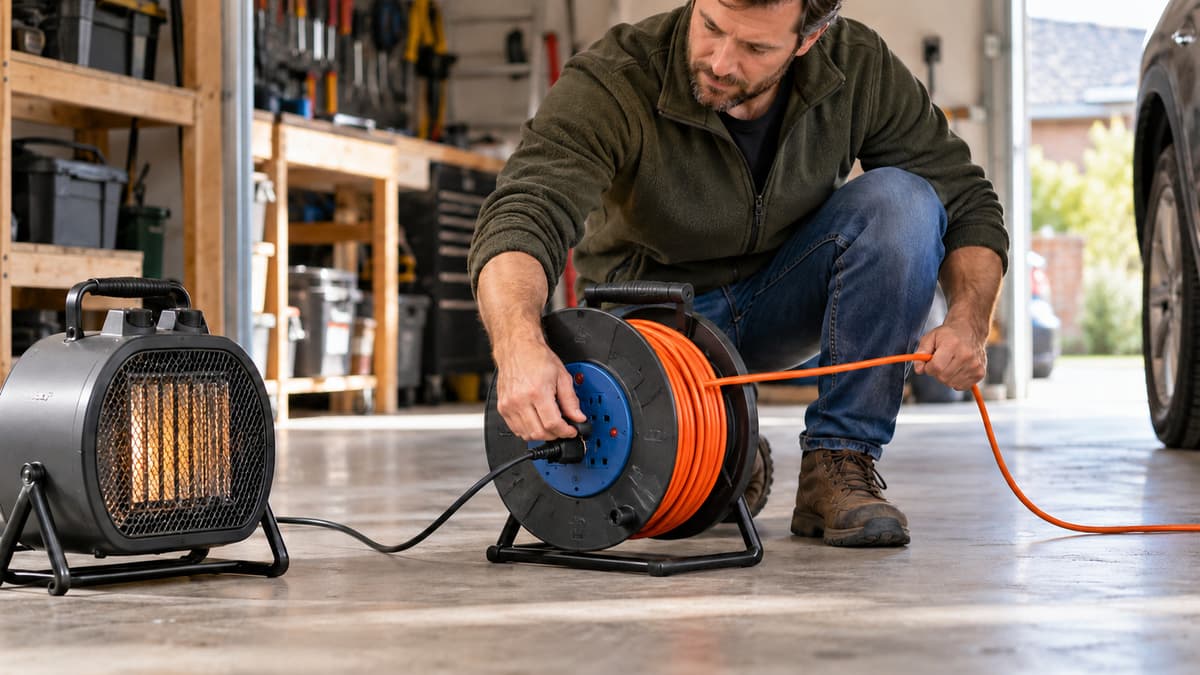
Unwind a reel fully before you put a load on it. A coiled cable holds heat. Electrical Safety First notes that a wound reel can be rated at only a few amps, against a much higher figure off the drum. The 13 A printed for unwound use is the figure people remember. The smaller wound figure applies while the cable is still wrapped. A thermal cut-out is the last line, not permission to leave the cable on the drum. How to read both numbers is in unwind cable reels before use.
Keep plugs and joins out of puddles. Raise connectors, close covers, and do not leave the reel in water. Unplug at the house, with dry hands, before you coil anything. Storing it coiled is normal. Running it coiled is the fault.
Those indoor strips are the contrast, not the shopping list. DEWENWILS, ANVODE and PIBEEX are Type G leads of a few metres, with no outdoor claim we would repeat as a garden rating. If a live listing later adds an IP figure, read it on the page you are buying. Water is not a surge.
A fixed outdoor socket is another job
A lead is for a session. A socket on the outside wall is an installation. Approved Document P is England's guidance for electrical work in dwellings, and a new circuit is notifiable work. An extra socket on an existing circuit, outside a bath or shower zone, often does not need notifying. An outdoor wall can still be a poor place for an unplanned spur. Scotland, Wales and Northern Ireland do not take their rules from that England note. Use a registered electrician. This page will not describe cable routes or how to connect a socket.
Until that socket exists: one outdoor lead, an RCD if needed, the reel unwound, plugs dry, and tools inside the rating. Bring the lead in when you finish. A weather-resistant lead left out all winter still needs a damage check in spring. Cracked mouldings after a frost are a replacement.
A battery UPS or an IEC lead is a different product. The UPS extension lead comparison covers kit on an uninterruptible supply, typically with a C14 connector. Those leads are not garden reels and they are not RCDs. Do not take a C14 splitter outside because a title said protection.
If the kitchen socket is damaged, warm, or will not hold the RCD plug, stop. A sound indoor socket, a correct outdoor lead, and an RCD you can account for have to be true before the mower starts. The DEWENWILS 6-way stays on the indoor list, in a dry room, inside its stated rating. It is what not to carry through the back door.
Look at the tool's own flex before you blame the extension. A cracked mower cable is not cured by a new reel. Check the appliance plug as well, and use a BS 1363 plug on anything that lives in a UK socket. A two-pin plug and a travel adaptor are not the outdoor connector. The lead you add still has to be weather-resistant, on one socket, with the reel unwound before the motor starts.
Common questions
Do I need an RCD for a mower?
Is a household extension lead OK on the lawn?
Should the reel be fully unwound?
What if the fusebox already has RCDs?
Can I leave connections in the rain?
Who should fit an outdoor socket?
Does an RCD replace the amp rating?
Which comparison lists these leads?

Peter F. is the editor for DIY & tools at productscompared.co.uk. Comparisons in this category are checked against amazon.co.uk listings, review evidence and public UK sources.
Related articles
Cable reel unwound: read both ratings
Unwind a reel fully before a high load. A coiled drum can be rated at only a few amps even when the side says 13 A.

Daisy chain extension lead: stop at one
One extension device per socket, indoors or on the patio. A second lead does not add a second 13 A allowance.
UK extension lead: plug, amps and length
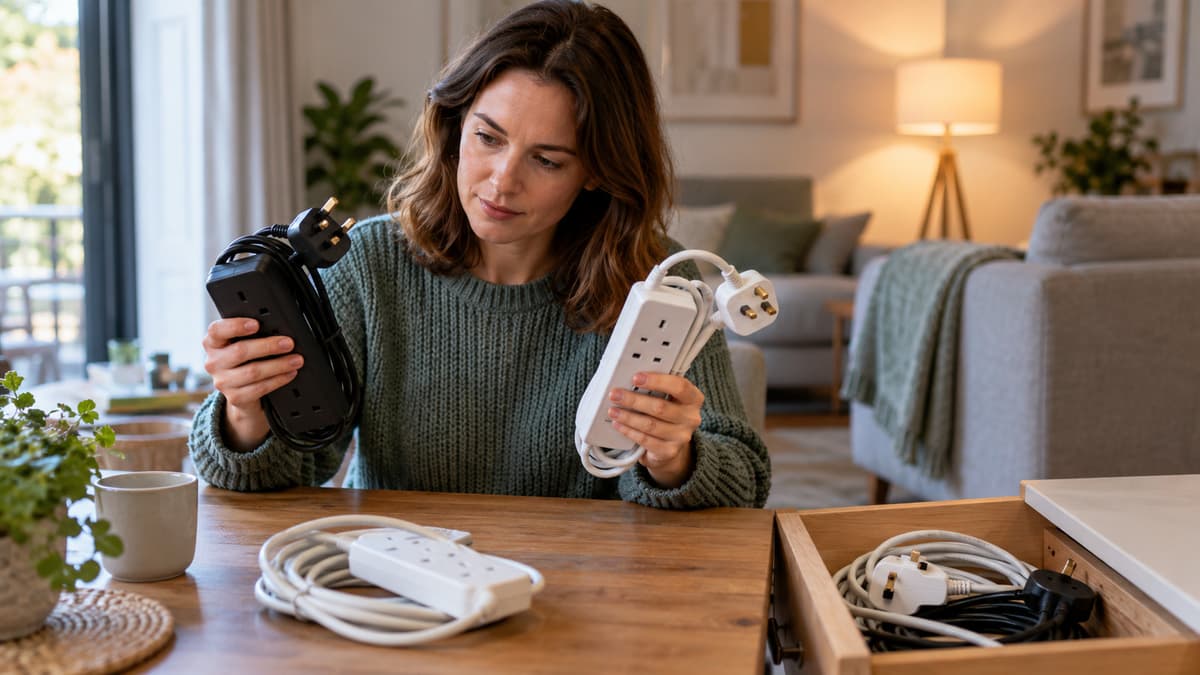
Indoors, start with a BS 1363 plug and a marked rating. That same lead does not become outdoor-rated on the lawn.