UK plug travel adaptor: not for every day at home
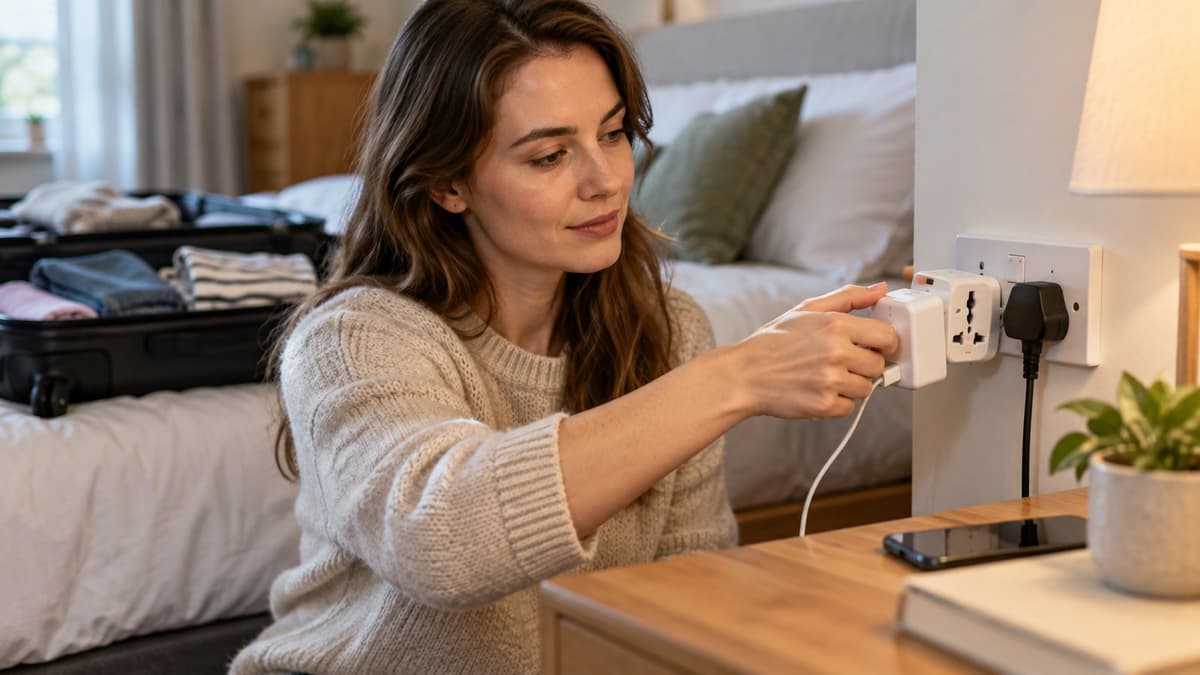
A UK plug travel adaptor is for a trip, not a two-pin appliance that stays in the house. Daily use wants a fused BS 1363 plug, not a cube in the wall.
On this page

The suitcase is unpacked, the European two-pin charger is still on the adaptor, and the adaptor is still in the socket by the bed a month later. A UK plug travel adaptor is for the trip. Electrical Safety First does not want it as the everyday way to run an appliance that lives in Britain. The plug that stays is a fused three-pin plug to BS 1363. A cube that accepts every pin pattern is not a quieter version of that plug.
The rule is Electrical Safety First on plugs and on extension leads. A socket that stays in the wall is the UK wall plug comparison. We did not test pin temperature. A qualifying purchase through our links can earn a commission at no extra cost to you.
In short
Use a travel adaptor for travel, then take it out of the wall. An appliance that stays in the UK needs a BS 1363 plug, or a proper conversion, with a fuse protecting the flex. A universal socket that accepts a two-pin plug is not automatically a UK 13 amp socket. Do not leave the adaptor in place, and do not stack it on a second lead.
BS 1363 is the UK plug
UK mains are 230 V, and the plug that belongs in the wall is the square-pinned, shuttered, fused plug. Electrical Safety First tells you to look for the BS 1363 mark. The fuse protects the cable if something downstream fails, and it is sized for that flex, not for a foreign appliance. A plug with the mark, an intact cover, and pins that have not been filed is what you want on anything that stays.
A two-pin Europlug does not have that fuse. It belongs in a socket built for it. In a UK face it does not belong except through an adaptor, and the adaptor is the weak part. The two-pin plug can sit loosely, and a loose contact warms. Warmth at a plug you use every night is the warning to stop. Unplug it. Do not pack card behind it to tighten the fit.
Extension leads follow the same plug. Electrical Safety First wants a UK three-pin plug and a fuse on the lead. A two-pin lead plus a travel adaptor is two compromises. The checks for a lead that stays are in choosing a UK extension lead: the mark, the amp rating, and a length that reaches in one cable. A travel adaptor does not add an extension lead rating the lead never printed. If the adaptor is cracked, or the shutters no longer spring back, stop using both. A damaged UK 13 amp socket needs an electrician. A damaged adaptor is scrap. Tape over a split cover is the repair Electrical Safety First tells you not to make. This page will not describe how to open the adaptor or rewire a plug.
What a travel adaptor is for
The honest job is a few nights away, or a guest with a foreign charger for a weekend. Plug in, charge, and take the adaptor out when the bag is packed. It is luggage, not a better connector. Leaving it in the wall is how a temporary contact becomes the socket you rely on.
Electrical Safety First is direct about appliances that stay: fit a UK plug, or use a proper conversion adaptor meant for that use, rather than a travel adaptor as the permanent joint. Proper conversion means a product sold to stay, with the fuse and the UK plug in one unit, not the airport cube still in the wall in March. If you cannot tell which you have, treat it as the travel cube and take it off daily duty.
The adaptor does not fix voltage. Many phone chargers accept a wide input and only need the pin shape changed. A heater, a kettle, or an appliance built for 110 V or 120 V does not become a 230 V appliance because the pins fit. A small travel cube is almost never a transformer. If the plate does not say 230 V, or a range that includes it, do not plug it in.
If you cannot find a fuse rating, do not invent a 13 A fuse. An unfused path into a thin flex is what the BS 1363 fuse is there to stop. A lead that warms along its length is a lead to retire. Do not fit a larger fuse. This article will not give fuse values or a way to open the cover.
Stacking is the third misuse. An adaptor in an extension lead, then a second lead in the first, is a daisy-chain with a loose cube in the middle. Electrical Safety First allows one extension device per socket, and the heat ends up in the plug that touches the wall. The rule is in do not daisy-chain extension leads.
Universal sockets and shaver points
A universal socket is sold as a face that accepts several pin patterns. In this hub the only listing is GK GUOKANG B0DWMQDTWK, a six-outlet indoor strip at £10.99, 4.4 from 219 reviews. The plug is Type G, the length is stated as 1.8 m, the current as 10 A, with three USB-A ports and one USB-C. The text claims UK-style and EU-style outlets. The captured file does not claim BS 1363 or BS 8546. A Type G plug on the lead can be the right plug for the wall. The universal holes are what invite a two-pin appliance to stay.
Ten amps is below a typical 13 A lead. A kettle that is fine on a 13 A wall socket can be the wrong load on a 10 A universal strip. USB ports do not raise the 10 A claim. Treat B0DWMQDTWK as a travel-side strip, not the house lead. For a lead that names BS 1363/A and a 13 A fuse, PIBEEX B09G2QH53B in the wall-mounted comparison is the clearer listing. It has no Europlug hole, which is a virtue for daily use.
Shaver sockets are for shavers and toothbrushes, not a 13 A outlet. A travel adaptor there, feeding a hair dryer, overloads a point that was never general purpose, and it adds water in a room GOV.UK treats as a special location once you start fixed work. Charge outside that room. A proper socket there is an electrician, as set out in when a new socket needs an electrician. The choice between a plug-in charger and a bathroom plate is in USB wall socket or plug adapter. A travel adaptor with a USB port is neither. Take it out.
What to do with the appliance that stays
Sort the kit into two piles. What goes back in the suitcase can keep the adaptor, stored in the bag. What lives here needs a UK plug. A phone charger is often cheaper to replace with a UK unit than to convert. A lamp or a radio with a moulded two-pin plug needs a proper conversion or a UK replacement, fitted by someone who will fit a fused plug correctly. This page stops before the screwdriver.
Check the plate for 220–240 V or 230 V before you pay for a conversion. If it says 120 V only, no plug change makes it a UK appliance. A step-down transformer is a different product, and it is not a travel cube.
For a short stay, use the wall socket, not a chain of leads. One adaptor, fully seated, nothing stacked on it, and unplugged if it warms. Do not run it under a pillow or use it outdoors. A travel adaptor is not an RCD, and an indoor universal strip is not an outdoor lead.
If you already own B0DWMQDTWK, use the Type G plug in the wall, stay inside the stated 10 A, and do not treat every hole as a UK socket for a permanent two-pin kettle. When the visit is over, the two-pin plugs leave with the guest. The lead that remains should name BS 1363, at a rating you can keep, with one plug in one socket. A damaged UK socket, a warm adaptor, or a plate you cannot read are stops. The suitcase is where the adaptor belongs.
Common questions
Can I use a European two-pin plug in a UK socket with a travel adaptor every day?
What mark should a UK plug show?
Is a universal socket a UK socket?
Are shaver sockets the same as a 13 A socket?
What if the appliance has no fuse?
Should I replace the plug or keep the adaptor?
Can I plug the travel adaptor into an extension lead?
Does this universal strip replace a UK extension lead?

Peter F. is the editor for DIY & tools at productscompared.co.uk. Comparisons in this category are checked against amazon.co.uk listings, review evidence and public UK sources.
Related articles
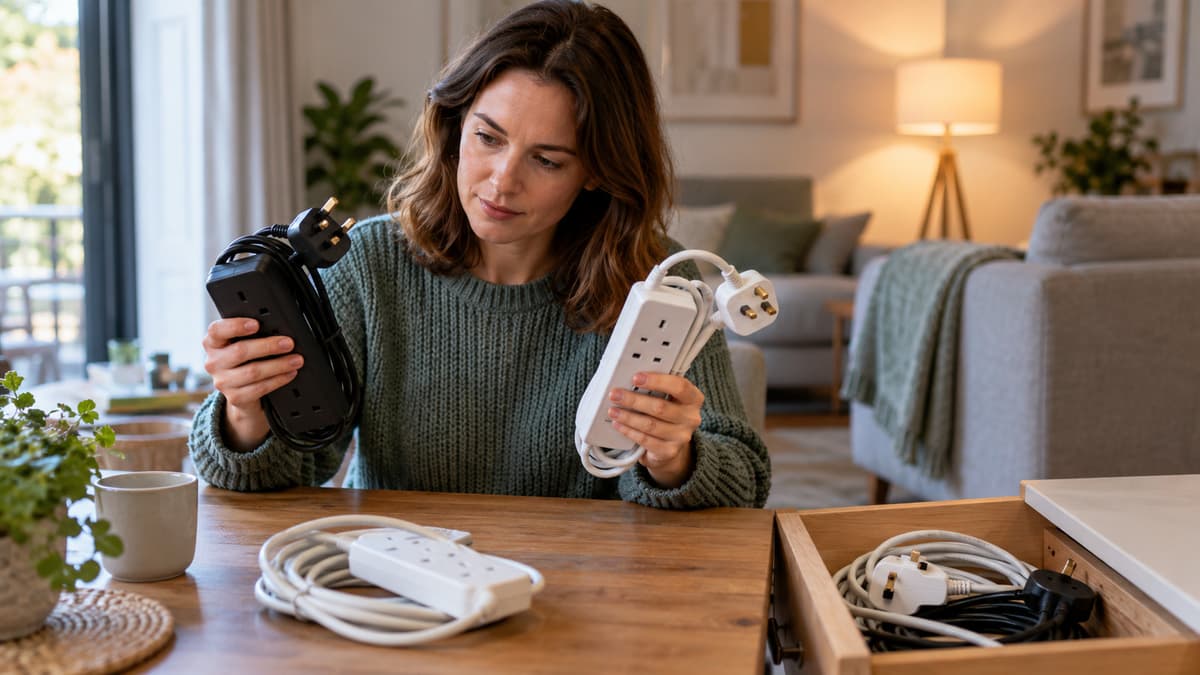
UK extension lead: plug, amps and length
A lead that stays in a UK home needs a fused BS 1363 plug. A travel adaptor on the end is not that plug.

Daisy chain extension lead: stop at one
An adaptor in a lead, then another lead in the adaptor, is still one crowded wall plug. Stop at one device.
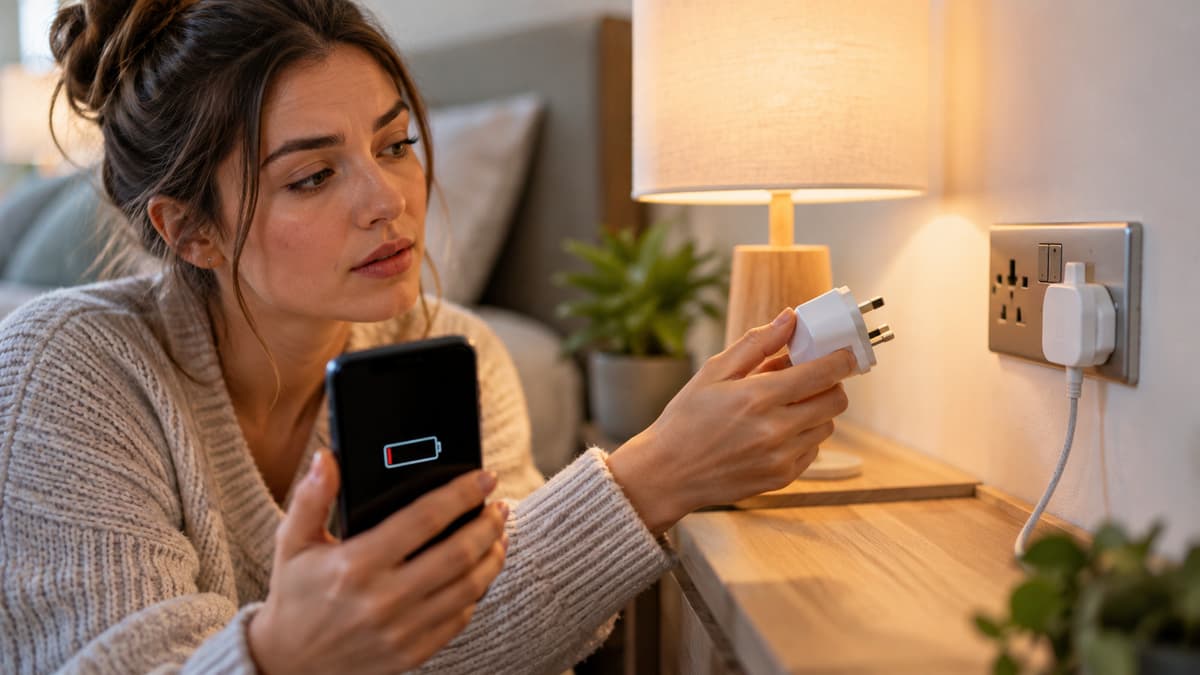
USB wall socket vs plug adapter: which fits
A charger for a phone should be a UK plug. A travel cube with a USB port is not the everyday charger.