USB wall socket vs plug adapter: which one fits you
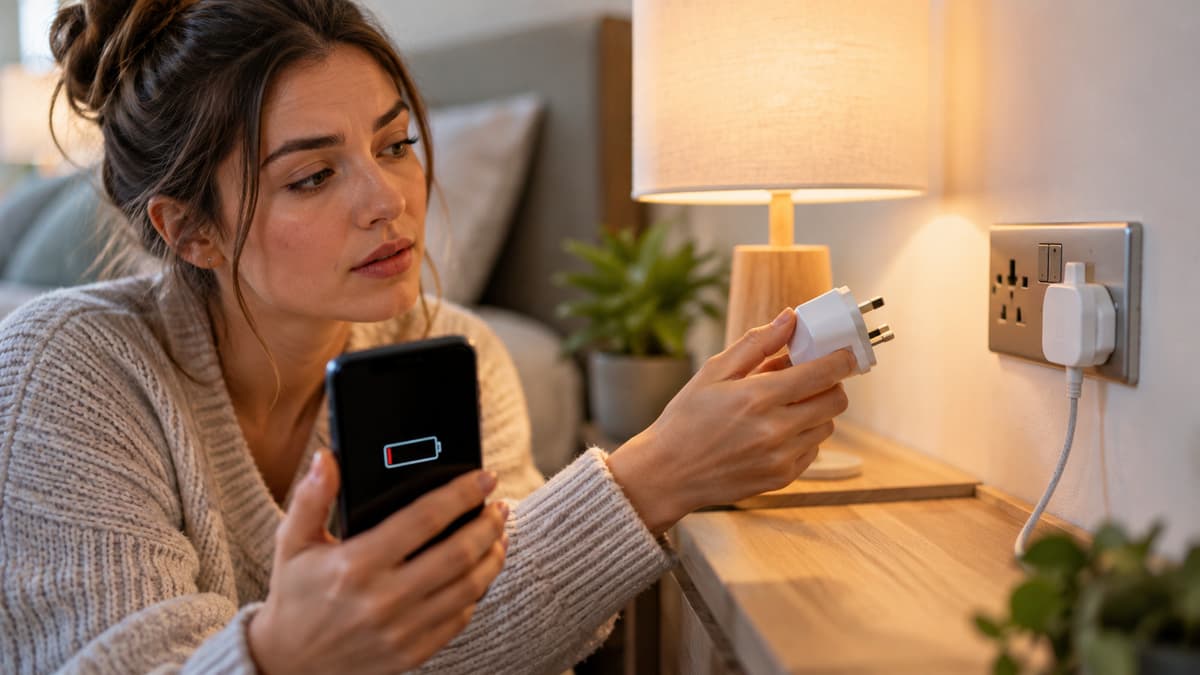
A USB wall socket vs plug adapter choice is fixed wiring against a charger that occupies a 13 A socket. Do not stack either of them to invent outlets.
On this page

The phone is at 10 per cent and the only free socket already has a lamp in it. A USB wall socket vs plug adapter decision is whether you need a charger you can move, or a plate that stays on the wall and frees the 13 A outlets beside it.
Adapter and plate figures are amazon.co.uk listings in the USB plug adapter comparison and the USB socket comparison. The stacking rule is Electrical Safety First. Notification notes are the GOV.UK replacements page and Approved Document P for England. We did not time a charge. A qualifying purchase through our links can earn a commission at no extra cost to you.
In short
Use a plug adapter when you need a charger you can unplug and take with you, and accept that it fills a 13 A socket. Fit a USB wall socket when the same phones charge in the same place every day and you want the socket outlets back. Do not stack either product onto a second lead. A plate is electrical work, not a larger version of the plug.
What each product is
A USB plug adapter is a charger with pins. Rekavin B0H2DP3PHX is a 20 W unit with USB-C and USB-A, Type G on the attribute line, £6.37, and 4.4 from 3,421 reviews. The box has no cable, so you still need a lead to the phone. Type G is the UK pin pattern. It is not, by itself, a line that says BS 1363, so read the live listing before you treat the mark as present.
A USB wall socket is a faceplate. British General B0DN255MB4 is a Nexus 800 round-edge plate at £20.00, with 4.5 from 209 reviews, one USB-A, two USB-C, 30 W, and PD and QC claimed. BS 1363 is on that listing. Someone connects it to a circuit, and it stays. Other rows are lower stated powers: 12 W with two USB-A and no USB-C (B0D2F4MZXK, £8.86, 4.7 from 343 reviews), and 15 W plates with two USB-A and one USB-C. Those 12 W and 15 W listings do not show a BS 1363 line in the captured file. The 30 W plate does.
The adapter occupies a UK 13 amp socket the whole time it is in. The plate puts USB on the face so the 13 A outlets can stay free. That is a practical split on a bedside table or a desk, not a safety class you can assume from the shape. A travel adaptor with a USB port is a third object, and the wrong one to leave in the wall. That warning is in travel adaptors are not UK plugs.
When a plug-in adapter is enough
Buy the adapter when the charging place moves: a weekend guest, a laptop in a bag, a charger you want in a hotel as well as at home. Rekavin at about £6 is that purchase, against about £20 for the British General plate before anyone is paid to fit it. The adapter needs no electrician. It does need a free socket, and a UK plug rather than a foreign one with UK only in the title.
Read the plug line. Aioneus B0HCTDWY9P is listed at £8.49 with a 33 W claim. The title says UK, but the plug attribute says Type A, not Type G, so skip it for a British socket. TEYASI B0FXTYRMQG is a two-pack of 5 W USB-A plugs at £6.79, Type G, 4.4 from 710 reviews, stated as 5 V at 1 A. Five watts will charge a phone slowly. It will not charge a laptop.
The adapter is the wrong tool when it fills the last outlet. Electrical Safety First says one extension device per wall socket, and not to daisy-chain. Put the adapter in one outlet of one lead if you must. The pattern is in do not daisy-chain extension leads. A 20 W charger does not make a stack safe. If the adapter leans, the face warms, or the pins are loose, unplug it.
When a fixed USB socket is different
Fit a plate when the same phones charge in the same place every night and you are tired of losing the socket. The British General 30 W plate keeps USB on the face. Whether the 13 A outlets on that plate also take the lamp depends on the exact face, so read the gang count, not only the USB line. A plate with USB and no usable socket outlet has not given you the lamp back.
Fitting it is not a plug-in job. Approved Document P is England's guidance for electrical work in dwellings. GOV.UK's replacements note says extra socket outlets on an existing circuit, outside a bath or shower, are often not notifiable, and a new circuit is. Replacing a damaged face can sit in that lighter group. Adding a point where there was no cable is a different job. Often not notified is not permission, and it is not the rule this page states for Scotland, Wales or Northern Ireland. When a registered electrician should self-certify is in when a new socket needs an electrician. This article does not describe how to open a consumer unit or terminate a plate.
If the socket is in a bath or shower room, stop. A lead run into a bathroom adds water to a trailing flex. A surface box is a different product. Those metal-clad rows are in the surface-mounted socket comparison.
Wattage you can read and wattage you cannot
Charging speed is the listed wattage, shared across the ports the listing describes. British General B0DN255MB4 claims 30 W with PD and QC. Rekavin claims 20 W. TEYASI B0H9YZJM8K claims 5 W at 5 V and 1 A, at £5.99, 4.4 from 74 reviews, and the captured file has no plug-type line, so do not assume Type G from the price. A laptop that asks for more than the port will charge slowly or not at all. These figures are listing claims, not a charge we timed.
Shared totals catch people out. TEYASI B0FXV14KC6 claims 25 W on a four-port USB-A plug at £6.79, and the file also shows 3 A beside a 5 A claim. Two currents on one listing are a reason to doubt the headline, not to average them. Aioneus claims 33 W total with a QC port up to 18 W, then fails the plug-type check. When the numbers fight, do not buy the larger one.
None of these wattages is the 13 A rating of the socket. Do not add the USB watts into that figure as if the plate had increased the circuit. A heater in a 13 A outlet on the plate is the load that matters. Do not daisy-chain a strip off the new plate to get more USB.
A Type G adapter such as Rekavin B0H2DP3PHX suits 20 W you can carry, if a socket is free. A BS 1363-listed plate such as British General B0DN255MB4 suits phones that live there, if someone competent will fit it. Skip any plug that is not Type G. A Wi-Fi plug is not a third kind of USB socket. The units in the Wi-Fi socket comparison switch a 13 A load. They do not add USB-C PD, and they still occupy the outlet. Do not stack a charger on a smart plug and then a lead on the charger.
Common questions
The answers below use the captured amazon.co.uk listings and the England notification note. Wattage figures are claims on those listings, not a lab charge test. A plug adapter does not become a wall socket because both charge a phone.
Common questions
Is a USB plug adapter the same as a USB wall socket?
Does a USB adapter use a 13 A socket outlet?
Can I stack adapters and extension leads?
Who fits a new USB socket?
Is a new circuit always required?
What should I not assume about charging wattage?
Can a USB plate go in a bathroom?
Which comparison should I open?

Peter F. is the editor for DIY & tools at productscompared.co.uk. Comparisons in this category are checked against amazon.co.uk listings, review evidence and public UK sources.
Related articles

Daisy chain extension lead: stop at one
A USB adapter on the end of a lead is still one stack in one wall socket. A second strip does not add supply.

Part P new socket: when to call an electrician
A plug adapter needs no electrician. A new USB plate is fixed wiring, and in England the circuit decides who notifies.
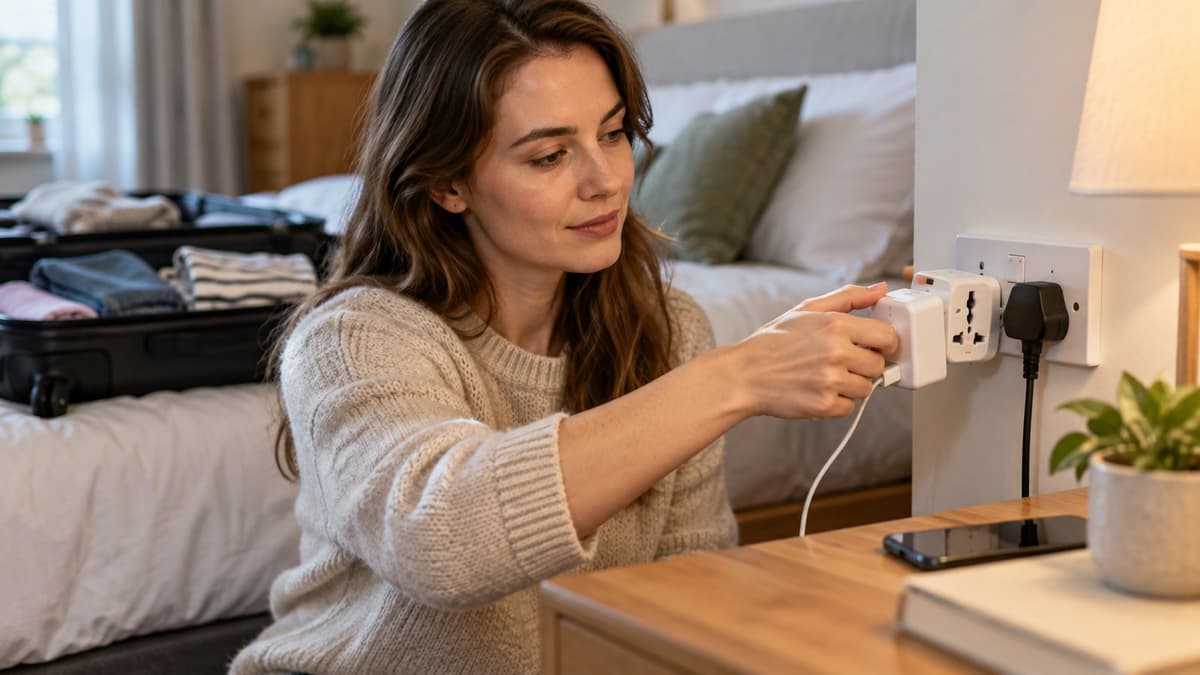
UK plug travel adaptor: not an everyday plug
A charger plug should be a UK Type G plug. A travel adaptor left in the socket is not the everyday way to charge.