How to use a chainsaw tachometer
The meter is in your hand, the saw is a petrol single-cylinder 2-stroke, and the first number is blank, half of what you expected, or roughly double. Learning how to use a chainsaw tachometer means fitting the pickup with the engine stopped, matching the firing pattern, and only then judging idle. Prices stay on the [chainsaw tachometer comparison](/hub/saw-accessories/chainsaw-tachometer). What to buy is on the [chainsaw tachometer buying guide](/hub/saw-accessories/chainsaw-tachometer/sub/chainsaw-tachometer-buying-guide). Mixture screws stay on the [chainsaw carb tuning tachometer](/hub/saw-accessories/chainsaw-tachometer/sub/chainsaw-tachometer-carb-tuning) page. We used maker install notes, UK forum practice, and amazon.co.uk review comments on 16 October 2026. We did not instrument a saw in a lab. A qualifying purchase can earn a commission at no extra cost to you.
The meter is in your hand, the saw is a petrol single-cylinder 2-stroke, and the first number is blank, half of what you expected, or roughly double.
The meter is in your hand, the saw is a petrol single-cylinder 2-stroke, and the first number is blank, half of what you expected, or roughly double. Learning how to use a chainsaw tachometer means fitting the pickup with the engine stopped, matching the firing pattern, and only then judging idle. Prices stay on the chainsaw tachometer comparison. What to buy is on the chainsaw tachometer buying guide. Mixture screws stay on the chainsaw carb tuning tachometer page. We used maker install notes, UK forum practice, and amazon.co.uk review comments on 16 October 2026. We did not instrument a saw in a lab. A qualifying purchase can earn a commission at no extra cost to you.
Our top picks
| Badge | Product | Pickup | Firing patterns | Stated refresh | Note | Price | Offer |
|---|---|---|---|---|---|---|---|
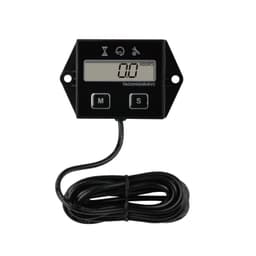
| Best overall |  YOOREAL YOOREAL YR-HM011F hour tachometer | Inductive wire | 3 | 0.5 second | 8.5 | about £13.99 | View offer |
| Preis-Tipp |  Yooreal Yooreal YR-HM011E hour tachometer | Inductive wire wrap | 3 | 0.5 second | 8.0 | about £11.99 | View offer |
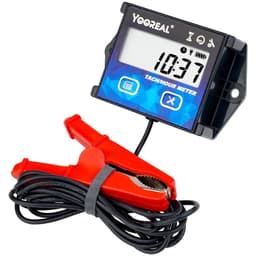
| Alternative |  YOOREAL YOOREAL YR-HM011J clip meter | Alligator clip | 9 | Not stated | 6.9 | about £17.89 | View offer |

On this page
Fit the pickup with the engine stopped
Set the firing pattern before you trust the number
What a stable idle reading looks like
When to stop and not invent a calibration
Common questions
How do I attach the wire without cutting the plug lead?
How many wraps do I need?
What if the clip model says not to wrap?
Why is the reading about half what I expect?
The screen is blank. What do I check first?
Hours stay at zero after a short run. Is it broken?
Related pages
Sources
Sources checked for this comparison; last retrieved on 16 October 2026.
- HSE, Chainsaws at work (INDG317) (retrieved 16 October 2026)
- HSE, Control of Vibration at Work Regulations 2005 (retrieved 16 October 2026)
- HSE, Training and competence (retrieved 16 October 2026)
- BSI, BS EN ISO 11681-1:2022 (retrieved 16 October 2026)
- Consumer Rights Act 2015, section 22 (retrieved 16 October 2026)
- GOV.UK, UKCA and CE marking in Great Britain (retrieved 16 October 2026)
- Arbtalk, how to check rpm (retrieved 16 October 2026)
- Arbtalk, chainsaw tachometers in 2022 and beyond (retrieved 16 October 2026)