Independent comparisons. We may earn from shop links. More info

How to use a sandpaper roll

Updated: 21 October 2026

You have unrolled abrasive paper, the pad on your sheet sander is waiting, and the first question is shape rather than grit. A sandpaper roll is not a quarter sheet or a half sheet until you cut it. You fit a length to the pad, sand without tearing the backing, and stop when the paper glazes or the dust changes the job. This guide covers plain-backed rolls in our [sandpaper roll comparison](/hub/sanders/sandpaper-roll), the ones you clamp or wrap, not hook-and-loop discs. Which number to use sits on the [sandpaper grit chart](/hub/sanders/sandpaper-roll/sub/sandpaper-roll-grit). Peter F. read the listings on 19 October 2026. There was no lab test.

You have unrolled abrasive paper, the pad on your sheet sander is waiting, and the first question is shape rather than grit. A sandpaper roll is not a quarter sheet or a half sheet until you cut it.

Our top picks

On this page

Cut the length, do not guess the pad

Measure the sanding face between the clamps, including the strip the jaws bite. Width is fixed by the roll. If the pad wants 115 mm and the roll is 93 mm, no trick covers the full face in one pass. That check belongs in the sandpaper roll buying guide before you order. Once width matches, cut length to the pad plus margin for the clamps. UK sellers of Klingspor-style stock often quote about 140 mm for many quarter-sheet clamp sanders and about 280 mm for a half sheet on 115 mm paper. Those are rules of thumb, not a fit for every DeWalt or Bosch. Scissors or a knife on a straight edge beat a torn edge that snags. Plain roll paper will not stick to hook-and-loop. Identify the grit face before you cut: abrasive side rough, back smoother.

Fit it without splitting the backing

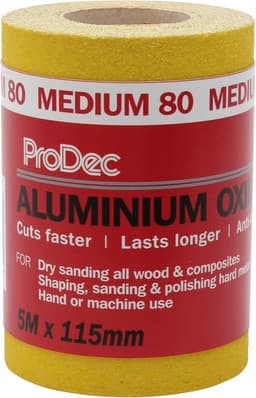
Release both clamps, tuck the paper under the leading edge, stretch it flat, then tighten. DeWalt’s DW411 manual describes that order and warns that extra downforce tears the sheet at the lip. That is one manual, not every sander. Most sheet clamps want tension, not a sharp fold jammed into metal. Folding the roll double into the clamp fails often enough in UK reviews to note. WORKPRO, SHALL around a block, and ProDec yellow 80 split at the fold. ProDec green 80 has ripped on an orbital in buyer text. If the backing cracks, cut a fresh length. When splits repeat, the backing may be wrong for the machine. That trade-off is on the paper or cloth sandpaper roll page. The GZKTY peel-and-stick roll needs a clean dry pad. UK notes on residue are thin, so treat it as small-area work.

Sand, then change the piece

Use light, even pressure. On bare timber, finish with the grain. Coarse across-grain passes are for levelling only. Start with the coarsest grade the job allows, then step down. ProDec’s lines put 60 on rough stock and old coatings, 80 on varnish and bare wood before paint, and 120 to key before a first coat, not to strip paint in one pass. Shiny or slow paper has clogged or glazed. Softwood stain fills grit quickly, and anti-clog copy is not a promise for a whole door. UK reviews mention ProDec yellow clogging on stain, and ProDec 60 dulling despite that wording. Change the piece when progress slows. Between coats, key a dry film with a light scuff, then brush and follow the tin. Wet keying of sound paint can be appropriate. Dry sanding flaking layers in an older house is not.

Dust, old paint, and when to stop

Wood dust has UK exposure limits. Even a short indoor oak job deserves extraction or a sander-linked vacuum. HSE guidance in WD7 points to Class M or H extraction where possible, and FFP3 or equivalent when dust is not captured. A small job still fills a room. Lead is the hard stop. HSE’s lead FAQ and CIS79 say do not dry-sand coatings that may contain lead. Flaking pre-1980s paint belongs with contractors who can contain it. Sound modern paint on a known late-twentieth-century door can follow the sequence above. Stripping old skirting to bare wood needs a test or a professional first. Narrow 25 mm cloth is for curves: pull it around a pipe and cut with scissors if the weave frays, which Flintronic buyers describe. Flat doors stay on 115 mm paper.

Common questions

How long a piece do I cut for a sheet sander?
Measure the pad and add grip for both clamps. Sellers often quote about 140 mm for quarter sheets and 280 mm for half sheets on 115 mm rolls. Those figures are examples, not a fit guarantee for every DeWalt or Bosch. Slipping usually means too short a length, or paper not seated under both jaws. A torn edge snags. Scissors or a knife on a straight edge is the cleaner cut.
Can I fold the roll into the clamps?
Folded plain paper splits more often than a single sheet stretched flat. WORKPRO, SHALL, and ProDec buyer text reports tears at hard clamps. Yellow ProDec 80 is the roll those fold comments cluster on. If the backing cracks, cut a fresh length without a centre fold. Most sheet clamps want tension, not a sharp fold jammed into the metal.
Which side is the grit?
The rough face cuts. The back is smooth paper. Rub a scrap of timber if you are unsure before you touch the workpiece. Clamp the abrasive side out, with even left-to-right tension, and keep a tool nick out from under the jaw. That nick becomes the tear that ends the sheet.
How hard should I press?
Light and even. Heavy pressure tears clamp sheets and clogs grit faster. DeWalt’s DW411 manual warns that extra downforce tears the sheet at the lip. That is one manual, not every sander. On a block by hand you can push slightly more, but expect to change paper sooner. Finish bare timber with the grain.
What do I do when the paper clogs or looks shiny?
Fit a fresh piece. Glazed paper polishes. Stain and between-coat work clog quickly. Anti-clog labels did not stop clogging in ProDec and Shineboc UK reviews. Softwood stain fills the grit fast. Change the piece when progress slows, rather than pressing harder on a shiny sheet.
Can I dry-sand a door in an older house?
Only with sound modern paint and no lead risk. Flaking pre-1980s layers may contain lead. HSE’s lead FAQ and CIS79 advise against dry sanding them. Wet keying of sound paint, or professional removal, replaces brute stripping. Refreshing a known late-twentieth-century door is a different job from taking old skirting back to bare wood.
Do I need a mask for a short oak job indoors?
Yes, if the dust is not captured at the sander. FFP3 or equivalent is a reasonable choice for uncaptured fine dust. A sander vacuum beats an open window on its own. HSE wood-dust guidance points to Class M or H extraction where possible. A short indoor oak job still fills a room.

Related pages

Sources

Sources taken from the research digest. Listings were checked on 19 October 2026.

  1. HSE — Wood dust (retrieved 19.10.2026)
  2. HSE — WD7 Hand-held powered sanders (retrieved 19.10.2026)
  3. HSE — Cutting and sanding wood (retrieved 19.10.2026)
  4. HSE — Lead FAQs (retrieved 19.10.2026)
  5. ISO 6344-3:2021 coated abrasives (retrieved 19.10.2026)
  6. BSI — BS EN 13743 coated abrasive products (retrieved 19.10.2026)
  7. Consumer Rights Act 2015, section 11 (retrieved 19.10.2026)
  8. Rodo — ProDec aluminium oxide green rolls (retrieved 19.10.2026)