Independent comparisons. We may earn from shop links. More info

How to use mesh sanding discs

Updated: 21 October 2026

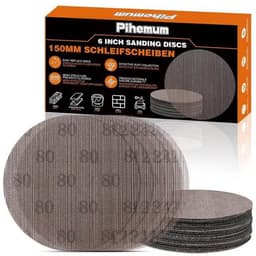
You have open mesh discs and a random orbital sander, but the first one peeled off mid-pass or the rim tore before the board was flat. Mesh pays off only when it stays on the pad, dust can leave through the hose, and you stop before a damaged edge marks the work. This page covers fit and extraction, not which pack to buy. Sizes and prices are in the [sanding mesh comparison](/hub/sanders/sanding-mesh). Filler grits are on [sanding mesh for plaster and filler](/hub/sanders/sanding-mesh/sub/sanding-mesh-plaster-and-filler). Format is in the [buying guide](/hub/sanders/sanding-mesh/sub/sanding-mesh-buying-guide). Paper versus mesh is on [mesh sandpaper vs sandpaper](/hub/sanders/sanding-mesh/sub/sanding-mesh-vs-sandpaper). There was no lab test. A qualifying purchase can earn a commission at no extra cost to you.

You have open mesh discs and a random orbital sander, but the first one peeled off mid-pass or the rim tore before the board was flat.

Our top picks

On this page

Fit it before you switch on

Unplug the sander or remove the battery, then inspect the backing pad. Gypsum and compacted dust fill the hooks until a mesh disc lifts at the edge. Brush them, or wipe with a dry cloth. A cleaning block will not fix hooks that are already worn flat. Match diameter to the pad: 125 mm on 125 mm, not a 150 mm disc centred on a smaller pad. Overhang tears the rim and unbalances the orbit. With the tool off, press the disc from the centre outward. Mesh is often stiffer than paper and may not seat once the motor is running. You do not line mesh up with hole patterns. Air passes through the open face, so HSE’s alignment step for perforated discs does not apply. The hose still does. A 5 m roll, including the ProDec top pick, will not cover a round pad.

Give the dust somewhere to go

HSE sheet WD7 pairs an abrasive that lets air through with the right vacuum class. Mesh is the first part. Extraction at the pad is the second. A kinked hose, the wrong port, or a poor adaptor still leaves overflow in the air. WD7 points toward M- or H-class extraction for many sanding jobs. CIS69 is clear that a typical shop vacuum is not an M- or H-class unit, HEPA marketing notwithstanding. That does not oblige industrial kit before skirting boards. It does mean a domestic vacuum is not rated extraction. Mirka’s UK dust guidance still expects protection indoors. Use the manufacturer’s adaptor, keep the hose short, and empty filters before airflow chokes. Without extraction, open windows, keep passes short, and treat a mask as backup.

Step the grits, then stop

On wood and painted work, not the plaster ladder, many jobs run P80 to cut, P120 to P150 to level, then P180 to P240 before paint or varnish. Light scuffs between coats may stay at P240 alone. Each grit should remove the marks of the coarser one. Keep the pad flat, move slowly enough to cut rather than skate, and lift often. Mesh sheds load better than paper on soft timber, yet coarse grit still leaves swirls if you linger. When raking light shows an even pattern, change disc. A torn or delaminated rim means that disc is finished. A finer disc will not rescue it.

When the disc leaves the pad

One fly-off is often a half-seated disc or dusty hooks. If the next discs also release, the pad and the abrasive are both in play. Short hook posts struggle with stiff mesh, and UK reviews note discs that hold on one brand and peel on another at the same stated size. A pad saver takes the peel wear. After half a pack has peeled, a saver is cheaper than a new backing. Retire the pad when the hooks are flush or every disc vibrates. Where indoor wood dust still escapes, HSE points to assigned protection factor 20 respiratory protection, such as FFP3, where the limits apply. A mask does not replace the hose.

Common questions

Do I line the mesh up with the holes on the pad?
No. Airflow goes through the open face, so you do not register holes the way you do with punched paper. You still connect extraction at the shroud. Mesh improves the path through the disc. It does not replace the hose.
Why does the first disc fly off and the next one stay?
The first may have gone on a dusty pad or only been pressed at the centre. Clean the pad, seat the whole disc with the tool off, and try again. If every disc releases, suspect short hooks, a worn pad, or stiff mesh on a consumer backing.
Do I need a pad saver?
Not on a fresh pad, but consider one once mesh peels repeatedly or the original hooks look clogged and flattened. The saver takes the peel wear so the backing pad keeps taller hooks. Mesh sticks to the saver, and the saver sticks to the tool.
Can I use my shop vacuum?
Yes, with the correct adaptor. It captures a lot of dust, but a typical domestic shop vacuum is not M- or H-class in HSE terms. Add ventilation or respiratory protection for long indoor runs. HEPA marketing on the vacuum does not change that class.
What grit order should I step through?
On general wood and paint prep, P80, then P120 to P150, then P180 to P240 is a common ladder. Skip steps on light jobs, but do not jump from a heavy cut to a fine finish. On filler and plaster, use the bands on the plaster page rather than this wood ladder.
When do I throw a torn disc away?
Immediately when the rim tears, delaminates, or folds. A finer grit on a new disc is the fix. Running a damaged coarse disc costs rework, and it unbalances the pad while it shreds.
Do I still wear a mask?
Whenever fine dust can reach you. Mesh plus extraction clears the floor more than the breathing zone. For much indoor wood sanding, HSE expects FFP3-level protection where limits apply. That is backup when extraction or ventilation is limited, not a substitute for the hose.

Related pages

Sources

Sources taken from the research digest. Listings are from the amazon.co.uk capture of 19 October 2026.

  1. HSE — wood dust (retrieved 21.10.2026)
  2. HSE WD7 — hand-held powered sanders (retrieved 21.10.2026)
  3. HSE — cutting and sanding wood (retrieved 21.10.2026)
  4. HSE — sanding plasterboard joints (retrieved 21.10.2026)
  5. HSE CIS69 — extraction as one system (retrieved 21.10.2026)
  6. Mirka — Abranet (retrieved 21.10.2026)
  7. Mirka — dust-free sanding (retrieved 21.10.2026)
  8. Norton — choosing sandpaper (retrieved 21.10.2026)
  9. Homebuilding — mesh sandpaper or standard sandpaper (retrieved 21.10.2026)
  10. Protrade — Velcro sanding discs (retrieved 21.10.2026)