Independent comparisons. We may earn from shop links. More info

How to fit a wall safe

Updated: October 2026

The wall might be brick, a plasterboard stud, or the party wall next door. Those are three different jobs, and the plugs in the box do not turn them into one. Holes in the back mean a surface fixing. A flat between-studs shell means the wall has to accept the body. Screw into masonry or into studs after a services check. Stop for a party-wall cut, a bridged cavity, or a Grade 0 body set in concrete. The listings are the [wall safe comparison](/hub/safes-and-secure-storage/wall-safe). Written from UK fitting guides on 16 October 2026, not from a site visit. A qualifying purchase can earn a commission at no extra cost to you.

The wall might be brick, a plasterboard stud, or the party wall next door. Those are three different jobs, and the plugs in the box do not turn them into one. Holes in the back mean a surface fixing.

Our top picks

On this page

Which fixing this safe actually needs

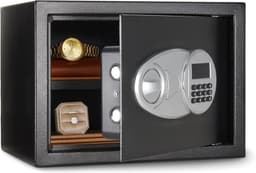
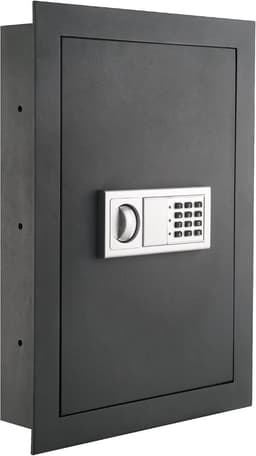
Look at the back before you look at the drill. Most cabinets in this set include expansion bolts and a row of holes. The Wickes surface method is the right family of job: a detector, then plugs and screws into solid wall, driven from inside the safe so the hinges are not asked to carry the weight. The Paragon 7725 is the exception. It is the flat between-studs body, and its listing talks in inches, including US 16 inch centres, so the screws go into the studs, not into four plugs in the plasterboard. A mortared recess is a third method, and it is the wrong tool for a cabinet 25 cm or 32 cm deep. If you are still unsure which shape you own, pause on in wall safe or bolted safe. Fixing can also be a condition of cover: see home insurance safe rating before you start cutting.

Brick or block

On solid brick, find the services before you mark the holes. A detector is the first pass, and London safes warn that plastic pipes may not show, so a small test hole still matters. Burton's fixing guidance says to drive into the centre of the brick, not the mortar joint, and to avoid hollow block where you can. Shift the safe until the holes meet brick. Remove the skirting if it holds the back proud, because a gap is a lever. Mark from inside the safe, drill, vacuum the dust, and tighten until the body does not rock. Plasterboard is not a thinner version of this job.

Studs and plasterboard

Plasterboard plugs will pull out under the weight of a safe. Heavy fixings go into studs, or you open the board and add timber. Confirm the studs with a small pilot, because a false detector reading puts four screws into gypsum. The Paragon listing's 16 inch centres are about 406 mm, while a UK stud wall is often 400 mm or 600 mm between centres, and the clear opening is narrower once the timber thickness is subtracted. If the body does not fit, do not plane the stud. Add a noggin or choose a cabinet that bolts to the face of the studs. The order of those choices is the wall safe buying guide.

When you stop

In England and Wales, cutting into a party wall needs notice under the Party Wall etc. Act 1996, or written consent, before you open it. GOV.UK treats drilling for shelves or cabinets as minor work, and treats a cut that could weaken the wall as work you tell the neighbour about. A buried safe is that second kind of work. A surface screw-fix into your own side is the first. Scotland and Northern Ireland do not use that Act. Stop as well if the recess would bridge a cavity. DIY Fix It wants a wall no thinner than 225 mm for a mortared safe, and London safes talk about 9 inch solid or 11 inch cavity construction. Those are retailer rules of thumb, not a Building Regulation minimum. Checkatrade's May 2024 guide puts wall-safe install labour around £326 to £489 plus VAT, as a ballpark, not a quote.

Common questions

Can I use the plugs in the box on plasterboard?
Use those plugs in solid masonry, after a services check. On plasterboard they are the wrong fixing, and the safe can be pulled off the board. Hit the studs, or open the plasterboard and fix timber behind it, then bolt into that timber. A detector reading alone is not a stud.
How do I bolt a cabinet to brick without hitting a pipe?
Scan with a detector, then drill a small test hole, because plastic pipe may not show on the detector. Shift the safe so the bolts land in the centre of bricks rather than in the mortar joint. Drive the screws from inside the safe and leave the back tight to the wall, with the skirting removed if it holds the cabinet proud.
Do I tell the neighbour if the wall is shared?
In England and Wales, yes if you are cutting into the party wall for a buried safe. Notice under the Party Wall etc. Act 1996, or written consent, comes before the opening. Screwing a cabinet to the surface is the sort of fixing GOV.UK groups with shelves. Scotland and Northern Ireland do not use that Act.
Where do the Paragon screws go if the bay is a UK stud wall?
They go into the studs either side of a bay you have measured, not into the plasterboard. The listing's 16 inch centres are a US figure, so check the clear gap in your wall before you cut the board. If the body will not enter that gap, stop and add timber or choose a surface cabinet. One UK fit went through a cupboard back, which only works when the bay behind it is empty.
When do I call a builder or a safe fitter?
Call them for a concrete-set safe, a party-wall recess, a stud you would have to cut, a cavity you might bridge, or a shut door whose override has failed. Bolting a cabinet to brick or to confirmed studs, after a services check, is the part you can do. Checkatrade's 2024 bands are a scale for labour, not a price you should budget as exact.

Related pages

Sources

Public UK sources on home safes, grades and party walls. amazon.co.uk listings in this set were checked on 16 October 2026. Prices move.

  1. Police.uk, home safes (retrieved 16 October 2026)
  2. Secured by Design, home safes (retrieved 16 October 2026)
  3. De Raat, insurance rating (retrieved 16 October 2026)
  4. ESSA, EN product insurance amounts (retrieved 16 October 2026)
  5. BSI, EN 15659 light fire storage units (retrieved 16 October 2026)
  6. GOV.UK, Party Wall etc. Act 1996 booklet (retrieved 16 October 2026)
  7. Wickes, how to fit a safe (retrieved 16 October 2026)
  8. Simply Safes, Burton Unica wall safe (retrieved 16 October 2026)