MDPE or PVC pipe for garden water: which to bury

Blue MDPE feeds a drinking tap and black poly feeds irrigation. Waste PVC stays on the drain. Check WRAS, the bar rating and burial before you dig the trench.
On this page

You have marked a line from the outside tap to the greenhouse, and the trench is still a string across the lawn. In the cart sit a blue coil, a black coil, and a length of grey tube that costs less per metre. Choosing an MDPE or PVC pipe for garden water decides what that tap is fit for. The colour on the coil is the first clue. The approval printed on it is the one that counts.
UK trade listings and the amazon.co.uk polyethylene comparison were checked for this guide in October 2026. There is no laboratory test behind it. A qualifying purchase through those amazon.co.uk links can earn a commission at no extra cost to you. Prices move, so read the live listing before you order.
In short
Bury blue MDPE when the garden tap is for drinking, and only when that coil and its fittings carry a drinking-water approval such as WRAS. Use black polyethylene for beds and sprinklers, and check the coil, because some black pipe with blue stripes is also approved. Leave waste PVC on the drain, and treat rigid pressure PVC as a narrow case for stable ground.
Blue MDPE when the water is for drinking
Blue medium-density polyethylene is the pipe UK merchants sell for a buried cold-water supply you might drink. People still ask for alkathene, the older name for this sort of polyethylene water pipe. The useful split is on the label: drinking water, underground, and a stated pressure.
Toolstation's 25 mm by 25 m blue MDPE listing states up to 12 bar, WRAS approval and BS 6572 for underground cold water. City Irrigation's 25 mm blue PE80 coil states WRAS and 12 bar as well. Those are two product claims, not a promise that every blue 25 mm coil matches them. You want BS 6572, or an equivalent the maker prints, on the coil in your hand.
WRAS, the Water Regulations Advisory Scheme, is the approval buyers look for on fittings that touch drinking water. Plastic Pipe Shop describes blue as the WRAS drinking-water colour and treats plain black as a different duty. The same note records that some black pipe with blue stripes is WRAS approved. A blue surface with no mark is only a colour. Read the print before you fill the trench. The elbows, the stopcock and the tap connector need the same kind of approval, and a new run should be flushed before anyone drinks.
Black poly when the run is irrigation only
Black polyethylene is the irrigation coil. Easy Garden Irrigation separates the colours in plain language: blue for potable water, black for irrigation, in 20, 25 and 32 mm. Use that split when the pipe feeds drippers, a sprinkler and a greenhouse tap you have reserved for plants.
The PE pipe comparison puts a familiar black coil at the top of the set. The Gardena 2701-20 listing on amazon.co.uk, at about £96.95 in that comparison, is black polyethylene, 25 mm and 50 m in the title, with 6 bar printed. The listing says the pipe can go above or below ground and claims UV stabilisation. Connectors are a second purchase. UK reviews describe a stiff coil that needs a square cut and a full insert, and kinks on tight bends. There is no WRAS number on the capture. One UK reviewer said ordinary blue water pipe fitted the same connectors and cost less. Use this coil as a sprinkler or pipeline supply. For drinking water, go back to an approved blue coil.
The specification block also prints 1 inch outside diameter and 1 inch wall beside the 25 mm title. Match the fitting to the end you have cut. Plain black is the usual irrigation colour. Some black pipe with a blue stripe is WRAS approved, so follow the print on the coil you unrolled.
Where rigid PVC still fits
Rigid PVC still has a place, and that place is smaller than the price per metre suggests. London Irrigation Specialists prefer polyethylene to rigid PVC where clay soil moves. They still see PVC on some sandy sites and on some higher-pressure jobs. That is an installer's opinion, not a laboratory trial. Polyethylene can flex a little as clay shrinks and swells. A solvent-welded straight run passes that movement into the joints.
The PVC in a typical DIY order is often soil and waste tube, jointed with solvent weld or push-fit and sized for a drain. The PVC pipe comparison sorts those waste systems. A grey length from a waste-pipe shelf will sit in a trench and look like a supply. The wall, the joint and the missing drinking-water approval are the reasons to keep it for a drain.
Pressure-rated PVC does exist for some cold lines, including irrigation where the ground is stable and the listing states a pressure. The bar figure and any drinking-water approval have to be on that pipe. In heavy clay, the polyethylene coil is the simpler buried choice for a tap run. Solvent cement welds PVC to PVC in the same system. Polyethylene needs insert fittings or compression joints. A waste elbow on a blue MDPE end leaves a leak path.
Burial, sun, and the joint back to the house
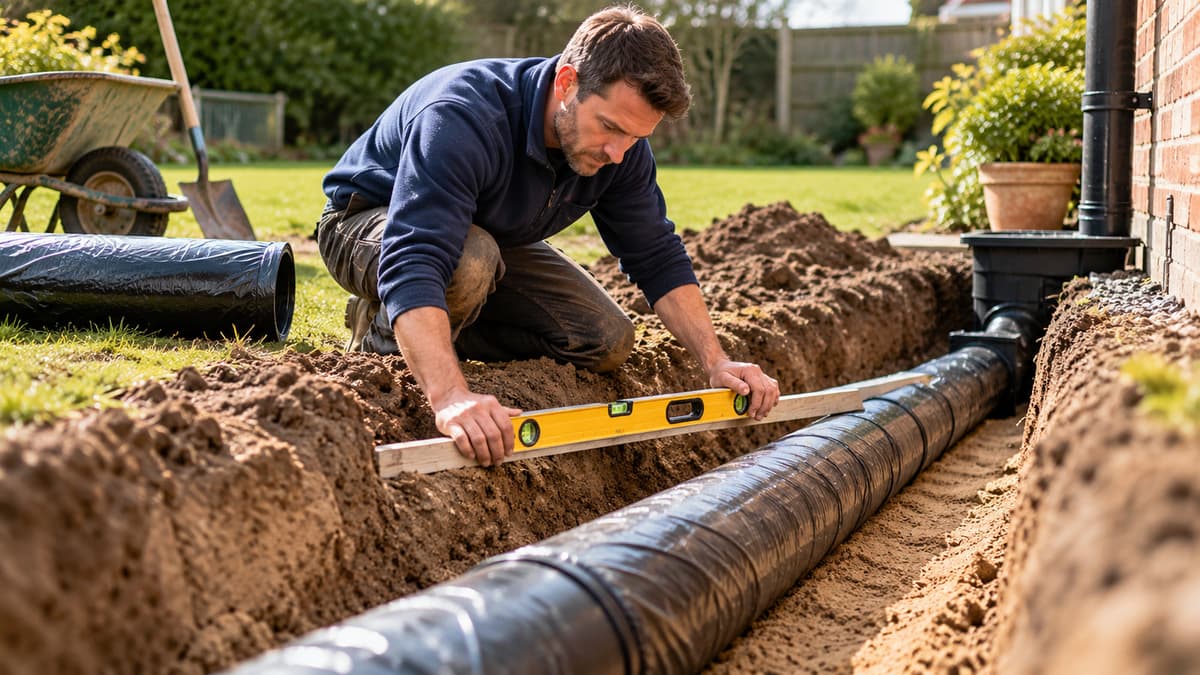
Blue MDPE is a burial pipe. Plastic Pipe Shop's buyer note says blue belongs in the ground, and a long spell in the sun is the wrong duty. Plan the trench so almost all of the drinking run is covered, with a short rise at the tap. Your water company sets the cover it expects, and a hard frost will find a pipe under a thin skim of turf. This guide does not invent a depth for your postcode. Ask the company that bills the water, then dig to that cover.
Black irrigation pipe can be a different sunlight case. The Gardena listing claims UV stabilisation and allows the pipe above or below ground. That claim stays with that product. It does not move across to a blue drinking coil, and it does not add a WRAS mark. A drip line on the surface for a summer is one job. A drinking main on a fence is another.
The joint at the house is where the trench becomes a supply. The Water Supply (Water Fittings) Regulations 1999 frame anything that connects to the mains. A hose on an existing outside tap leaves the plumbing as it is. Cutting into the pipe that feeds that tap needs fittings for the two materials, and a person who can make the joint without letting soil into the water. Many water companies want notice before certain supply work. Settle that before you break the ground. Allow a gentle sweep into the tap, and use an elbow if the turn is tight. Leave a spare length in the shed, labelled with the size and the approval.
Which comparison to open next
Open the PE pipe comparison when you are choosing a polyethylene coil. The set mixes garden pipe with small-bore leads for fridges and filters. Stay with the outdoor size, the colour and the approval. A 6 mm refrigerator line is the wrong product when the trench is 20 metres long. The comparison's top listing is the black Gardena sprinkler coil, ahead on review volume and a clear 25 mm by 50 m title. It leads as an irrigation pipe. The drinking-water choice stays with an approved blue MDPE coil that prints WRAS and the bar rating.
Open the PVC pipe comparison when the tube is a waste system, a solvent-weld stack or a push-fit basin run. That page will not choose the buried supply to a tap you drink from. If the order still contains a blue coil and a length of waste PVC, split it. One trench, one plastic, one jointing method.
Common questions
Can I drink from blue MDPE?
Is black pipe the same if it is also polyethylene?
Will PVC crack in clay?
What pressure is 25 mm blue pipe rated to?
Can the pipe sit in the sun?
What diameter should a garden tap use?
Do I need a plumber where it joins the house main?
Is this the same as waste PVC?

Peter F. is the editor for DIY & tools at productscompared.co.uk. Comparisons in this category are checked against amazon.co.uk listings, review evidence and public UK sources.
Related articles
The fall an underground drainage pipe needs
A short 100 mm length does not set the fall. Too flat a foul drain in the garden blocks.

Push-fit or solvent weld for waste pipe
Basin waste looks like one size of PVC. Push-fit and solvent weld do not join to each other.

Lag pipes before a cold snap
Foam has to match the pipe and cover the fittings before the temperature drops outside.