How to fill a raised bed
The frame is on the lawn, or the bags are still in the boot, and you need to know how to fill a raised bed before you plant. The figure that matters is the soil in the growing wall. Measure its length, width and depth, then buy a mix that is mostly topsoil. This page covers the litre sum, the Royal Horticultural Society ratio, cardboard on grass, and a slow fill that keeps thin sides straight. If you are still choosing the frame, start with the [raised bed comparison](/hub/raised-beds-greenhouses-and-compost/raised-bed), where the stated volume sits beside each kit. The Products Compared editorial team updated this guide on 16 October 2026 from those listing figures and from public RHS advice. A purchase through a link on the comparison can earn us a commission at no extra cost to you.
The frame is on the lawn, or the bags are still in the boot, and you need to know how to fill a raised bed before you plant. The figure that matters is the soil in the growing wall.
The frame is on the lawn, or the bags are still in the boot, and you need to know how to fill a raised bed before you plant. The figure that matters is the soil in the growing wall. Measure its length, width and depth, then buy a mix that is mostly topsoil. This page covers the litre sum, the Royal Horticultural Society ratio, cardboard on grass, and a slow fill that keeps thin sides straight. If you are still choosing the frame, start with the raised bed comparison, where the stated volume sits beside each kit. The Products Compared editorial team updated this guide on 16 October 2026 from those listing figures and from public RHS advice. A purchase through a link on the comparison can earn us a commission at no extra cost to you.
Our top picks
| Badge | Product | Stated volume | Side height | Open base | Note | Price | Offer |
|---|---|---|---|---|---|---|---|
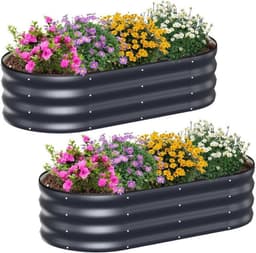
| Best overall |  Harbour Housewares Harbour Housewares raised beds, pack of 2 | 486 litres | 30 cm | Yes | 8.4 | about £59.99 | View offer |
| Best value |  Ergohortus Ergohortus oval raised beds, 2-pack | 216 litres | 30 cm | Yes | 8.3 | about £38.99 | View offer |
 VIREO GARDEN VIREO GARDEN round raised bed, 2-pack | 10.7 cubic feet | 30.5 cm | Yes | 7.7 | about £30.63 | View offer |


On this page
Litres from the soil wall
What the RHS puts in the bed
Cardboard, film and braces before the soil
After the level drops
Common questions
How many litres is a 180 x 90 x 30 cm raised bed?
What mix does the RHS publish for a raised bed?
Can you fill a raised bed with compost only?
Should you put plastic under a raised bed?
Does a raised bed need topping up after it settles?
When should you order a bulk bag?
Related pages
Sources
Public UK sources from the research digest, last checked on 16 October 2026.
- RHS — How to make a raised bed (retrieved 16.10.2026)
- RHS — Growing veg in raised beds (retrieved 16.10.2026)
- RHS — No-dig gardening (retrieved 16.10.2026)
- RHS — Creating raised beds for schools (retrieved 16.10.2026)
- Thrive — Wheelchair-friendly garden design (retrieved 16.10.2026)
- GOV.UK — Permitted development technical guidance (retrieved 16.10.2026)
- legislation.gov.uk — Consumer Rights Act 2015 (retrieved 16.10.2026)
- Quickcrop — Timber raised beds vs metal raised beds (retrieved 16.10.2026)