Independent comparisons. We may earn from shop links. More info

How to use a greenhouse heater

Updated: October 2026

The heater is in, the lead reaches a socket, and the bench is still cold in the morning. How to use a greenhouse heater is mostly where you put it, what the dial actually means, and how you prove the plants were warm. This page assumes you already own one. The nine listings are on the [greenhouse heater comparison](/hub/raised-beds-greenhouses-and-compost/greenhouse-heater). Products Compared used RHS, Thompson & Morgan and Heathfield placement notes, plus the captured listings. We did not run an overnight trial in your house. A qualifying purchase can earn a commission at no extra cost to you.

The heater is in, the lead reaches a socket, and the bench is still cold in the morning. How to use a greenhouse heater is mostly where you put it, what the dial actually means, and how you prove the plants were warm.

Our top picks

On this page

Put the heat where the cold air is

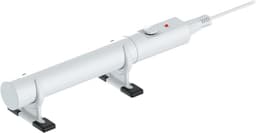
Cold air sits low, and a tube does its small job there. Heathfield’s guide puts tubular heaters low on the side walls, under the staging, spread along both sides. Do not push fleece or bubble wrap onto the element. The wrap is for the glass. A fan or convector wants a clear path. Thompson & Morgan places an electric fan in an open spot at one end, away from water, with airflow above the leaves. The RHS says not to wet the heater and to keep the supply on an RCD.

Trust the thermometer, not the dial

The RHS wants a max-min thermometer in the middle of the house, near the plants, because the dial sits on the heater and can be out by a few degrees. Read it on the first cold mornings, at plant height, not on the apex where the air is warmer and the tomatoes are not. If the minimum is below the figure you chose, the heater is in the wrong place, undersized, or the dial is not what you think. In this set only the Airmaster prints a degree band, stated as 5–30°C. Set that and then believe the morning thermometer. LightHouse and the Trendi state no thermostat, so they are on or off unless you add a control the listing does not include.

Paraffin is a different routine

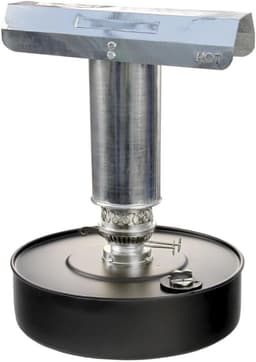
If the heater you own is the wick type, electric placement does not apply. Two Wests wants about 30 cm from anything that burns, and says to extinguish before you refill. Tameside and Glossop’s note says premium paraffin only, a level base, and a cool heater before you add fuel. UK reviews of that ASIN mention smoke when the wick is high, and less smoke when the wick is soaked and set. Light it low. Burning paraffin makes water as well as heat. The RHS says the flame also produces ethylene and carbon monoxide, so you ventilate. Do not shut every vent. If you feel dizzy, sick or unusually drowsy, the NHS line is to stop the appliance if you can do so safely, go outside, get medical advice, and do not go back until you have that advice.

Stop and call someone

Some faults are not a placement tweak. A new supply from the dwelling sits inside Approved Document P (2013). That is a registered electrician or building control. A doubtful RCD, a warm plug, or a damaged lead is the same stop. Suspected carbon monoxide is the other stop. Go outside first. If an electric heater trips the supply, unplug it and leave the circuit to someone who can test it. A low set point is a different job, covered on the greenhouse frost protection page.

Common questions

Where does a tube go, and where does a fan go?
Put a tube low, under the staging, along the side walls, and keep fleece and bubble wrap off the element. Put a fan or convector in an open spot at one end, away from water, with the airflow above the leaves. One short tube cannot cover both sides of a 6 × 8 equally. Spread heat if you have more than one bar.
Why is the dial not the temperature of the plants?
The dial is on the heater. The RHS says that position can be several degrees away from the air the plants feel. In this set only the Airmaster states 5–30°C. Hylite claims a thermostat with no scale in the file. Morris’s 90° line is a cut-out. Check plant height with a separate thermometer.
Where do I put the thermometer?
Hang a max-min thermometer in the middle of the house, near the plants, at about plant height. Read the minimum on the first cold mornings. The apex will look kinder than the bench. If the minimum misses your target, move the heater or accept that it is too small, rather than twisting a dial that has no scale.
How do I light a paraffin heater without smoking the glass?
Use premium paraffin, a level base, and a wick that has been soaked and set low. Two Wests suggests 30 cm from anything that burns, and says extinguish before you refill. UK reviews of the Trendi link a high wick with smoke. Leave a vent open. Do not copy a gas-heater probe method onto an electric tube.
Can I leave it on overnight?
Only after a max-min thermometer has already shown the minimum you want, the heater is dry, and the plug and RCD are sound. A first night with an unscaled dial is a check, not a routine. This page does not promise that an unattended heater is safe. Paraffin still needs ventilation overnight.
What do I do if I suspect carbon monoxide?
Stop the appliance if you can do that safely, go outside, and get medical advice. The NHS names gas and paraffin heaters. Do not go back in to air the house or turn the wick down until you have advice. An electric heater does not burn fuel, and a flue-like smell from a new tube that clears, as in one LightHouse review, is a different report from ongoing illness.
When is this a new circuit, not a how-to?
When the greenhouse has no safe socket and you want one taken from the dwelling supply. Approved Document P brings that work inside Part P. A damaged plug or a doubtful RCD is the same call. Do not invent a fuse rating from a review of the 28 W Hylite.

Related pages

Sources

Public UK sources from the research digest, last checked on 17 October 2026.

  1. RHS — Heating greenhouses efficiently (retrieved 17.10.2026)
  2. RHS — Electricity in the garden (retrieved 17.10.2026)
  3. Ofgem — Energy price cap, 1 October to 31 December 2026 (retrieved 17.10.2026)
  4. Approved Document P (2013) (retrieved 17.10.2026)
  5. Electrical Equipment (Safety) Regulations 2016, regulation 35 (retrieved 17.10.2026)
  6. NHS — Carbon monoxide poisoning (retrieved 17.10.2026)
  7. Two Wests — Greenhouse heaters (retrieved 17.10.2026)
  8. Hylite — Greenhouse heater data sheet (retrieved 17.10.2026)