Independent comparisons. We may earn from shop links. More info

Electric or paraffin greenhouse heater

Updated: October 2026

The greenhouse is at the end of the garden, and either a socket is already there or it is not. An electric or paraffin greenhouse heater is that choice, not a style preference. If the socket is safe to use, electric heat with a thermostat wins in this set, because you are not burning fuel in a closed glass box. If there is no mains, the only listing left here is one paraffin heater, and it has no thermostat. The [greenhouse heater comparison](/hub/raised-beds-greenhouses-and-compost/greenhouse-heater) still shows all nine. Products Compared used the RHS heating page, NHS carbon monoxide guidance and the captured amazon.co.uk files. A qualifying purchase can earn a commission at no extra cost to you.

The greenhouse is at the end of the garden, and either a socket is already there or it is not. An electric or paraffin greenhouse heater is that choice, not a style preference.

Our top picks

On this page

Electric wins when the socket is real

Electric heat does not add combustion water, ethylene or carbon monoxide. The RHS calls it the controllable option, and it wants a thermostat so the heater runs when the house needs it. A stated 230 V or 240 V figure is the check, not a plug in a photograph. In this set the Airmaster states 240 V and 5–30°C. The 300 mm Hylite and the LightHouse state 230 V. A sound socket still has conditions. The RHS wants an RCD and a dry heater. A new circuit on the dwelling supply sits in Approved Document P (2013), so the cable is an electrician or building control. Regulation 35 of the Electrical Equipment (Safety) Regulations 2016 expects a correctly fitted BS 1363 plug, or a conversion with a BS 1362 fuse to the maker’s instructions. With that socket in place, reject paraffin.

Paraffin is the no-socket tool

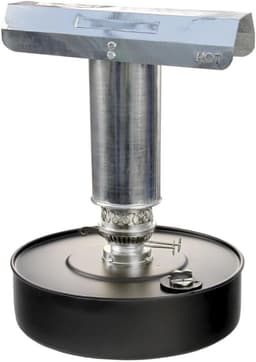
Without mains, the Trendi, ASIN B09R4XBHHT, at £18.95, is the only heater in this set. The bullets describe a 4.5 litre tank, a twin wick, premium paraffin, and up to 80 hours from one filling. Fuel is not included. There is no thermostat. The spec block also prints 4,500 W and 0.0307 m². Ignore both as a size for the house. The RHS limits paraffin and gas to H2 or hardier plants, because the flame produces water, ethylene and carbon monoxide, and you must ventilate. UK reviews of this ASIN mention smoke when the wick is high, loose fittings, and soot on plants. If a socket exists, this listing loses. If it does not, leave a vent open, as in how to use a greenhouse heater. Gas heaters are not in the nine.

Electric listings that still fail

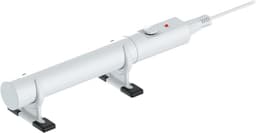
“Electric” is not one safe group. The AC Infinity at £89.99 states 120 V and 8.33 A. Rank in Greenhouse Heaters does not make 120 V a UK heater. Three more electric files never state voltage: the AAOBOSI at £119.99, the SISUPASSIE at £49.99, and the 1,000 mm Hylite at £33.95. A missing line is not a hidden 230 V. The long Hylite is used on frosty nights in UK reviews, and you still read the plate before you treat it as the 230 V sibling of the 300 mm bar.

Cost is not the sticker

The Trendi’s £18.95 is the heater, not the winter. Where watts are printed, Ofgem’s average Direct Debit rate for 1 October to 31 December 2026, in England, Scotland and Wales, is 26.32 p/kWh. A full hour is about 0.7 pence at 28 W, about 13.7 pence at 520 W, and about 53 pence at 2,000 W. A thermostat changes how long that hour lasts. A paraffin heater with no stat does not.

Common questions

If I have a socket, is electric always the better heater?
It is the better fuel when the socket is safe and the listing states 230 V or 240 V. You avoid combustion water and carbon monoxide, and a real thermostat can cycle. A 120 V electric heater is still the wrong mains. A missing voltage is still unresolved. Electric does not fix a heater that is too small for the glass.
If I have no socket, is paraffin the only option in this set?
Yes. The Trendi is the only paraffin listing. Gas heaters are not among the nine, though the RHS discusses them in the same breath as paraffin. A new electric circuit is the other route, and it is an electrician under Part P, which can cost more than the heater.
Does paraffin add damp?
Yes. Burning paraffin produces water. Tameside and Glossop’s figure is about 10 pints from a gallon. The RHS says you also ventilate because of ethylene and carbon monoxide, so you let heat out while you let fumes out. A low-watt electric tube is the listing type UK reviews actually use against damp.
What about carbon monoxide?
The NHS names gas and paraffin heaters. If you suspect poisoning, stop the appliance if you can, go outside, get medical advice, and do not go back until you have advice. Ventilation reduces the risk and does not make a closed house safe. Electric heaters in this set do not burn fuel.
Is £18.95 cheaper to run than a tube?
The sticker is cheaper than the tubes. The run is unpriced here because the file does not state a paraffin burn rate. A 28 W tube is about 0.7 pence an hour at 26.32 p/kWh if it runs the whole hour. Fuel in 5 litre packs, plus a heater with no thermostat, can erase the £18.95 gap. Do not quote a shop’s nightly pound as a measurement.
Why is a 120 V electric heater still the wrong side of this choice?
Because the choice is a UK socket or no socket. 120 V is neither a BS 1363 supply nor a paraffin heater. The AC Infinity file states that voltage. Rank and a PTC element do not convert it. Buy it only for a 120 V supply you already have, which is outside this greenhouse decision.
Can I shut every vent to keep the heat in?
No. The RHS says paraffin and gas need ventilation, and that ventilation costs you heat. Shutting the house raises the chance of fumes and of the water the flame adds. A roof vent on the latch is the usual compromise. Orchids and cacti are a reason to avoid paraffin altogether, in the Two Wests note.

Related pages

Sources

Public UK sources from the research digest, last checked on 17 October 2026.

  1. RHS — Heating greenhouses efficiently (retrieved 17.10.2026)
  2. RHS — Electricity in the garden (retrieved 17.10.2026)
  3. Ofgem — Energy price cap, 1 October to 31 December 2026 (retrieved 17.10.2026)
  4. Approved Document P (2013) (retrieved 17.10.2026)
  5. Electrical Equipment (Safety) Regulations 2016, regulation 35 (retrieved 17.10.2026)
  6. NHS — Carbon monoxide poisoning (retrieved 17.10.2026)
  7. Two Wests — Greenhouse heaters (retrieved 17.10.2026)
  8. Hylite — Greenhouse heater data sheet (retrieved 17.10.2026)