Independent comparisons. We may earn from shop links. More info

Greenhouse heater buying guide

Updated: October 2026

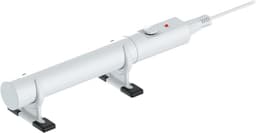
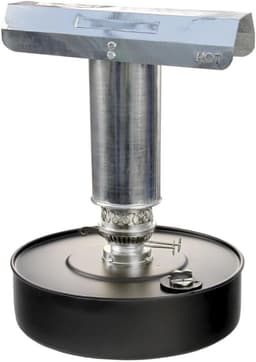
A cold night in a British greenhouse usually starts with the same three boxes on the shelf: a short electric tube, a fan or convector, and a paraffin wick heater. You need a greenhouse heater that matches the socket you actually have, the temperature the plants need, and the glass you are trying to hold. This guide stops before a model scoreboard. The [greenhouse heater comparison](/hub/raised-beds-greenhouses-and-compost/greenhouse-heater) lists all nine amazon.co.uk captures. Products Compared checked those listings and public UK sources, including the RHS heating page, and did not run a lab test. A qualifying Amazon purchase can earn a commission at no extra cost to you.

A cold night in a British greenhouse usually starts with the same three boxes on the shelf: a short electric tube, a fan or convector, and a paraffin wick heater.

Our top picks

On this page

Start with the socket and the degrees

The first split is the supply. UK mains are a nominal 230 V. A listing that states 230 V or 240 V can sit on a socket you already trust. A listing that states 120 V cannot. In this set the AC Infinity file states 120 V and 8.33 A. AAOBOSI, SISUPASSIE and the 1,000 mm Hylite file do not state a voltage, so a plug in a photo is not a printed figure. If there is no socket, paraffin is the fuel left in this set. The RHS treats burning fuel as the option where you cannot install electricity, limited to H2 or hardier plants, because the flame produces water, ethylene and carbon monoxide. That choice is on the electric or paraffin greenhouse heater page. Degrees decide whether a tube can be the tool. The RHS calls 4°C frost-free for H2 plants. Thompson & Morgan uses 3°C as a bare minimum, 7°C for pelargoniums and citrus, and 10°C as safer for young plants.

Thermostat is not a cut-out

A greenhouse heater with a thermostat should tell you a temperature you can set. An overheat cut-out only stops the element getting too hot. In this set the Airmaster states 5–30°C. That is a band you can read. Hylite bullets say a thermostat, and UK reviews of those tubes say the dial has no scale, so the set point is trial and error against a separate thermometer. Morris’s “90° thermostat cut out”, and a spec field of 90 degrees Fahrenheit, is the cut-out. A UK review says there is no dial. LightHouse states no thermostat. Trendi states none.

Watts come after insulation

Watt tables disagree because they are different methods, and neither is a lab result for your glass. Two Wests prints about 1,170 W for a bare 6 ft × 8 ft frost-free house and about 936 W if it is insulated, aimed at roughly 4.5°C. Heathfield LED, checked on 3 October 2026, uses about 6.25 W per square metre of glass per degree, and about 30 per cent less with bubble wrap. Their wrapped 6 × 8 is about 420 W for a light frost (4°C inside, −1°C outside). Do not average 936 W and 420 W. A 28 W tube, or a title that says 45 W while the spec field says 50 W, is not either sum.

Damp, plugs and the heater you do not buy

Glass drips. The RHS says not to wet the heater, and to protect the circuit with an RCD. Where a listing states an IP rating, Toolstation’s note on BS EN 60529 treats IP44 as splashes and IP55 as limited dust plus low-pressure jets. Hylite bullets claim IP44. Morris claims IP55, including the word waterproof, which does not mean you may hose the tube. The other files are silent on IP. That is a gap, not a pass. A new circuit, a doubtful RCD or a damaged plug is an electrician.

Common questions

Do I need a tube, a fan or paraffin?
Choose paraffin only when there is no safe socket. Choose a fan or convector when you need more watts and moving air, and the RHS wants that fan to be one sold for greenhouses. Choose a tube when the job is background frost heat in a small volume and the listing states 230 V or 240 V. A 28 W tube and a 2,000 W fan are not substitutes, even when both titles say greenhouse.
What temperature am I actually trying to hold?
The RHS page used here calls 4°C frost-free for H2 plants. Thompson & Morgan’s bare line is 3°C, with 7°C for pelargoniums and citrus and 10°C as safer for young plants. Write down which of those you mean before you compare watts. A propagator at 15–21°C in the compost is a different target again.
Is a stated thermostat the same as an overheat cut-out?
No. A stated band, such as 5–30°C on the Airmaster, is a control you can set. Morris’s 90° line is a cut-out, and UK reviews say there is no dial. Hylite claims a thermostat, and reviews say the dial has no scale. LightHouse and Trendi state no thermostat in these files.
Why do watt tables for a 6 × 8 disagree?
Two Wests prints about 1,170 W bare and 936 W insulated for a frost-free apex 6 × 8. Heathfield’s glass-area method, with bubble wrap, lands near 420 W for a light frost and about 670 W for a larger lift. They are different retailer methods. Do not blend them, and do not treat a 28 W or 120 W tube as either total.
What if the listing says 120 V?
Stop. UK sockets are nominal 230 V with a BS 1363 plug. The AC Infinity specification block states 120 V and 8.33 A. Rank in Greenhouse Heaters does not convert the voltage. A missing voltage, as on AAOBOSI, SISUPASSIE and the 1,000 mm Hylite file, is a gap you resolve on the rating plate before you rely on the heater.
When do I call an electrician?
Call one for a new circuit to a greenhouse on the dwelling supply, which Approved Document P (2013) brings inside Part P, and for a doubtful RCD or a damaged plug. Regulation 35 of the Electrical Equipment (Safety) Regulations 2016 expects a correctly fitted BS 1363 plug, or a converted plug with the right fuse to the maker’s instructions. A review that suggests a fuse size is not that instruction.

Related pages

Sources

Public UK sources from the research digest, last checked on 17 October 2026.

  1. RHS — Heating greenhouses efficiently (retrieved 17.10.2026)
  2. RHS — Electricity in the garden (retrieved 17.10.2026)
  3. Ofgem — Energy price cap, 1 October to 31 December 2026 (retrieved 17.10.2026)
  4. Approved Document P (2013) (retrieved 17.10.2026)
  5. Electrical Equipment (Safety) Regulations 2016, regulation 35 (retrieved 17.10.2026)
  6. NHS — Carbon monoxide poisoning (retrieved 17.10.2026)
  7. Two Wests — Greenhouse heaters (retrieved 17.10.2026)
  8. Hylite — Greenhouse heater data sheet (retrieved 17.10.2026)